Ashwagandha Root Powder

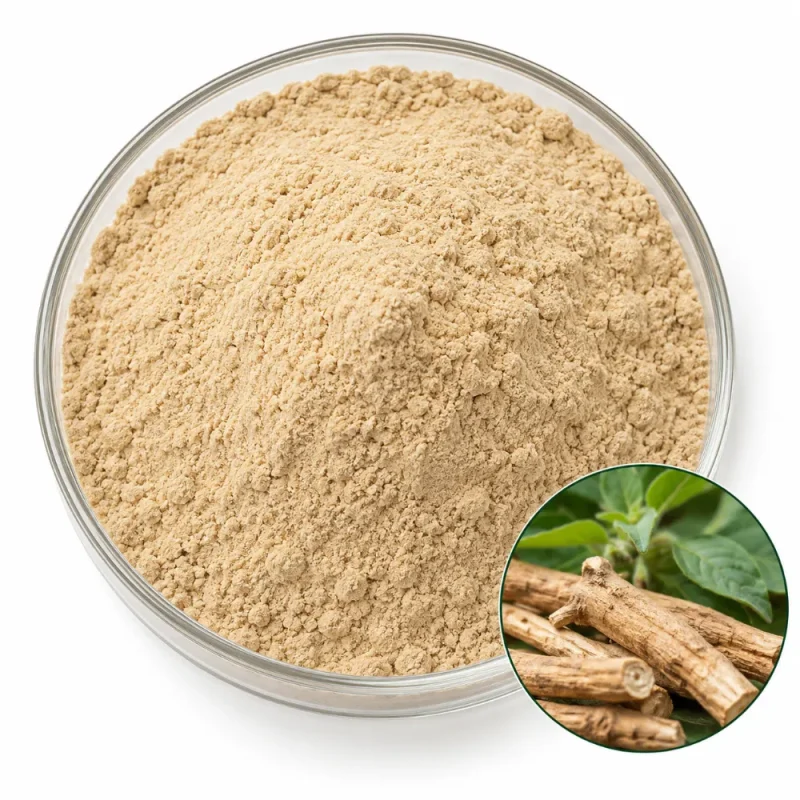
Milling the dried root of Withania somnifera, a shrub of the nightshade family, produces ashwagandha root powder. The powder is made from the root only and keeps its starch, fiber and the whole natural range of root constituents.

It is supplied at 80 mesh, with 40, 60 and 100 mesh optional, as a light brown powder with an earthy odor and a slightly bitter taste. Unlike ashwagandha extract powder or a withanolide-standardized extract, it is raw milled root, so inclusion rates are higher and the flavor is stronger.

Withania somnifera Raw Material & Plant Part

The scientific name is Withania somnifera (L.) Dunal, family Solanaceae. The part used is the root, which is harvested from mature plants, cleaned, sliced and dried before milling. Leaves, berries and stems are not part of this raw material, and that matters because the chemistry differs by plant part.

Ashwagandha is also sold as Indian ginseng and winter cherry. It is not related to true ginseng, and the name winter cherry also covers other plants. A close relative, Withania coagulans, is a different species with its own uses. Within W. somnifera there are two known chemotypes, one dominated by withaferin A and one by withanolide D, and the withanolides are reported to differ between root and leaf, with withaferin A higher in leaves.

The dried root has a starchy, pale interior and a brown skin, and the powder is therefore light brown with a fibrous texture. The earthy odor is characteristic of the root and persists in dry blends.

When ashwagandha root powder is specified, the part has to be named because leaf and root differ chemically. A line that reads ashwagandha powder without the part leaves room for leaf material, which is richer in withaferin A and is a different raw material. The words dried root and the species name make the specification precise.
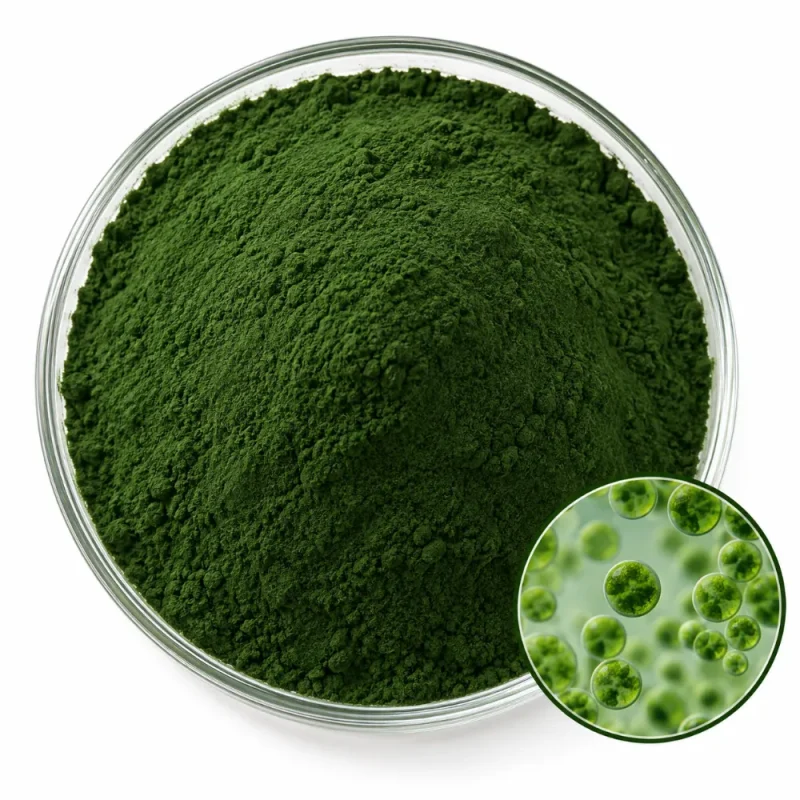
Ashwagandha Root Powder vs Extract

FormWhat It IsChoose It When
Ashwagandha Root PowderMilled dried root with its starch and fiberWhole-root inclusion in capsules and blends
Ashwagandha Extract PowderWater-extracted root powder with the insoluble fiber removedA lower inclusion rate or a more soluble format
Ashwagandha Extract 2.5–10% WithanolidesRoot extract standardized to a withanolide rangeA defined marker content is required
Withanolide A 90–98%Single-compound withanolide AAn isolated reference-grade compound is needed

The root powder keeps the starch, fiber and the full spectrum of root constituents at their natural, lower concentration. Inclusion rates are therefore higher than for an extract, the earthy flavor is stronger and the powder only disperses in liquids. The extract and the standardized extract concentrate selected constituents and are dosed at lower weights, and the single compound is a different ingredient altogether. Choose the powder when the whole root is wanted, and choose an extract or isolate when a defined marker is required.

Taste and texture separate the forms. Ashwagandha root powder is earthy, slightly bitter and starchy, so it thickens hot drinks and leaves a visible sediment in water. An extract powder is lighter in taste and dissolves with less sediment, which is why many drink mixes use extract and capsules use the powder.

Ashwagandha root powder is the choice when a recipe needs the whole root and its starch. Ashwagandha extract powder, standardized extract and the single compound serve other aims, so ashwagandha root powder is not interchangeable with any of them in a label or a specification.

Typical Specifications

Specification ItemProduct Information
Latin NameWithania somnifera
Plant PartRoot & Rhizome
ProcessingMilled
Common NameAshwagandha, Indian ginseng, winter cherry
Raw MaterialDried root
Ingredient TypeMilled Powder
AppearanceLight Brown powder (natural color of the dried material)
Odor & TasteEarthy odor, slightly bitter
Solubility / DispersibilityWater Dispersible
Quality Parameters
Moisture (LOD)≤8.0%
Particle Size80 mesh (40 / 60 / 100 mesh optional)
Heavy MetalsLead ≤2 ppm · Arsenic ≤1 ppm · Cadmium ≤1 ppm · Mercury ≤0.1 ppm
MicrobiologyTPC ≤10,000 cfu/g · Yeast & Mold ≤1,000 cfu/g · E. coli Negative · Salmonella Negative/25 g
Shelf Life24 months in unopened original packaging, cool and dry storage

Application Areas

Hard capsules and tablets

Ashwagandha root powder is a bulky, starchy powder, so capsules are volume-limited and tablets need a good binder. The dose is by weight in milligrams, and a small pilot shows how many capsules deliver the intended amount.

Powder sticks and drink mixes

Dry mixes blend the powder with cocoa, malt, spices or cereal bases that cover the earthy odor. The starch swells slightly in hot liquid, and the drink is cloudy, so the format suits opaque milk-style beverages.

Gummies and chews

Chewable formats use the powder at moderate inclusion in a pectin or gelatin base with strong flavors. The bitterness is masked by sweeteners and acids, and the powder is added late to limit heat exposure. Heat exposure is kept short.

Bars and nutrition blends

In bars and nutrition mixes the root powder adds an earthy base note and fiber. It is combined with nut butters, dates or cocoa, and taste tests set the practical inclusion limit. Ashwagandha root powder is sticky when warm, so the mix is chilled before it is pressed.

Handling & Blending Notes

Starch and fiber control the handling. The powder is cohesive and takes up moisture, so it forms lumps and cakes on storage if the pack is not sealed. Moisture-barrier bags, dry weighing rooms and quick resealing keep the flow free, and a mild anti-caking carrier is sometimes used in premixes.

Mesh choice changes the result. The 80 mesh grade suits capsules and most dry blends, while 40 and 60 mesh stay in tea bags and infusions better, and 100 mesh suspends more evenly in a drink. Finer powders feel smoother but dust more, so dust extraction is useful at the weighing station.

The earthy, slightly bitter taste needs masking in liquids, and cocoa, vanilla, cinnamon and malt are the common partners. The starch gives a slightly thick mouthfeel in hot drinks. Opened containers are used promptly, because a raw root powder is more exposed to humidity and odors than a dense extract, and storage in a cool, dry area away from strong aromas keeps the character clean.

Aroma control completes the plan. Ashwagandha root powder carries a strong earthy odor that transfers to neighboring materials, so it is stored apart from delicate flavors, and sealed containers are opened only when needed. In production, a ventilated weighing booth keeps the odor from spreading through the room.

Packaging & Commercial Supply

Essencefield supports product evaluation, formulation trials, commercial orders, and ongoing ingredient supply. Packaging, storage, and shipping arrangements are determined by product characteristics, order quantity, stability requirements, and destination-market needs.

Supply ItemGeneral Information
SampleAvailable upon request for formulation, testing, and supplier evaluation
Order Quantities100 g · 1 kg · 5 kg · 25 kg · 100 kg · 500 kg · Bulk
Sample Lead TimeTypically 5–7 days after sample confirmation
Production Lead TimeTypically 15–30 days after order and specification confirmation
PackagingSuitable protective inner packaging with bags, cartons, drums, or other appropriate outer packaging
StorageStore in tightly sealed, suitable protective packaging in a cool, dry environment. Protect from moisture, heat, and direct sunlight. Specific storage conditions follow the approved product specification.
DocumentationCOA · Product Specification · TDS · SDS · Applicable declarations (as applicable)

Final order quantities, lead times, packaging, documentation, and shipping arrangements are confirmed according to the selected product and commercial requirements.

Request Ingredient Specifications & Quote

Share your target specification, application, quantity, and documentation needs. We’ll help confirm suitable options, samples, and commercial supply details.