Barley Grass Powder

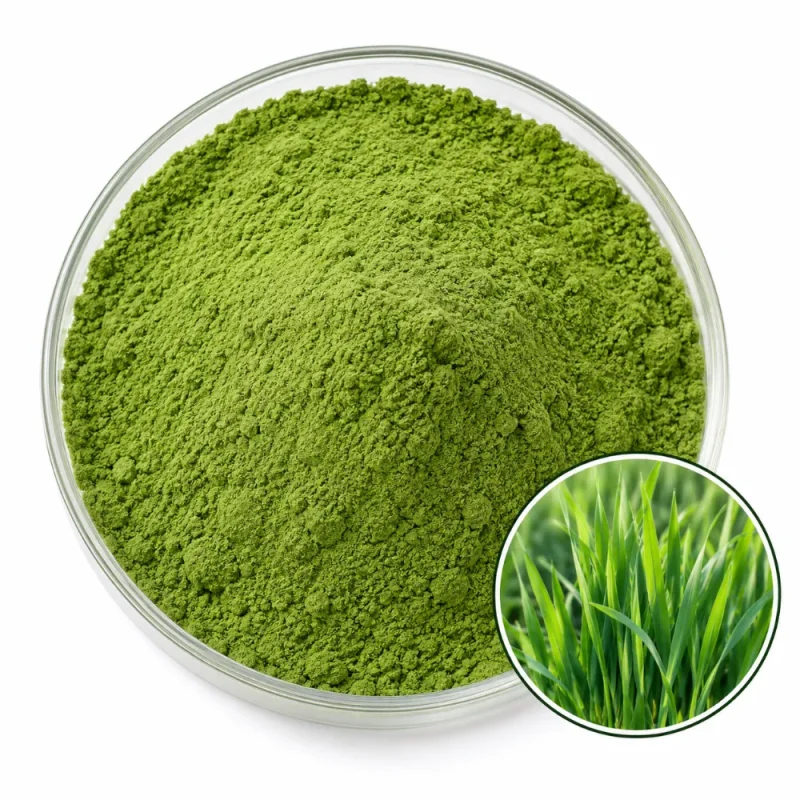
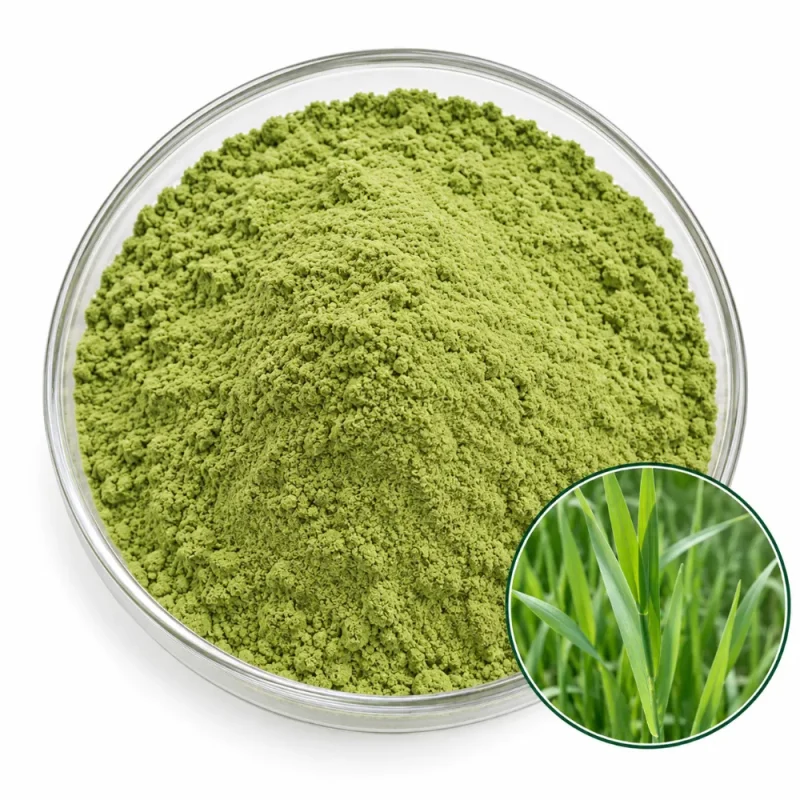
Drying and milling the young leaves of Hordeum vulgare, cut long before the plant sets grain, gives barley grass powder. The powder is made from the leaf only, not the grain, the malt or the husk, and it keeps the green color of the chlorophyll in the leaf.

It is supplied at 80 mesh, with 40, 60 and 100 mesh optional, as a green powder with a fresh, grassy odor and a mild, slightly sweet taste. Unlike barley grass extract powder or barley grain flour, it is raw milled leaf, so fiber, color and flavor are those of the whole young leaf.

Hordeum vulgare Raw Material & Plant Part

The scientific name is Hordeum vulgare L., family Poaceae. The part used is the young leaf, harvested at an early stage while it is still tender and green, then dried and milled. Grain, malt, husk, roots and mature straw are not part of this raw material, and the distinction matters because barley is used in several very different forms.

Three barley raw materials are easily confused. Barley grass powder is the leaf. Barley powder and highland barley powder are milled grain, rich in starch and fiber and pale in color. Malted barley is grain that has been germinated and dried, with enzymes and sugars from the malting step. A specification should say leaf in words.

The green color comes from chlorophyll, which is sensitive to acid, heat and light, and the leaf also carries flavone C-glycosides such as saponarin and lutonarin that are characteristic of young barley. Harvest timing matters, because these compounds are reported to peak at early leaf stages and fall later, so an early cut is the usual practice.

The powder is light, fluffy and green, and its color depends on drying conditions.

In a specification, barley grass powder should state the part in words. Listings that read barley powder may mean grain flour, malt or the leaf, and the words dried young leaf, together with the species name and the mesh, make the raw material unambiguous for quality and regulatory staff.
Barley Grass Powder vs Extract

FormWhat It IsChoose It When
Barley Grass Leaf PowderMilled dried young leaf with its fiberWhole-leaf inclusion in capsules, blends and drinks
Barley Grass Extract PowderWater-extracted leaf powder with the insoluble fiber removedA lower inclusion rate or a more soluble format
Barley PowderMilled barley grain, starchy and paleA grain-based, neutral flour is needed
Highland Barley PowderMilled highland barley grain, a hulless grainA hulless-grain flour is needed

The leaf powder keeps the fiber, the chlorophyll and the whole range of leaf constituents at their natural, lower concentration. Inclusion rates are higher than for an extract, the green color and grassy flavor are stronger, and the powder only disperses in liquids. The extract removes fiber and usually gives a lighter color, and the grain powder is a different raw material with starch and little color. Choose barley grass powder where the whole young leaf and its green color are wanted, and an extract or grain powder where solubility, a neutral taste or starch is needed.

Color and texture separate the forms. Barley grass powder is green and fibrous and gives a cloudy drink, while barley grain powder is pale and starchy, and the extract powder is lighter in color and dissolves with less sediment.

Typical Specifications

Specification ItemProduct Information
Latin NameHordeum vulgare
Plant PartLeaf & Herb
ProcessingMilled
Common NameBarley grass, young barley leaf
Raw MaterialDried young leaf
Ingredient TypeMilled Powder
AppearanceGreen powder (natural color of the dried material)
Odor & TasteFresh grassy odor, mild slightly sweet taste
Solubility / DispersibilityWater Dispersible
Quality Parameters
Moisture (LOD)≤8.0%
Particle Size80 mesh (40 / 60 / 100 mesh optional)
Heavy MetalsLead ≤2 ppm · Arsenic ≤1 ppm · Cadmium ≤1 ppm · Mercury ≤0.1 ppm
MicrobiologyTPC ≤10,000 cfu/g · Yeast & Mold ≤1,000 cfu/g · E. coli Negative · Salmonella Negative/25 g
Shelf Life24 months in unopened original packaging, cool and dry storage

Application Areas

Capsule and tablet formats

Barley grass powder is light and fluffy, so capsule fills are volume-limited and tablets need a compressible binder. The green color shows through clear shells, which can be a feature or a problem, and the dose is by weight in milligrams.

Green drink mixes and powder sticks

Dry mixes blend the powder with fruit, citrus or mint flavors that suit the grassy note. The fiber does not dissolve, so the drink is cloudy and green, and a vigorous stir or a blender prevents floating lumps.

Smoothie and juice blends

Smoothie packs combine the powder with fruit and plant protein, and the acid in fruit can turn the green toward olive over time. Adding the powder at serving, not during storage, keeps the color fresh. The result is judged on color and on flavor.

Bars, bakery and snack blends

In bars and baked snacks the powder adds green color and a grassy note. Heat and acid shift the color toward brown, so baking trials with the intended pH show how much color remains. Color and flavor are judged on the finished bar.

Handling & Blending Notes

Chlorophyll is the key to handling. Acid, heat and light turn the bright green toward olive or brown, so the powder is kept in opaque barrier packaging, away from sunlight, and acidic ingredients are added late. In drinks the color is checked at the end of the shelf-life period, not only at filling.

Fluffiness and dust are the physical issues. The powder is low in bulk density and bridges in hoppers, floats as dust and takes up moisture from the air. Dry rooms, wide outlets, vibration aids and dust extraction keep the flow steady, and moisture-barrier bags with quick resealing prevent caking.

Mesh choice affects the result. The 80 mesh grade suits capsules and most blends, 40 and 60 mesh stay in a tea bag, and 100 mesh suspends more evenly in a drink. Barley grass powder is a raw leaf powder and takes up odors easily, so opened containers are used promptly and stored in a cool, dry area away from strong aromas.

Storage after opening matters for color. Barley grass powder is resealed after each use in the barrier bag and shelved in a cool, dry room away from light. The green fades in light and air, so smaller packs and prompt use maintain the quality.

Packaging & Commercial Supply

Essencefield supports product evaluation, formulation trials, commercial orders, and ongoing ingredient supply. Packaging, storage, and shipping arrangements are determined by product characteristics, order quantity, stability requirements, and destination-market needs.

Supply ItemGeneral Information
SampleAvailable upon request for formulation, testing, and supplier evaluation
Order Quantities100 g · 1 kg · 5 kg · 25 kg · 100 kg · 500 kg · Bulk
Sample Lead TimeTypically 5–7 days after sample confirmation
Production Lead TimeTypically 15–30 days after order and specification confirmation
PackagingSuitable protective inner packaging with bags, cartons, drums, or other appropriate outer packaging
StorageStore in tightly sealed, suitable protective packaging in a cool, dry environment. Protect from moisture, heat, and direct sunlight. Specific storage conditions follow the approved product specification.
DocumentationCOA · Product Specification · TDS · SDS · Applicable declarations (as applicable)

Final order quantities, lead times, packaging, documentation, and shipping arrangements are confirmed according to the selected product and commercial requirements.

Request Ingredient Specifications & Quote

Share your target specification, application, quantity, and documentation needs. We’ll help confirm suitable options, samples, and commercial supply details.