
Vitamin C Standardization & Grades
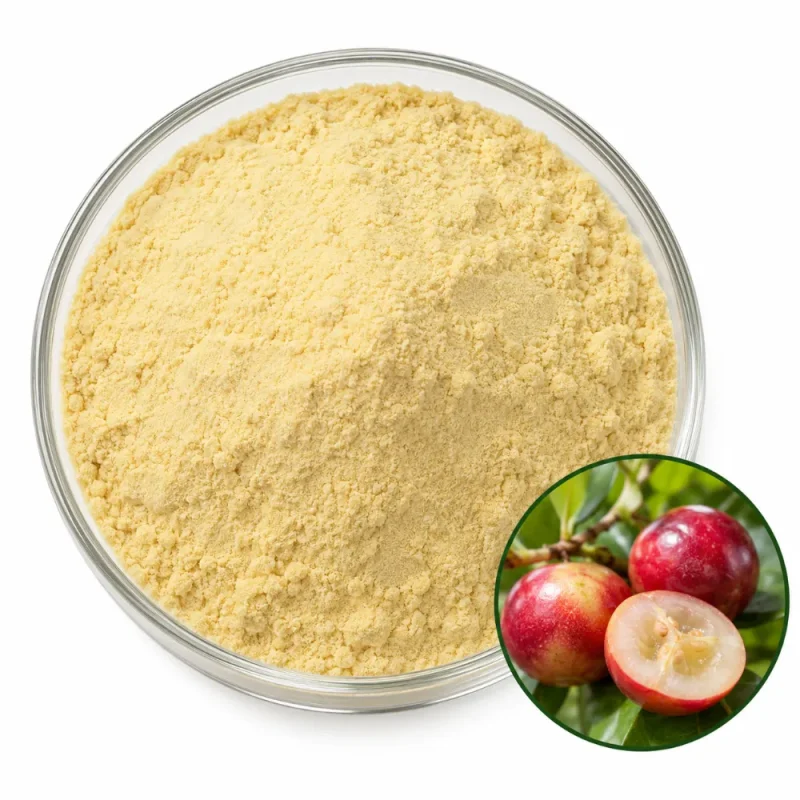
Natural vitamin C here means ascorbic acid that comes from the fruit itself, measured as ascorbic acid and not added as a separate ingredient. Camu camu is standardized to it because ascorbic acid is the defining nutrient of the berry and because HPLC can resolve it from the sugars, organic acids and polyphenols of the extract. The botanical entity is Myrciaria dubia (Kunth) McVaugh, and the part used is the fruit. The rest of the camu camu extract is the berry’s own sugars, organic acids and phenolics, so even the 25% grade is a fruit extract and not a purified acid. Two lots with the same vitamin C percentage can still differ in color.
| Grade | Assay & Method | Where It Fits |
|---|---|---|
| 10% Natural Vitamin C | HPLC | Drink powders, gummies, effervescent mixes |
| 25% Natural Vitamin C | HPLC | Capsules and tablets, small fill weight |
Grade choice follows dose, acidity and fill weight. At 25% a capsule delivers its target in a compact fill, while the 10% grade is bulkier and brings more of the fruit’s own sugars and polyphenols into a beverage. Camu camu is also supplied as a 10:1 ratio extract without a marker figure, the Camu Camu Extract Powder, and as fruit powders, the Camu Camu Powder and the Freeze-Dried Camu Camu Powder. Use the standardized extract when a vitamin C figure has to appear in the specification.


