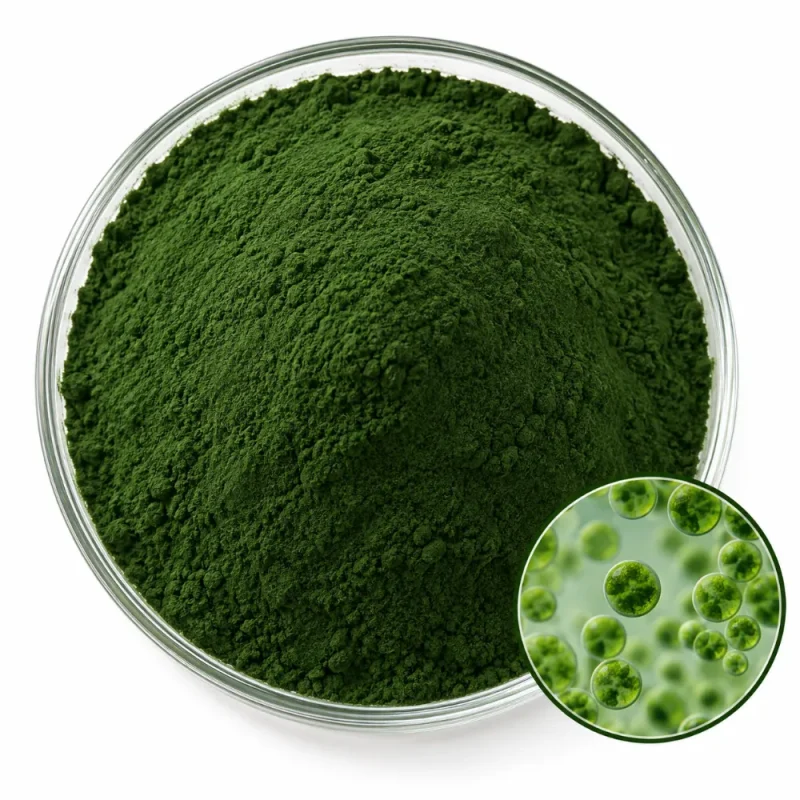
Chlorella Powder

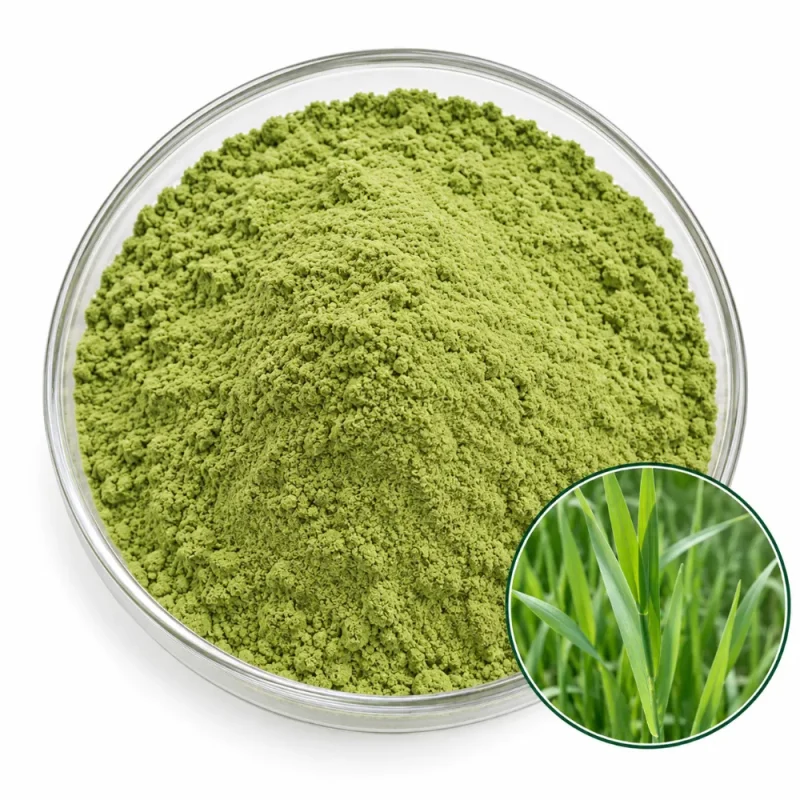
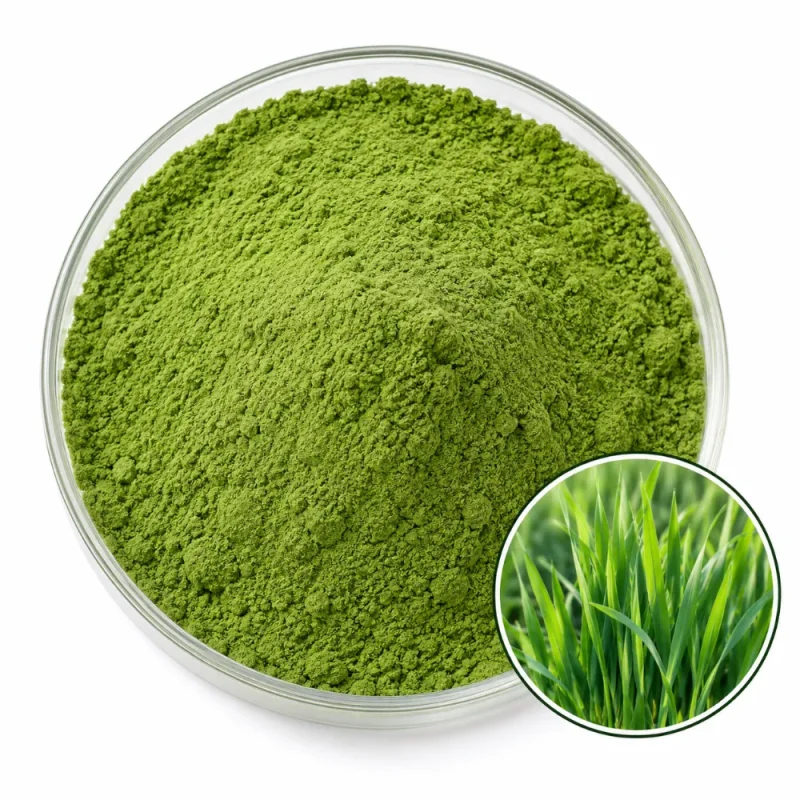
Whole cells of the freshwater microalga Chlorella vulgaris are harvested, dried and milled into a dark green powder with a grassy, slightly marine smell. The material is the algal biomass itself, so it is a whole-organism powder and not a pigment or a cell-wall extract.

Chlorella powder is supplied at 80 mesh, with 40, 60 and 100 mesh optional, and has a dark green color with an earthy, sea-like odor and a mild, green taste. It is milled algae rather than an extract, so it carries the full cell content and the fiber of the cell wall.

Chlorella vulgaris Raw Material & Plant Part

The botanical name is Chlorella vulgaris Beij., family Chlorellaceae, a single-celled green alga a few micrometres across. The raw material is the whole dried alga, with no separation of cell contents from the wall. Although the master data groups it with plant materials as a whole alga, nothing is added or removed apart from water.

Several algae are sold under similar green-powder headings. Spirulina is a cyanobacterium of the genus Arthrospira and is a blue-green organism with a different cell structure and pigment, and Chlorella pyrenoidosa is a name that appears in trade for closely related chlorella strains. A specification that gives the species and the whole-alga form avoids those confusions.

The cell wall of chlorella is tough and fibrous, built from polysaccharides and resistant to digestion and to simple milling. The wall is also the source of the powder’s insoluble fiber, which is why chlorella powder floats and settles in water. The green color comes from high chlorophyll content, a trait of the alga and not a stated level for this powder.
Chlorella Mesh Size & Particle Options

Chlorella powder is offered at 80 mesh as the standard grade, with 40, 60 and 100 mesh on request. The mesh number matters more for chlorella than for many leaf powders, because the dried cells are very small and clump into aggregates, and milling mainly breaks the aggregates apart. A coarse grade, at 40 or 60 mesh, shows visible dark specks in a dry mix and flows more freely, while 80 mesh is the working grade for capsules, tablets and most blends.

The 100 mesh grade gives the smoothest dispersion in water and in smoothie bases, but it is also the grade that dusts most, takes up moisture fastest and stains containers and equipment green. Static charge builds in dry rooms and makes fine chlorella cling to scoops and bag walls.

In water, even the fine grade does not dissolve. The powder wets slowly, forms lumps unless it is added with stirring, and gives a dark, opaque green suspension that settles on standing. Mesh is therefore chosen for the way the powder is used: capsule and tablet fills use 80 mesh, drink sticks use 80 or 100 mesh, and dry baking mixes use 60 or 80 mesh for even color.

Compared with leaf powders, chlorella powder is denser, and a capsule holds more weight of it, which is a practical reason why capsule and tablet makers work with the 80 mesh grade. Because the dried cells are very small, a coarse grade does not change the taste much; it mainly changes how visible the dark specks are.

Typical Specifications

Specification ItemProduct Information
Latin NameChlorella vulgaris
Plant PartSeaweed & Algae
ProcessingMilled
Common NameChlorella, green microalga
Raw MaterialDried whole alga
Ingredient TypeMilled Powder
AppearanceDark Green powder (natural color of the dried material)
Odor & TasteEarthy, sea-like odor; mild, green taste
Solubility / DispersibilityWater Dispersible
Quality Parameters
Moisture (LOD)≤8.0%
Particle Size80 mesh (40 / 60 / 100 mesh optional)
Heavy MetalsLead ≤2 ppm · Arsenic ≤1 ppm · Cadmium ≤1 ppm · Mercury ≤0.1 ppm
MicrobiologyTPC ≤10,000 cfu/g · Yeast & Mold ≤1,000 cfu/g · E. coli Negative · Salmonella Negative/25 g
Shelf Life24 months in unopened original packaging, cool and dry storage

Application Areas

Green smoothie and shake bases

Chlorella powder is stirred into smoothie bases and shake powders for a deep green color. The sea-like note is covered with citrus, mint, pineapple or banana flavors, and the powder is added with stirring so it does not form lumps.

Tablet and capsule fills

Tablets and capsules use the powder as a dense, dark green fill with good compressibility. The strong color stains punches and tablet cores, so cleaning between products is part of the plan, and a coating limits odor.

Noodle and bakery colorants

Pasta, noodles and crackers use the powder as a natural green tint. The green deepens in a neutral dough and fades toward olive with long baking or low pH, so inclusion is set after a baking trial.

Dry green blends

Powder sticks and dry mixes combine chlorella with other greens such as barley grass or alfalfa. The blend ratio sets color and taste, and chlorella is usually the darkest and strongest component, so it stays a small share.

Handling & Blending Notes

Chlorella powder is fine, light and electrostatic. It dusts at open transfers, clings to scoops and chutes, and leaves a green film that is hard to remove from plastic and cloth. Covered transfer, local extraction and metal or anti-static tools keep the green dust under control, and dedicated equipment is common for chlorella lines.

The powder absorbs moisture slowly but steadily. Barrier packaging with low headspace, dry rooms and quick resealing keep it free-flowing, and lumps that form are screened. Because the dried cells are rich in pigments and lipids, light and warmth dull the green color and flatten the aroma, so opaque packs and cool storage protect the material.

Taste is the sensory control. The sea-like note grows stronger with finer mesh, warmth and age, and it is balanced with strong flavors, citrus acids or cocoa. Opened containers are resealed and used within a short time, because chlorella powder absorbs odors from neighboring materials and in turn flavors them.

Chlorella powder is packed dry and used soon after opening, since fine particles expose a large surface to air and humidity. A sealed liner inside the outer pack and a short working period for each opened container keep the color and the aroma stable.

Packaging & Commercial Supply

Essencefield supports product evaluation, formulation trials, commercial orders, and ongoing ingredient supply. Packaging, storage, and shipping arrangements are determined by product characteristics, order quantity, stability requirements, and destination-market needs.

Supply ItemGeneral Information
SampleAvailable upon request for formulation, testing, and supplier evaluation
Order Quantities100 g · 1 kg · 5 kg · 25 kg · 100 kg · 500 kg · Bulk
Sample Lead TimeTypically 5–7 days after sample confirmation
Production Lead TimeTypically 15–30 days after order and specification confirmation
PackagingSuitable protective inner packaging with bags, cartons, drums, or other appropriate outer packaging
StorageStore in tightly sealed, suitable protective packaging in a cool, dry environment. Protect from moisture, heat, and direct sunlight. Specific storage conditions follow the approved product specification.
DocumentationCOA · Product Specification · TDS · SDS · Applicable declarations (as applicable)

Final order quantities, lead times, packaging, documentation, and shipping arrangements are confirmed according to the selected product and commercial requirements.

Request Ingredient Specifications & Quote

Share your target specification, application, quantity, and documentation needs. We’ll help confirm suitable options, samples, and commercial supply details.