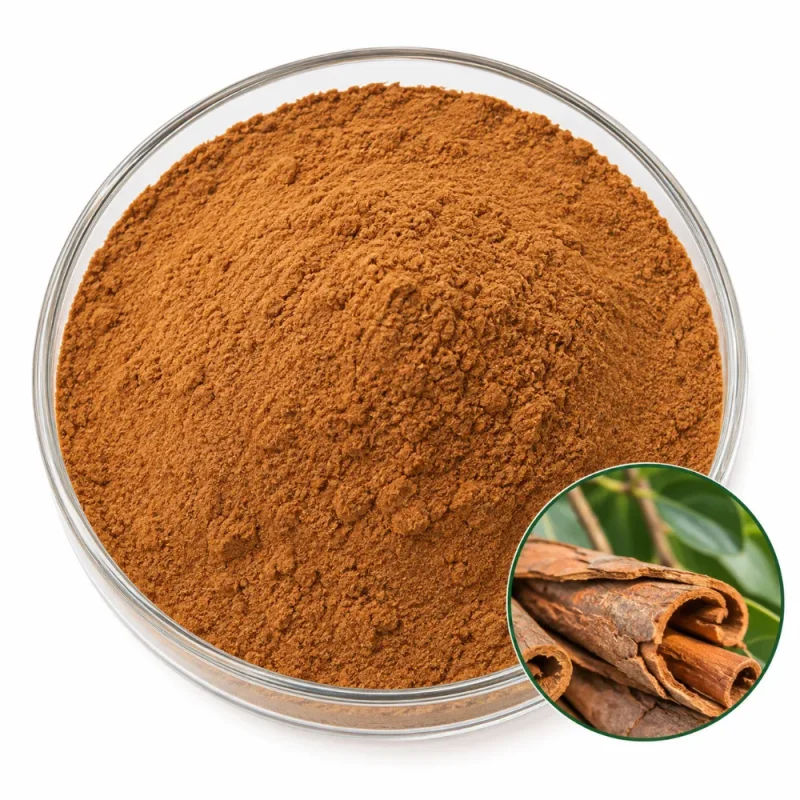
Cinnamon Bark Powder

Dried bark from Cinnamomum cassia, the Chinese cinnamon tree, is stripped, dried and milled into this brown powder. Only the bark is used, with no leaf, twig or bud material, so the cassia character stays defined and the powder keeps the woody, fibrous texture of the bark.

Cinnamon bark powder is supplied at 80 mesh, with 40, 60 and 100 mesh optional, and has a warm, sweet-spicy odor with a pungent, slightly astringent taste. It is raw milled bark rather than an extract, so inclusion rates are higher and the flavor is stronger than in the extract forms.

Cinnamomum cassia Raw Material & Plant Part

The botanical name is Cinnamomum cassia, family Lauraceae, sold as Chinese cinnamon, cassia cinnamon or cassia bark. The raw material is the dried bark of the tree, which curls into quills or flat pieces as it dries before milling. Leaves, twigs and flowers are not part of this powder.

Commercial cinnamon covers several species, so the species has to be named. Ceylon cinnamon, Cinnamomum verum, has thin, pale, brittle bark and a milder flavor. Cassia bark is thick, hard and darker, with a sharper, more pungent flavor and a higher coumarin content, which is why buyers who compare cinnamon powders read the species first. Indonesian and Vietnamese cinnamons come from other Cinnamomum species and are not this raw material.

The name cassia is also used for cassia seed, which is the seed of a Senna plant and has no botanical link to this bark.

Bark is peeled from the tree, dried until brittle and milled, and because the aroma sits in the bark tissue itself, the whole milled bark carries the flavor rather than a surface layer. The powder ranges from reddish brown to brown depending on the age of the bark and the drying, which is a natural variation of the raw material and not a sign of a different grade. In a specification, the three facts that define this material are therefore the species, the bark as the part and the milled form.
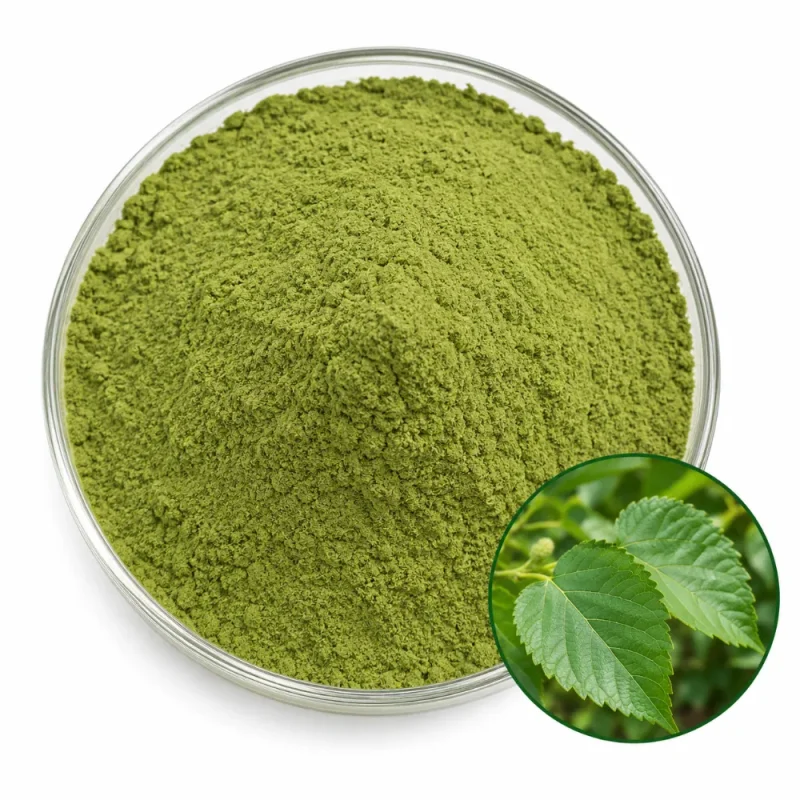
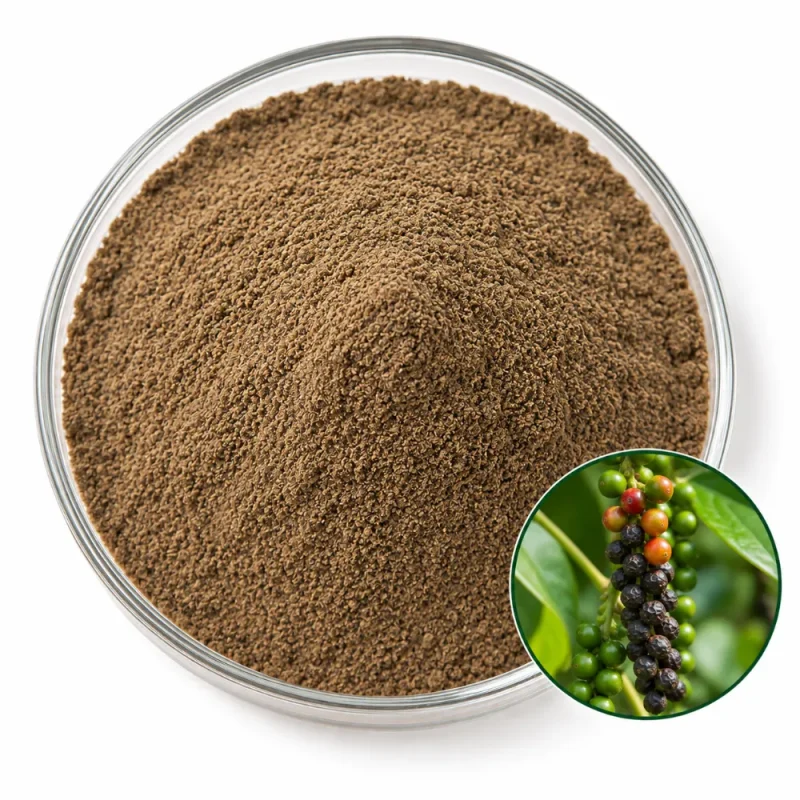
Cinnamon Bark Powder vs Extract

FormWhat It IsChoose It When
Cinnamon Bark PowderMilled dried cassia bark with its fiberWhole-bark flavor and fiber in dry blends
Cinnamon Bark Extract PowderWater-extracted bark with the insoluble fiber removedA more soluble format at a lower inclusion rate
Cinnamon Extract 10–30% PolyphenolsCinnamon extract standardized to a polyphenol rangeA defined polyphenol content is the requirement

The powder keeps the bark fiber, tannins and aromatic oils together, so it delivers the full cassia flavor at a lower concentration than any extract. The fiber stays in the product, which means a higher inclusion weight and a powder that disperses in liquids without dissolving.

Flavor is the practical dividing line. Cinnamon bark powder tastes strongly of cinnamaldehyde-type spice and is slightly astringent from its tannins, so it works as a flavoring as much as a botanical ingredient. The extract powder is milder and leaves less sediment, while the standardized extract is chosen for its defined content rather than its taste.

Texture separates the forms as well. The whole-bark powder carries starch and fibrous material that thicken hot liquids slightly and feel gritty at coarse mesh, a behavior the extract forms do not show. For a seasoning or a coating the powder is therefore the natural choice, and for a clear or smooth drink one of the extract forms is easier to use.

Typical Specifications

Specification ItemProduct Information
Latin NameCinnamomum cassia
Plant PartBark & Stem
ProcessingMilled
Common NameCinnamon, Chinese cinnamon, cassia
Raw MaterialDried bark
Ingredient TypeMilled Powder
AppearanceBrown powder (natural color of the dried material)
Odor & TasteWarm, sweet-spicy odor; pungent, slightly astringent taste
Solubility / DispersibilityWater Dispersible
Quality Parameters
Moisture (LOD)≤8.0%
Particle Size80 mesh (40 / 60 / 100 mesh optional)
Heavy MetalsLead ≤2 ppm · Arsenic ≤1 ppm · Cadmium ≤1 ppm · Mercury ≤0.1 ppm
MicrobiologyTPC ≤10,000 cfu/g · Yeast & Mold ≤1,000 cfu/g · E. coli Negative · Salmonella Negative/25 g
Shelf Life24 months in unopened original packaging, cool and dry storage

Application Areas

Spice and seasoning blends

Baking spice mixes, rubs and seasoning blends use the powder as a direct flavor ingredient. Cassia is sharper than Ceylon cinnamon, so less is needed for the same intensity, and blending the powder with sugar or flour first keeps it free-flowing and spreads the pungent bark flavor evenly through the mix.

Cinnamon-sugar snack coatings

Cereal, nut and snack coatings apply the powder in a dry mix with sugar. A finer mesh gives an even surface, and the brown bark tint deepens the coating color, so the dosage is adjusted by sight as well as by taste. Coarser grades leave visible specks that suit a rustic look.

Bark-fiber capsule fills

Capsule fills take the powder as a bulky, fibrous bark, so fill weight is limited by volume. The strong aroma persists inside the fill, and tablets need a binder because the woody fiber does not bind on its own. A pilot fill shows how many capsules deliver the intended weight.

Instant drink mixes

Cocoa, malt and milk-powder mixes carry the powder well, since the spice note suits opaque beverages. The fiber does not dissolve and leaves a fine sediment in the cup, so 100 mesh is chosen when a smoother suspension matters more than a rustic texture.

Handling & Blending Notes

Bark fiber keeps the powder fairly free-flowing, but the aromatic oils make it cohesive in warm, humid rooms, and lumps form in open packs. Moisture-barrier bags, dry weighing areas and quick resealing protect the flow. Fine bark powder dusts at transfer points, so extraction at the scoop station keeps the fine fraction out of the air.

Mesh choice shapes the result. The 80 mesh grade suits capsules and most dry blends. The 40 and 60 mesh grades stay visible in coatings and rustic blends, and 100 mesh suspends more evenly in a drink mix.

The strong cassia aroma needs no masking in sweet products, while in neutral bases it is balanced with vanilla or sugar. Aroma fades once a pack is open, so containers are reclosed quickly and stored away from strong odors that the powder could absorb.

Aroma compounds sit in the bark tissue, so a sealed pack protects the flavor more than any additive does. Warm storage drives off the volatile fraction and flattens the note, which shows as a duller cinnamon character after months in a hot or open room. Dedicated scoops keep the strong aroma from crossing into unflavored products on shared equipment.

Packaging & Commercial Supply

Essencefield supports product evaluation, formulation trials, commercial orders, and ongoing ingredient supply. Packaging, storage, and shipping arrangements are determined by product characteristics, order quantity, stability requirements, and destination-market needs.

Supply ItemGeneral Information
SampleAvailable upon request for formulation, testing, and supplier evaluation
Order Quantities100 g · 1 kg · 5 kg · 25 kg · 100 kg · 500 kg · Bulk
Sample Lead TimeTypically 5–7 days after sample confirmation
Production Lead TimeTypically 15–30 days after order and specification confirmation
PackagingSuitable protective inner packaging with bags, cartons, drums, or other appropriate outer packaging
StorageStore in tightly sealed, suitable protective packaging in a cool, dry environment. Protect from moisture, heat, and direct sunlight. Specific storage conditions follow the approved product specification.
DocumentationCOA · Product Specification · TDS · SDS · Applicable declarations (as applicable)

Final order quantities, lead times, packaging, documentation, and shipping arrangements are confirmed according to the selected product and commercial requirements.

Request Ingredient Specifications & Quote

Share your target specification, application, quantity, and documentation needs. We’ll help confirm suitable options, samples, and commercial supply details.