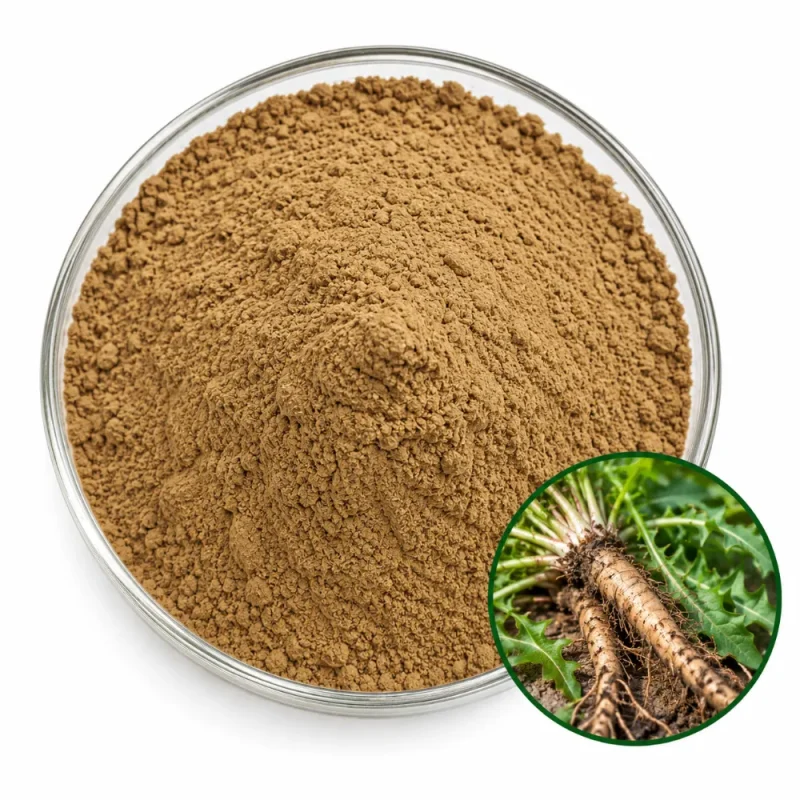
Dandelion Root Powder

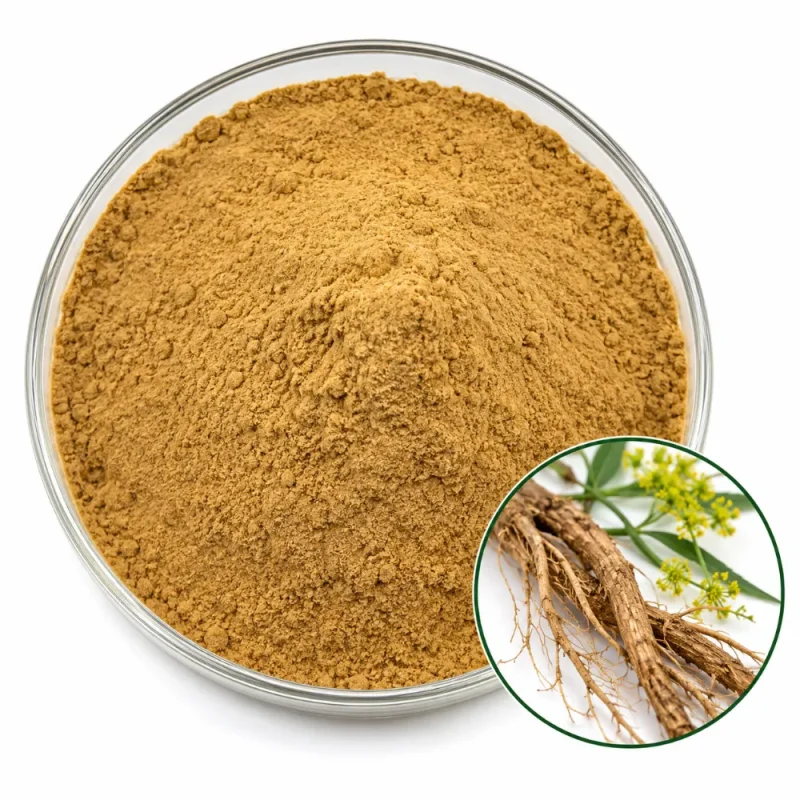
The taproot of Taraxacum officinale, the common dandelion, is washed, dried and milled to give this light brown powder with an earthy, faintly sweet and bitter character. Only the root is used, so the leaf, flower and seed head of the dandelion are not part of the material.

Dandelion root powder is supplied at 80 mesh, with 40, 60 and 100 mesh optional, and is sold as a fibrous, slightly sweet-bitter powder with a mild earthy odor. It is raw milled root rather than an extract, so inclusion rates are higher and the bitterness is more direct than in the extract forms.

Taraxacum officinale Raw Material & Plant Part

The botanical name is Taraxacum officinale Weber ex F.H.Wigg., family Asteraceae, known as dandelion or common dandelion. The raw material is the dried root, a long, brittle taproot that is cleaned, cut, dried and then milled. Leaves, flowers and the milky stem sap are listed under other products and are not included.

Dandelion is a difficult genus: Taraxacum has hundreds of microspecies, and T. officinale is used in commerce as an aggregate name. Other plants with dandelion-like flowers, such as false dandelion (Hypochaeris) and chicory, are not the same, even though chicory root is also a bitter, inulin-rich root used in similar blends.

The root is characterized by inulin, a storage fructan that gives mild sweetness and soluble fiber, and by bitter sesquiterpene lactones such as taraxinic acid glycosides. The leaf carries more flavonoids and caffeic acid derivatives, which is why root and leaf are different ingredients. These are traits of the plant and not levels for this powder.

Roots are lifted in autumn or early spring, when the inulin reserve of the root is high, then washed, cut and dried. The fresh root exudes a bitter white latex, and drying leaves a brittle, dark-skinned root with a pale interior that mills to a light brown dandelion root powder.
Dandelion Root Powder vs Extract

FormWhat It IsChoose It When
Dandelion Root PowderMilled dried taproot with its fiber and inulinWhole-root inclusion in blends and capsules
Dandelion Extract PowderWater-extracted root with the fiber removedA soluble format at a lower inclusion rate
Dandelion Extract 3–5% FlavonoidsExtract standardized to a flavonoid rangeA defined flavonoid content is required
Dandelion Peptide PowderLow-molecular-weight protein hydrolysateA peptide ingredient is wanted, not a root

The root powder keeps the inulin, the cell-wall fiber and the bitter principles at their natural level, so inclusion rates are higher and the product is sweeter and more fibrous than an extract. The powder also takes up water and thickens slightly.

The extract powder is paler and dissolves more easily, and the standardized extract is picked for a defined marker. The peptide powder is a protein-based ingredient and not a root product at all. Choose the root powder when the whole root, its inulin and its bitter note belong to the recipe.

Because inulin and fiber are intact, dandelion root powder swells in water and thickens a drink more than the extract does. An extract powder is paler and thinner, and the peptide powder has no root fiber at all. For roasted-root drinks the dandelion root powder itself is the established form.

Typical Specifications

Specification ItemProduct Information
Latin NameTaraxacum officinale
Plant PartRoot & Rhizome
ProcessingMilled
Common NameDandelion, common dandelion
Raw MaterialDried root
Ingredient TypeMilled Powder
AppearanceLight Brown powder (natural color of the dried material)
Odor & TasteMild earthy odor; slightly sweet, bitter taste
Solubility / DispersibilityWater Dispersible
Quality Parameters
Moisture (LOD)≤8.0%
Particle Size80 mesh (40 / 60 / 100 mesh optional)
Heavy MetalsLead ≤2 ppm · Arsenic ≤1 ppm · Cadmium ≤1 ppm · Mercury ≤0.1 ppm
MicrobiologyTPC ≤10,000 cfu/g · Yeast & Mold ≤1,000 cfu/g · E. coli Negative · Salmonella Negative/25 g
Shelf Life24 months in unopened original packaging, cool and dry storage

Application Areas

Coffee-style root beverage mixes

Dandelion root is a classic ingredient in caffeine-free roasted-root drink mixes. The powder adds a bitter, earthy body, and it is blended with chicory, barley or cocoa so that the bitterness reads as a dark, coffee-like profile.

Inulin-bearing fiber blends

Dry fiber mixes take the powder for its natural inulin and bulk. Inulin is hygroscopic, so the mix is kept dry, and the sweet-bitter note limits the inclusion rate in neutral bases. Pairing with other fibers calls for a hydration test.

Herbal capsule fills

Capsule fills use the root powder as a bulky, fibrous material. The compressibility is moderate, and the cohesive fiber can bridge in hoppers, so flow aids and a gentle fill speed are tested. A pilot fill sets the real weight per shell.

Savory seasoning and broth bases

Dry broth and seasoning bases use the earthy bitterness of dandelion root as a background note next to onion, mushroom or roasted grain powders. Salt, yeast and roasted notes carry the bitterness well, and the broth is tasted hot because heat sharpens the root.

Handling & Blending Notes

Inulin makes dandelion root powder hygroscopic. The powder takes up moisture from the air, becomes sticky and clumps in open bags, and the clumps harden if the pack is left half-open in a humid room. Barrier bags, dry weighing areas and quick resealing are the main controls, and clumped material is screened and not forced through the line.

The root fiber is tough and slightly elastic, so milling gives a fibrous texture, and it does not compact into very dense tablets without a binder. Mesh choice shifts behavior: the 80 mesh grade suits capsules and dry blends, the 40 and 60 mesh grades suit tea-style blends, and the 100 mesh grade disperses better in beverage mixes but is more sticky.

Bitterness is the sensory control in food use. Sweet partners, roasted notes and fats round it off, while acids sharpen it. A pinch of salt or a roasted partner lowers the perceived bitterness further, and a trial at the finished pH confirms the balance.

Packaging for dandelion root powder favors a sealed inner liner inside a carton, since the sugar-like inulin fraction pulls moisture even in rooms that feel dry. Opened packs are scooped with a dry tool and reclosed at once, and any block that forms is kept out of fine blends.

Packaging & Commercial Supply

Essencefield supports product evaluation, formulation trials, commercial orders, and ongoing ingredient supply. Packaging, storage, and shipping arrangements are determined by product characteristics, order quantity, stability requirements, and destination-market needs.

Supply ItemGeneral Information
SampleAvailable upon request for formulation, testing, and supplier evaluation
Order Quantities100 g · 1 kg · 5 kg · 25 kg · 100 kg · 500 kg · Bulk
Sample Lead TimeTypically 5–7 days after sample confirmation
Production Lead TimeTypically 15–30 days after order and specification confirmation
PackagingSuitable protective inner packaging with bags, cartons, drums, or other appropriate outer packaging
StorageStore in tightly sealed, suitable protective packaging in a cool, dry environment. Protect from moisture, heat, and direct sunlight. Specific storage conditions follow the approved product specification.
DocumentationCOA · Product Specification · TDS · SDS · Applicable declarations (as applicable)

Final order quantities, lead times, packaging, documentation, and shipping arrangements are confirmed according to the selected product and commercial requirements.

Request Ingredient Specifications & Quote

Share your target specification, application, quantity, and documentation needs. We’ll help confirm suitable options, samples, and commercial supply details.