Dehydrated Garlic Processing
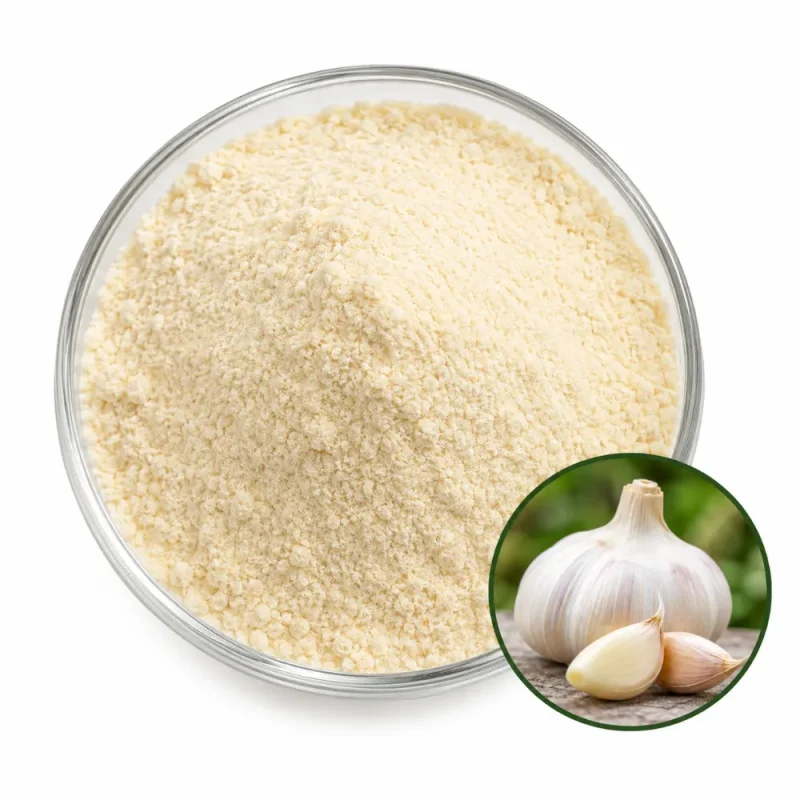
The species is Allium sativum L., a member of the amaryllis family, Amaryllidaceae, closely related to onion, Allium cepa, and to Chinese chive and the other alliums. The part used is the bulb, which is made of cloves, and the powder starts from peeled cloves. The name garlic can point to the bulb, the green shoot, the flowering scape or the aged black bulb, so the species and the part define this product.
The raw material is fresh garlic. Cloves are separated, peeled, sliced and dried in warm air before milling. Raw garlic holds the odorless amino acid derivative alliin and the enzyme alliinase in separate compartments, and cutting brings them together to form allicin, which gives the sharp smell. Hot-air dehydration changes how much of that reaction survives, so the flavor of a dehydrated powder is a cooked, roasted-sulfur note, deeper and less pungent than freshly crushed garlic. A freeze-dried garlic powder keeps more of the fresh character.
Garlic comes in softneck and hardneck types, and the clove size, skin color and pungency differ between cultivars. White-skinned softneck bulbs are the main material for dried products because they are uniform, store well and give a pale powder, while purple-striped hardneck types are stronger and more variable. The cultivar changes the flavor intensity of the powder a little from crop to crop, which is one reason a retained sample is the working reference for each lot.