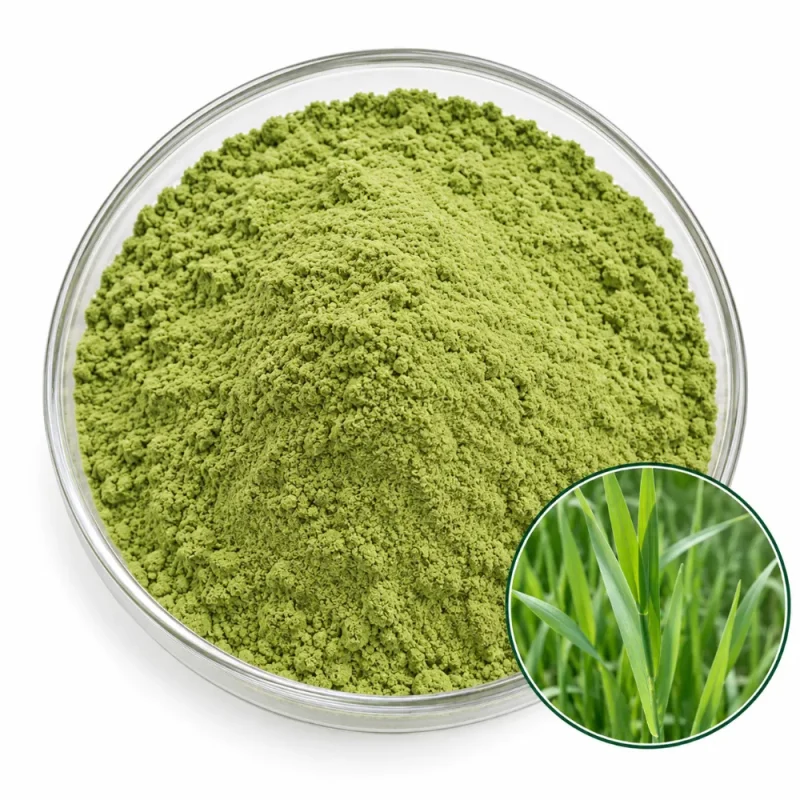
Lotus Leaf Powder

Broad, round leaves of the sacred lotus, Nelumbo nucifera, are dried and milled into a green powder with a faint tea-like aroma and a gently bitter taste. Only the leaf is used, so the seed, rhizome and flower of the lotus, which are separate ingredients, stay out of this material.

Lotus leaf powder is supplied at 80 mesh, with 40, 60 and 100 mesh optional, and has a mild, green and slightly waxy odor with a clean, faintly bitter taste. It is raw milled leaf rather than an extract, so inclusion rates are higher and the leaf character is stronger than in the extract forms.

Nelumbo nucifera Raw Material & Plant Part

The botanical name is Nelumbo nucifera Gaertn., family Nelumbonaceae, known as sacred lotus, Indian lotus or he ye. The raw material is the dried leaf, a large, round, shield-like blade on a long stalk that stands above or floats on the water. It is collected in summer, dried and milled, and the stalk is not part of the powder.

Lotus is often confused with water lilies. Nymphaea, the water lily, belongs to a different family, Nymphaeaceae, with leaves that have a cleft and flowers that sit on the water, while the lotus has unbroken, round leaves held high on stalks. The lotus plant also gives lotus seed, lotus root and lotus stamens, which are sold as other products and are not what this powder contains.

The leaf is known for aporphine alkaloids, among them nuciferine, and for flavonoids such as quercetin glycosides. The surface of the leaf is covered with a waxy layer that repels water, a feature that gave rise to the lotus effect in materials science.

Leaves are collected in summer when fully expanded but not yet yellowing, and are dried flat or cut before drying. The large blade gives a lot of low-density material, so the milled lotus leaf powder is voluminous, with a light green tone that deepens in coarser grades.
Lotus Leaf Powder vs Extract

FormWhat It IsChoose It When
Lotus Leaf PowderMilled dried leaf with its fiber and waxWhole-leaf inclusion in teas and green blends
Lotus Leaf Extract PowderWater-extracted leaf with the fiber removedA soluble format at a lower inclusion rate
Lotus Leaf Extract 1–5% NuciferineLeaf extract standardized to a nuciferine rangeA defined alkaloid marker is required
Nuciferine 98%Purified single alkaloid reference gradeAn isolated compound is needed

The leaf powder keeps the fiber, the leaf wax and the full set of constituents at their natural, lower concentration. Inclusion rates are therefore higher than for an extract, the green color is deeper, and the powder only disperses in liquids because the waxy particles resist wetting.

The extract powder is paler, dissolves more easily and has less leaf aroma. The standardized extract is chosen for its defined nuciferine content, and the 98% reference grade is a purified chemical ingredient. Choose the leaf powder when the whole leaf, with its green color and its tea-like character, is the specification.

The wax is a practical point. Lotus leaf powder floats on cold water and forms lumps unless it is wetted with stirring or premixed with a dry carrier, while an extract powder wets at once.

Lotus leaf powder also differs from the extract in visual impact. The powder gives specks of green in a dry blend, while the extract blends invisibly into the base, so the choice is made by appearance as well as by dissolving behavior.

Typical Specifications

Specification ItemProduct Information
Latin NameNelumbo nucifera
Plant PartLeaf & Herb
ProcessingMilled
Common NameLotus, sacred lotus, he ye
Raw MaterialDried leaf
Ingredient TypeMilled Powder
AppearanceGreen powder (natural color of the dried material)
Odor & TasteFaint tea-like, waxy odor; clean, slightly bitter taste
Solubility / DispersibilityWater Dispersible
Quality Parameters
Moisture (LOD)≤8.0%
Particle Size80 mesh (40 / 60 / 100 mesh optional)
Heavy MetalsLead ≤2 ppm · Arsenic ≤1 ppm · Cadmium ≤1 ppm · Mercury ≤0.1 ppm
MicrobiologyTPC ≤10,000 cfu/g · Yeast & Mold ≤1,000 cfu/g · E. coli Negative · Salmonella Negative/25 g
Shelf Life24 months in unopened original packaging, cool and dry storage

Application Areas

Lotus leaf tea blends

Lotus leaf is a traditional tea ingredient, and the powder serves tea-bag and instant blends with green tea, jasmine or hawthorn partners. A 40 or 60 mesh grade stays in the bag, and the clean, slightly bitter taste blends with a little sweetener or citrus.

Steamed rice and dough colorants

Rice, buns and noodles take the powder as a natural green tint with a mild, leafy aroma. The color is gentle and fades under long steaming or high heat, so inclusion is set after a cooking trial with the finished product.

Green leaf capsule fills

Capsule fills use the powder as a light, bulky green material with good flow. The waxy surface keeps particles from sticking, but the low density limits how much fits in a shell, so pilot fills confirm the real weight.

Dry herbal drink sticks

Drink sticks combine the powder with other green herbs or fruit powders. Because the wax repels water, the powder is premixed with a hydrophilic carrier such as a sweetener, so that it wets and disperses quickly in the cup.

Handling & Blending Notes

The waxy leaf surface changes how the powder is handled. Lotus leaf powder wets slowly, floats on water and forms lumps if poured into cold liquid in one lot. Premixing with a dry carrier, adding with stirring and using a slightly warm liquid are the usual remedies, and a finer mesh wets faster than a coarse one.

The powder is light, with a low bulk density, and dust appears at open scoops and hoppers. Covered transfer and local extraction keep the green dust off equipment and out of the air. Static charge builds in dry rooms and makes the fine grades cling to surfaces.

Moisture uptake is moderate, and sealed barrier packs prevent lumps. Chlorophyll fades under light and acid, so opaque packs and a cool, dry store protect the green tone, and trials at the finished pH confirm color stability. Opened containers are resealed at once, and the powder is stored away from strong odors that its wax-rich fiber could absorb.

Packaging matters because the leaf is voluminous. Lotus leaf powder needs larger inner bags than denser powders, and sealed liners inside cartons keep humidity out, with an opened bag folded tightly and clipped between uses.

Packaging & Commercial Supply

Essencefield supports product evaluation, formulation trials, commercial orders, and ongoing ingredient supply. Packaging, storage, and shipping arrangements are determined by product characteristics, order quantity, stability requirements, and destination-market needs.

Supply ItemGeneral Information
SampleAvailable upon request for formulation, testing, and supplier evaluation
Order Quantities100 g · 1 kg · 5 kg · 25 kg · 100 kg · 500 kg · Bulk
Sample Lead TimeTypically 5–7 days after sample confirmation
Production Lead TimeTypically 15–30 days after order and specification confirmation
PackagingSuitable protective inner packaging with bags, cartons, drums, or other appropriate outer packaging
StorageStore in tightly sealed, suitable protective packaging in a cool, dry environment. Protect from moisture, heat, and direct sunlight. Specific storage conditions follow the approved product specification.
DocumentationCOA · Product Specification · TDS · SDS · Applicable declarations (as applicable)

Final order quantities, lead times, packaging, documentation, and shipping arrangements are confirmed according to the selected product and commercial requirements.

Request Ingredient Specifications & Quote

Share your target specification, application, quantity, and documentation needs. We’ll help confirm suitable options, samples, and commercial supply details.