Maca Root Powder

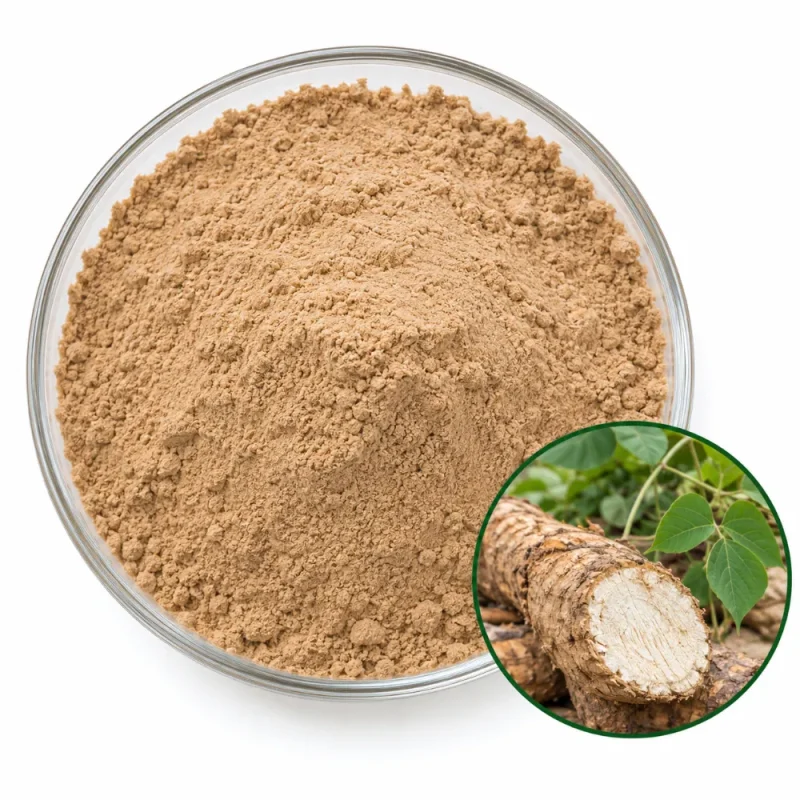
Washing, drying and milling the swollen root-hypocotyl of Lepidium meyenii, the Andean crucifer grown at high altitude, gives maca root powder. The powder is made from the root only and keeps its starch, fiber and its natural range of constituents.

It is supplied at 80 mesh, with 40, 60 and 100 mesh optional, as a brown powder with an earthy, malty odor and a mildly pungent taste. Unlike maca extract powder, a macamide-standardized extract or maca peptide powder, it is raw milled root, so inclusion rates are higher and the flavor is stronger.

Lepidium meyenii Raw Material & Plant Part

The scientific name is Lepidium meyenii Walp., family Brassicaceae, the same family as cabbage and mustard. The part used is the hypocotyl-root, the fleshy storage organ that is harvested, dried and milled. Leaves, flower stalks and seeds are not part of this raw material.

Maca occurs in several colors, such as yellow, red, black and purple, and these are types of one species. The color of the hypocotyl is linked to differences in metabolite profile, so a color name is not a substitute for the botanical name, and a specification should name the species and the part. The common name Peruvian ginseng is a trade phrase that does not link maca to true ginseng.

The dried root is starchy and pale inside with a brown skin, so the powder is brown with a fibrous, slightly sticky texture. Glucosinolates, typical of the crucifer family, contribute a mild pungency, and the starch gives a malty, sweet-earthy impression in warm drinks.

Traditional drying on open ground, followed by storage, is part of the root’s trade history.

In a specification, maca root powder should state the part in words, because maca leaves and seeds are different raw materials. The phrase dried hypocotyl-root, together with the species name and the mesh, makes the raw material unambiguous, and a buyer can add a color type if a particular type is wanted.

Maca Root Powder vs Extract

FormWhat It IsChoose It When
Maca Root PowderMilled dried root with its starch and fiberWhole-root inclusion in capsules and blends
Maca Extract PowderWater-extracted root powder with the insoluble starch and fiber removedA lower inclusion rate or a more soluble format
Maca Extract 0.6–1% MacamidesRoot extract standardized to a macamide rangeA defined marker content is required
Maca Peptide PowderHydrolyzed root peptide powderA peptide-defined, more soluble ingredient is needed

The root powder keeps starch, fiber and the whole range of constituents at their natural, lower concentration. Inclusion rates are higher than for an extract, the earthy and malty flavor is stronger and the powder only disperses in liquids. The water extract removes the insoluble starch and fiber, the standardized extract concentrates fat-soluble macamides, and the peptide powder is a hydrolyzed fraction. Choose maca root powder where the whole root is wanted, and an extract or peptide where concentration, a marker or solubility is needed.

Taste and starch separate the forms. Maca root powder is starchy, earthy and malty, so it thickens drinks and leaves sediment, while an extract powder is lighter in flavor and dissolves with less residue, and a peptide powder is more soluble still.

Typical Specifications

Specification ItemProduct Information
Latin NameLepidium meyenii
Plant PartRoot & Rhizome
ProcessingMilled
Common NameMaca, Peruvian maca
Raw MaterialDried hypocotyl-root
Ingredient TypeMilled Powder
AppearanceBrown powder (natural color of the dried material)
Odor & TasteEarthy, malty odor, mildly pungent
Solubility / DispersibilityWater Dispersible
Quality Parameters
Moisture (LOD)≤8.0%
Particle Size80 mesh (40 / 60 / 100 mesh optional)
Heavy MetalsLead ≤2 ppm · Arsenic ≤1 ppm · Cadmium ≤1 ppm · Mercury ≤0.1 ppm
MicrobiologyTPC ≤10,000 cfu/g · Yeast & Mold ≤1,000 cfu/g · E. coli Negative · Salmonella Negative/25 g
Shelf Life24 months in unopened original packaging, cool and dry storage

Application Areas

Tablets and filled capsules

Maca root powder is bulky and starchy, so capsule fills are volume-limited and tablets need a good binder. The dose is by weight in milligrams, and a pilot run shows how many capsules deliver the intended amount.

Smoothie and drink mixes

Dry mixes blend the powder with cocoa, banana, oat or nut flavors that match the malty note. The starch gives body and a slightly thick mouthfeel, and the drink is opaque, so a blender or a vigorous stir prevents lumps.

Bars, balls and baked snacks

In energy bars, date balls and baked snacks the powder adds an earthy-sweet base note. It tolerates dry baking steps, and taste tests show how much can be added before the mild pungency is noticed. Results are noted for each trial.

Gummies and chews

Chews carry the powder at moderate inclusion in a flavored base. The brown color is easy to hide in cocoa or caramel, and the powder is added late to limit heat exposure. The finished chew is tested for color and flavor drift.

Handling & Blending Notes

Starch is the key to handling. The powder is cohesive, takes up water from humid air and cakes in open packs, so moisture-barrier bags, dry weighing rooms and quick resealing keep it free-flowing. In warm drinks the starch swells, so a short stir and a hot water addition give a smooth, thick result without lumps.

Mesh choice changes the result. The 80 mesh grade suits capsules and most dry blends, 40 and 60 mesh stay in a tea bag, and 100 mesh suspends more evenly in a drink. Finer powder dusts more, so dust extraction at the weighing station reduces losses.

Flavor planning matters in liquids. The earthy, malty note pairs with cocoa, vanilla, cinnamon and caramel, and a small test series shows the threshold. As a raw root powder it is more exposed to humidity and odors than a dense extract, so opened containers are used promptly and stored in a cool, dry area away from strong aromas. Because the root is starch-rich, a heat step in production is kept short.

Storage after opening matters. Maca root powder is closed in its original barrier bag with the air pressed out and stored in a cool, dry room. It takes up moisture and odors quickly, and a separate shelf away from strong flavors keeps the maca root powder clean.

Packaging & Commercial Supply

Essencefield supports product evaluation, formulation trials, commercial orders, and ongoing ingredient supply. Packaging, storage, and shipping arrangements are determined by product characteristics, order quantity, stability requirements, and destination-market needs.

Supply ItemGeneral Information
SampleAvailable upon request for formulation, testing, and supplier evaluation
Order Quantities100 g · 1 kg · 5 kg · 25 kg · 100 kg · 500 kg · Bulk
Sample Lead TimeTypically 5–7 days after sample confirmation
Production Lead TimeTypically 15–30 days after order and specification confirmation
PackagingSuitable protective inner packaging with bags, cartons, drums, or other appropriate outer packaging
StorageStore in tightly sealed, suitable protective packaging in a cool, dry environment. Protect from moisture, heat, and direct sunlight. Specific storage conditions follow the approved product specification.
DocumentationCOA · Product Specification · TDS · SDS · Applicable declarations (as applicable)

Final order quantities, lead times, packaging, documentation, and shipping arrangements are confirmed according to the selected product and commercial requirements.

Request Ingredient Specifications & Quote

Share your target specification, application, quantity, and documentation needs. We’ll help confirm suitable options, samples, and commercial supply details.