Dehydrated Purple Sweet Potato Processing
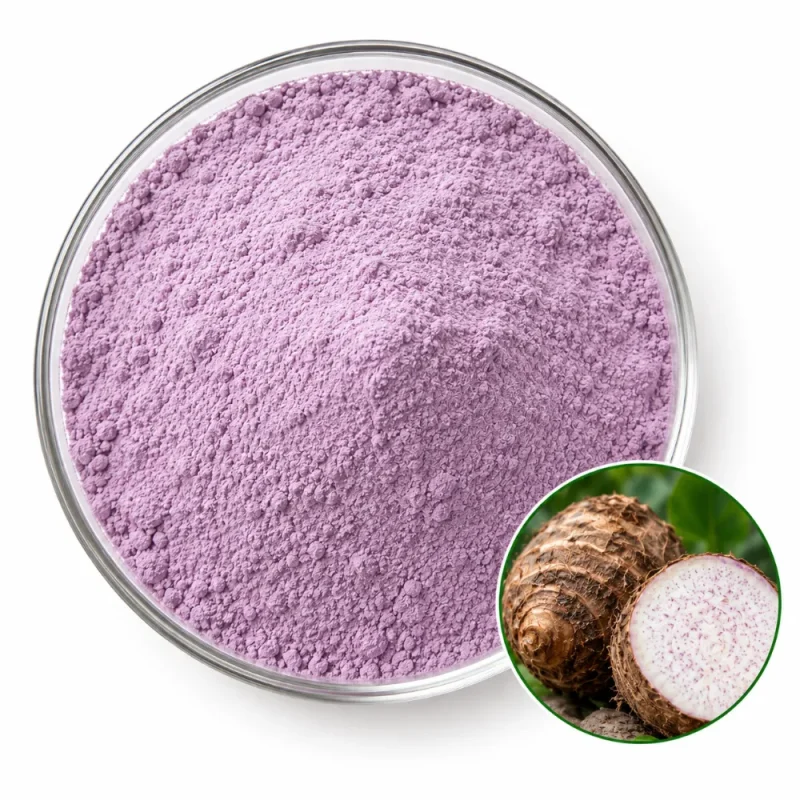
The species is Ipomoea batatas (L.) Lam., the same species as the common sweet potato, in cultivar groups with deep purple flesh. Purple sweet potato is not purple yam, Dioscorea alata, nor the purple Okinawan sweet potato by any other species name, though sellers mix these names. It is also unrelated to the common potato. The part used is the swollen root, peeled and cooked.
The raw material is fresh purple sweet potato root. Roots are washed, peeled, cooked or steamed, cut and dried in warm air, then ground into powder. Cooking gelatinizes the starch and softens the cell walls, which releases pigment and gives a fine, evenly colored powder that hydrates quickly. Hot-air drying deepens the purple toward a plum tone.
The anthocyanins of purple sweet potato are mostly acylated, meaning organic acid groups are attached to the pigment. That structure makes them more resistant to heat, light and pH change than the simple anthocyanins of raspberry or elderberry, which is why the color survives steaming and baking.
Roots are harvested in autumn and cured to build sweetness. The depth of purple varies with cultivar and growing conditions, and a deep-purple cultivar gives a powder with stronger tint. No cultivar is named, and the powder is judged by its shade and not by a pigment figure.