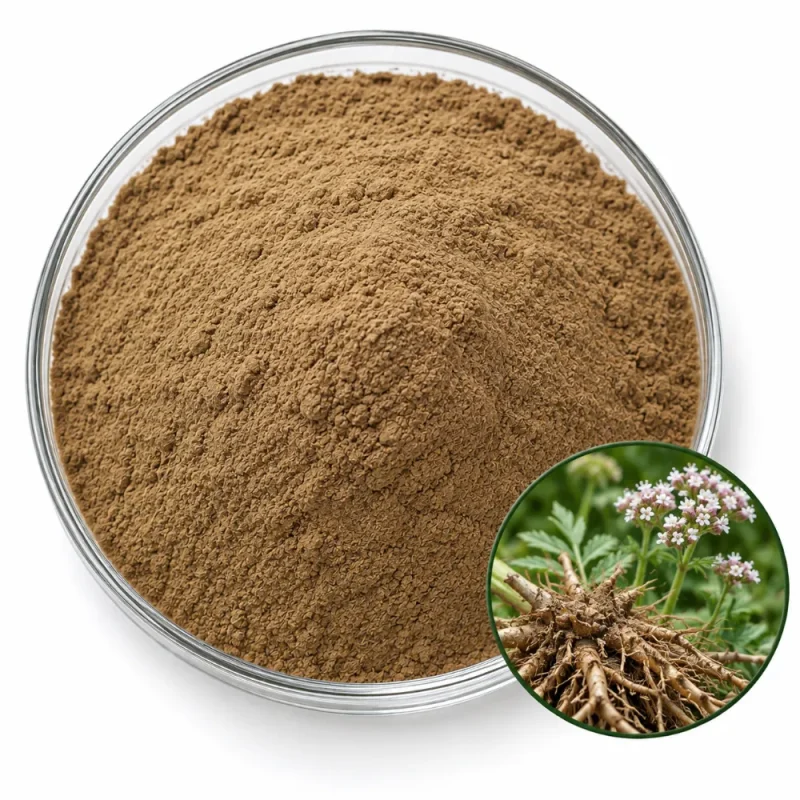
Valerian Root Powder

Roots and rhizomes of Valeriana officinalis are cleaned, dried and milled into this light brown powder, which carries the strong, earthy-musty smell that identifies valerian. Only the underground parts are used, so the aerial stems and flowers of the plant are not in the material.

Valerian root powder is supplied at 80 mesh, with 40, 60 and 100 mesh optional, and has a pungent, earthy odor and a bitter, slightly sharp taste. It is raw milled root rather than an extract, so inclusion rates are higher and the odor is stronger than in the extract forms.

Valeriana officinalis Raw Material & Plant Part

The botanical name is Valeriana officinalis L., family Caprifoliaceae, known as valerian or garden valerian. The raw material is the dried root and rhizome, harvested from mature plants, washed and dried carefully, then milled. Leaves, stems and flowers are not part of this powder.

The genus is large. Valeriana wallichii, Indian valerian, and Valeriana edulis, Mexican valerian, are traded under the same word but differ in chemistry, and they are reported to lack the characteristic valerenic acids of V. officinalis. The species therefore has to be stated, because root powders sold only as valerian can come from more than one plant.

Valerian chemistry is led by sesquiterpene acids such as valerenic acid, together with iridoid esters called valepotriates, which are unstable and break down on drying and storage. The strong smell comes from volatile esters and acids, including isovaleric acid, which develop as the root dries. These are named as traits of the plant and not as levels in this powder.

Roots are harvested once the plant has matured, then washed and dried at moderate temperature, because strong heat drives off the volatile oil fraction. The smell of the dried root is stronger than that of the fresh root, since the characteristic odor compounds form during drying.
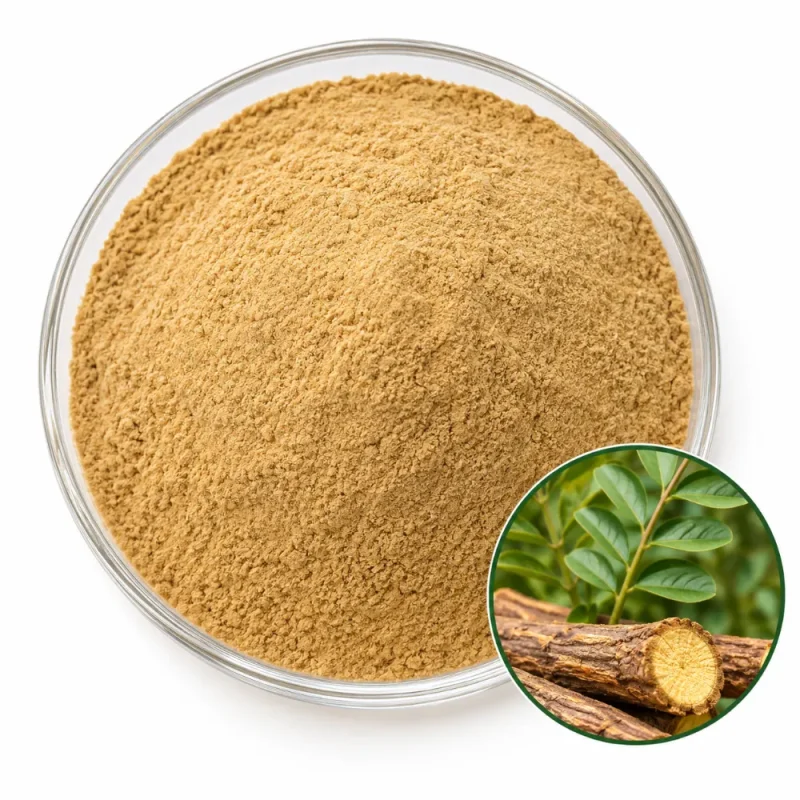
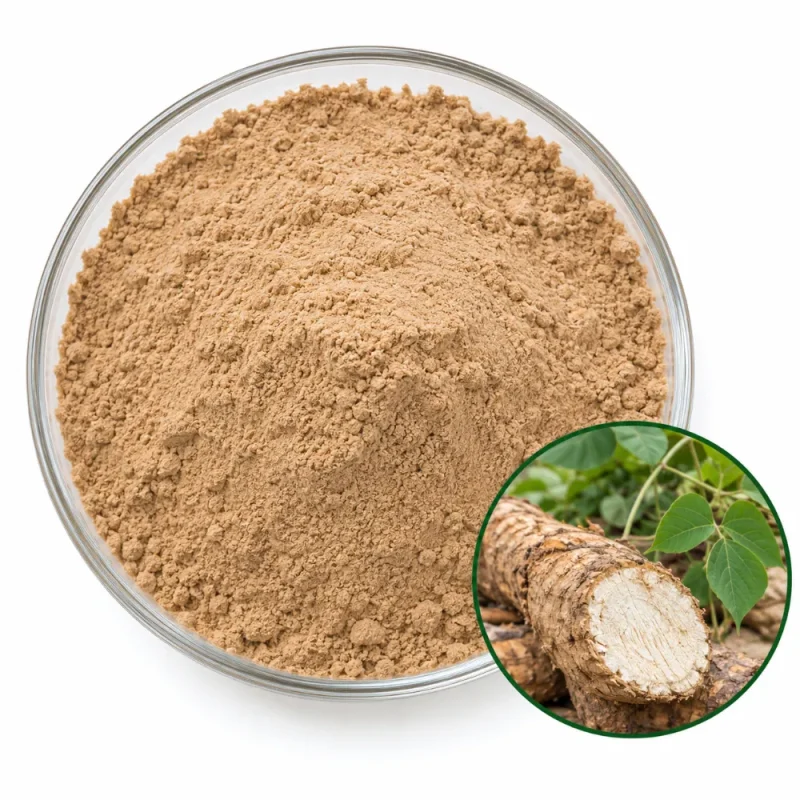
Valerian Root Powder vs Extract

FormWhat It IsChoose It When
Valerian Root PowderMilled dried root and rhizome with its fiberWhole-root inclusion in capsules and dry blends
Valerian Root Extract PowderWater-extracted root with the fiber removedA soluble format at a lower inclusion rate
Valerian Extract 0.8–1% Valerenic AcidsRoot extract standardized to a valerenic acid rangeA defined marker content is required

The root powder keeps the fiber, starch, the volatile oil fraction and the odor of the root, all at their natural lower concentration. Inclusion rates are higher than for an extract, and the smell is stronger and persists in the finished blend.

The extract powder is easier to dissolve and has a lighter smell, since a water extract does not carry the volatile fraction as completely. The standardized extract is selected for its marker and not for its sensory character. Choose the powder when the whole root is the specification and the odor is accepted as part of it.

Sensory impact is the clearest difference between the forms. Valerian root powder contributes a heavy, earthy odor to anything it touches, and capsule and tablet formats exist largely to contain it. An extract powder is also pungent but carries less bulk, so the same odor is delivered through a smaller amount of material. Formulators who need a lower-odor option look at the extract before the powder.

Typical Specifications

Specification ItemProduct Information
Latin NameValeriana officinalis
Plant PartRoot & Rhizome
ProcessingMilled
Common NameValerian, garden valerian
Raw MaterialDried root and rhizome
Ingredient TypeMilled Powder
AppearanceLight Brown powder (natural color of the dried material)
Odor & TastePungent, earthy odor; bitter taste
Solubility / DispersibilityWater Dispersible
Quality Parameters
Moisture (LOD)≤8.0%
Particle Size80 mesh (40 / 60 / 100 mesh optional)
Heavy MetalsLead ≤2 ppm · Arsenic ≤1 ppm · Cadmium ≤1 ppm · Mercury ≤0.1 ppm
MicrobiologyTPC ≤10,000 cfu/g · Yeast & Mold ≤1,000 cfu/g · E. coli Negative · Salmonella Negative/25 g
Shelf Life24 months in unopened original packaging, cool and dry storage

Application Areas

Odor-managed capsule fills

Capsules are the common format for valerian root powder, because a shell hides the smell until the pack is opened. The odor still escapes from the bottle, so closures with a good seal and desiccants are tested during stability trials.

Herbal tea blends

Tea blends use coarse 40 or 60 mesh valerian root with mint, lemon balm or chamomile. Those partners cover the earthy smell, and the root is kept at a low share, since its bitter taste dominates the infusion quickly.

Powder sticks with strong flavors

Stick packs pair the root powder with cocoa, vanilla or malt to cover the odor. The fiber leaves sediment in the cup, so the format suits thick, opaque drinks, and the mix is stirred well before drinking.

Tablet blends

Tablets press the powder with a binder and a coating. A film or sugar coat limits odor release, and a dry tableting room keeps the sticky root fiber from clumping on the punches. Hardness is checked after storage, because the fiber slowly takes up moisture.

Handling & Blending Notes

The odor is the main handling point. Valerian root powder smells strongly even in a closed room, and the smell transfers to neighboring materials, packaging and equipment. Dedicated scoops, covered hoppers and a separate weighing area keep the odor from crossing into unflavored products, and used containers are aired or washed with care.

The root fiber is starchy and slightly sticky when warm and humid. The powder cakes in open bags, builds up on tablet punches and bridges in narrow hoppers, so dry rooms, barrier bags and short exposure times are normal controls. Fine fractions dust at transfer points, and local extraction handles that.

Mesh choice follows the format. The 80 mesh grade fits capsules and blends, the 40 and 60 mesh grades suit tea bags, and the 100 mesh grade disperses better in a drink. The odor rises as the surface area increases, so finer grades smell stronger. Opened containers are used quickly and stored cool, dry and sealed.

Storage after opening follows one rule: reseal at once. Each opening lets part of the volatile odor into the room and lets humid air in, so dividing a large pack into smaller working containers keeps the main stock closed and the odor inside.

Packaging & Commercial Supply

Essencefield supports product evaluation, formulation trials, commercial orders, and ongoing ingredient supply. Packaging, storage, and shipping arrangements are determined by product characteristics, order quantity, stability requirements, and destination-market needs.

Supply ItemGeneral Information
SampleAvailable upon request for formulation, testing, and supplier evaluation
Order Quantities100 g · 1 kg · 5 kg · 25 kg · 100 kg · 500 kg · Bulk
Sample Lead TimeTypically 5–7 days after sample confirmation
Production Lead TimeTypically 15–30 days after order and specification confirmation
PackagingSuitable protective inner packaging with bags, cartons, drums, or other appropriate outer packaging
StorageStore in tightly sealed, suitable protective packaging in a cool, dry environment. Protect from moisture, heat, and direct sunlight. Specific storage conditions follow the approved product specification.
DocumentationCOA · Product Specification · TDS · SDS · Applicable declarations (as applicable)

Final order quantities, lead times, packaging, documentation, and shipping arrangements are confirmed according to the selected product and commercial requirements.

Request Ingredient Specifications & Quote

Share your target specification, application, quantity, and documentation needs. We’ll help confirm suitable options, samples, and commercial supply details.