
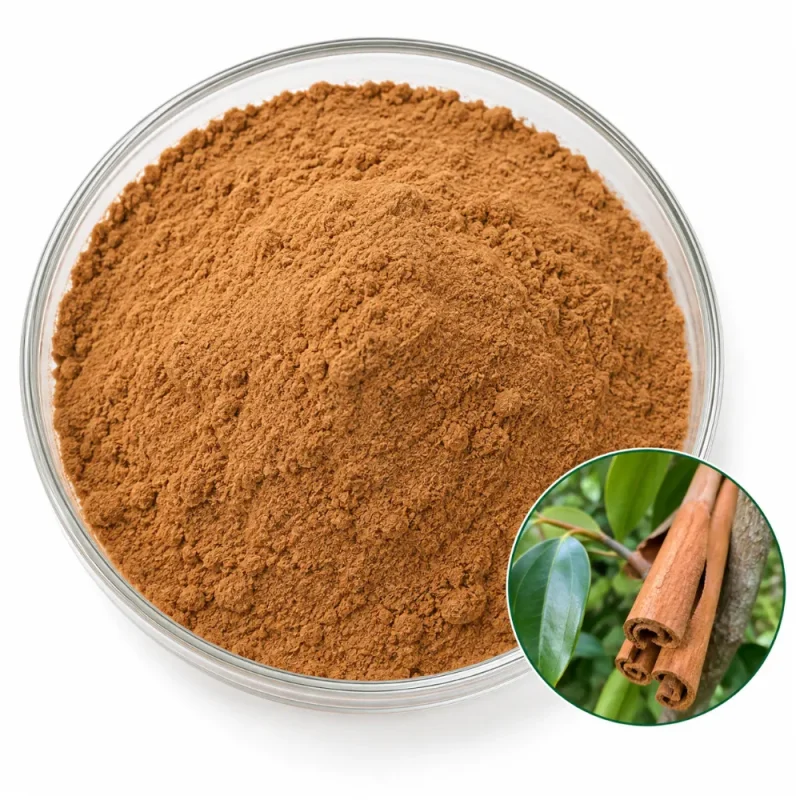
Polyphenol Standardization & Grades
In cinnamon bark the polyphenols are mostly procyanidins, chains of catechin and epicatechin units, many of them of the A-type with a double linkage that is characteristic of the genus. The bark also holds phenolic acids and flavan-3-ols. The aromatic aldehyde cinnamaldehyde, which carries the odor, is a volatile oil constituent and is not part of the polyphenol figure. The botanical entity is Cinnamomum verum J.Presl, a tree of the Lauraceae, and the part used is the inner bark.
| Grade | Assay & Method | Where It Fits |
|---|---|---|
| 5% Polyphenols | UV, Folin-Ciocalteu | Drink powders and tea-style mixes |
| 15% Polyphenols | UV, Folin-Ciocalteu | Capsules and tablets with small fill |
The two grades differ by a factor of three. The 15% grade is a polyphenol concentrate that supplies a defined load from a small fill. The 5% grade is closer to the bark, with more of the sugars and mucilage, so Ceylon cinnamon extract at this level suits drink powders and tea-style mixes. True cinnamon and cassia are different products. The cassia species have a thicker, harder bark and a stronger, harsher flavor, and they are supplied as the Cinnamon Extract 10–30% Polyphenols. The names Ceylon cinnamon and true cinnamon refer to Cinnamomum verum only. Ceylon cinnamon extract at 15% is the more concentrated of the two grades, and Ceylon cinnamon extract at 5% is the fuller one. Sri Lanka is the traditional source of the bark, where the bark is rolled into thin quills.


