
Custom Botanical Ingredient Development
When standard grades don’t fit, we develop custom botanical extracts with our approved manufacturing partners, working on target markers, extract ratios and solubility from feasibility to scale-up.
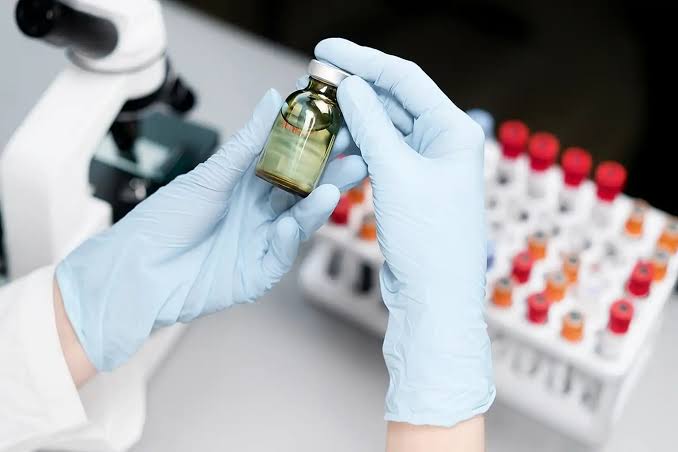
When Custom Development Makes Sense
It’s useful when no standard grade delivers the required assay, extract profile, solubility, physical property or application performance. Examples: a higher marker level, better dispersion, or a physical form that isn’t commercially available. A custom ingredient should solve a defined need and stay practical for repeat production. If an existing grade already fits, Specification & Grade Matching is the faster route.
Target→Feasibility→Prototype→Pilot→Verify→Scale
Define the Target Profile
- Botanical species and plant part
- Extract type or ratio
- Target marker and assay
- Physical properties and carrier
- Solubility or dispersibility
- Application and commercial volume
Many projects start with part of this: a reference COA, a benchmark material, a formulation problem or a target assay is often enough for a feasibility review. We then sort out which requirements are essential and which are flexible.
Evaluate the Botanical Source
Species, plant part, origin, natural marker level and material quality set what the extract can achieve. Raw materials vary between origins, harvests and lots, so the route must handle that variation. Availability and continuity of supply matter too; difficult starting materials can be sourced in parallel through Ingredient Sourcing.
Assess Feasibility
The question is whether the extract can be made consistently and at a practical scale. A viable processing route balances assay, yield, stability, physical properties, complexity, scalability and cost. Some targets are achievable but impractical because of low yield or cost; others need refining.
Define the Specification
Marker and assay
For standardized extracts, a defined constituent such as polyphenols, flavonoids, anthocyanins, saponins or polysaccharides, always stated with the test method.
Extract ratio
Our listed extracts are 10:1, and other ratios can be developed. A ratio doesn't show active content, so a marker-based target is clearer where that matters.
Physical properties and solubility
Particle size, density, flow, carrier, dispersibility and solubility, evaluated in your formula, not in isolation. This matters especially for Functional Beverages.
Prototype, Pilot, Verify
01 Prototype
A bench-scale sample shows the gap between the first result and the target profile; analytical and formulation feedback guides refinement.
02 Pilot
Checks reproducibility as batch size grows. Extraction, concentration, drying, yield, handling and assay can all shift at scale.
03 Verify
Confirms identity, marker or assay, method, physical properties and project limits; results by different methods may not be comparable.
Once approved, the final specification becomes the reference for all production batches.
Scale Up for Commercial Production
The goal is a reproducible commercial ingredient, not a one-time sample. At this stage the question changes from “can it be made?” to “can it be made consistently?” Raw-material availability, operating conditions, yield and batch consistency become central. Approved ingredients move into Sample & Bulk Supply.
The same pathway supports new extracts, modified grades, application-specific ingredients and proprietary specifications.
Start Your Custom Ingredient Project
You don’t need a finished specification. A target assay, reference COA, benchmark sample or formulation challenge is enough for a first review.