
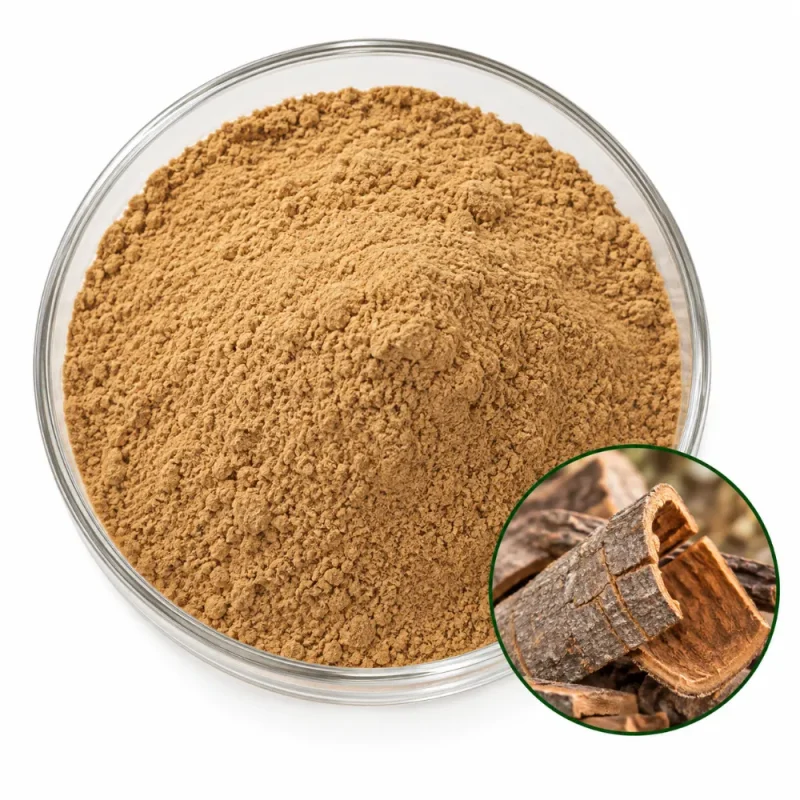
Honokiol & Magnolol Standardization & Grades
Honokiol and magnolol are the two characteristic lignans of magnolia bark. They are isomers of each other: both are biphenyl compounds carrying two allyl groups and two hydroxyl groups, and they differ only in where those groups sit on the rings. The grade sums the two compounds because the bark always carries both and because HPLC resolves them as separate peaks. The botanical entity is Magnolia officinalis Rehder & E.H.Wilson, and the part used is the bark.
| Grade | Assay & Method | Where It Fits |
|---|---|---|
| 10% Honokiol + Magnolol | HPLC | Dry blends keeping the bark matrix |
| 95% Honokiol + Magnolol | HPLC | Softgels and capsules with minimal fill |
Grade choice follows dose, fill weight and the amount of bark matrix a formula should carry. The 95% grade carries nearly ten times the lignan load per gram of the 10% grade. It reaches a target in a very small fill, and it behaves more like an isolated compound blend than like a botanical extract. The 10% grade keeps the other bark constituents, including alkaloids and volatile oil fragments, and is bulkier. The same bark is supplied as the unstandardized Magnolia Officinalis Extract Powder, the milled Magnolia Bark Powder and the purified Honokiol 98%.
The name of this product also mentions total phenols, but the grade is defined by the HPLC sum of the two lignans. A total phenol reading by colorimetry counts every phenolic compound in the bark and is not interchangeable with it. Buyers who compare magnolia bark extract quotes should check which method sits behind each percentage.


