
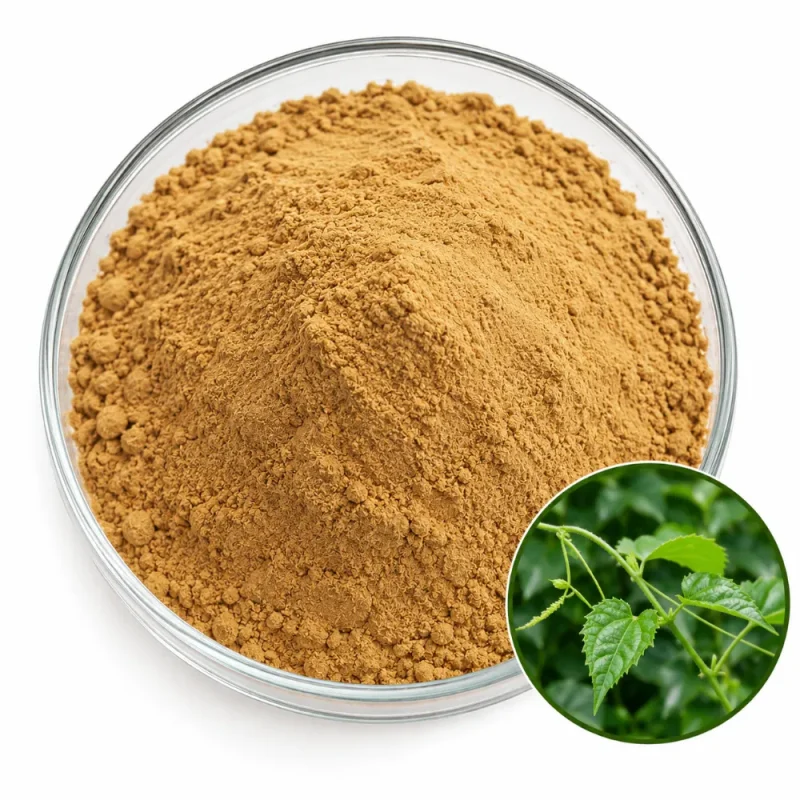
DHM Standardization & Grades
DHM stands for dihydromyricetin, also known as ampelopsin, a dihydroflavonol that differs from the flavonol myricetin by one saturated bond in the middle ring. That small difference makes it less colored, more prone to oxidation and more stable in acid than in neutral solution. It is the dominant flavonoid of vine tea leaf and the standardization target, because it is abundant and resolved cleanly by HPLC. The botanical entity is Ampelopsis grossedentata (Hand.-Mazz.) W.T.Wang, and the part used is the leaf.
| Grade | Assay & Method | Where It Fits |
|---|---|---|
| 20% DHM | HPLC | Tea-style drink mixes and blends |
| 80% DHM | HPLC | Capsules and tablets with small fill |
Grade choice follows dose, fill weight and the amount of leaf matrix a formula should carry. The 80% grade holds four times the DHM load per gram of the 20% grade, so a capsule reaches its target with a much smaller fill. The 20% grade keeps more of the other leaf flavonoids and the sweetish, slightly bitter character of the tea, and it dissolves better in hot water. Siblings from the same plant are the unstandardized Vine Tea Extract Powder and the purified Dihydromyricetin (DHM) 98%.
Buyers who compare vine tea extract quotes should check the species and the compound name. DHM, ampelopsin and dihydromyricetin refer to one compound, while myricetin is a different molecule and the root of a related Ampelopsis species is a separate drug. A named species, the leaf as the stated part and an HPLC method make the figure comparable.
GBIF treats the plant as a synonym of Nekemias grossedentata, so searches for either name refer to the same vine. The name Ampelopsis grossedentata is kept here because it remains the common trade and pharmacopoeial name.


