
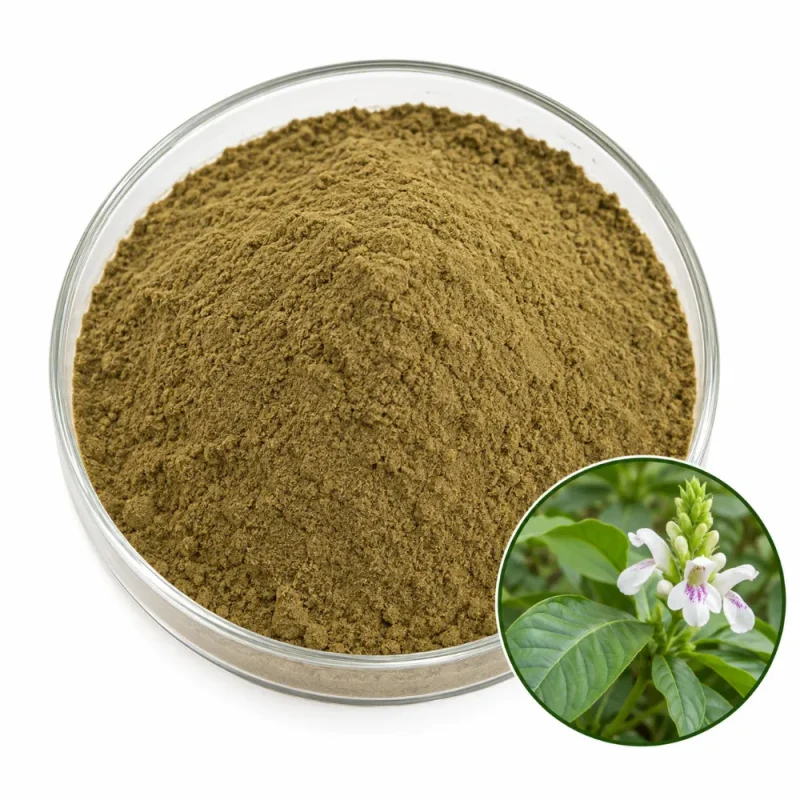
Vasicine Standardization & Grades
Vasicine, also known as peganine, is the lead alkaloid of vasaka leaf: a quinazoline alkaloid with a tricyclic ring system and a hydroxyl group. It is the standardization target because it is characteristic of the genus and resolved cleanly by HPLC. The leaf also carries vasicinone, vasicinol and other related alkaloids. The botanical entity is Adhatoda vasica Nees, a name that GBIF treats as a synonym of Justicia adhatoda, and the part used is the leaf.
The specification has a single grade, so there is no ladder to choose from, and the decision concerns dose planning and matrix. At 1% vasicine, the Adhatoda vasica powder is a whole-leaf extract in which the marker is a minor component. A capsule needs a generous fill to reach a target, and the remaining weight consists of chlorophyll, tannins, flavonoids and soluble sugars. A second measure, total alkaloids, is recorded in the data but is not published as a separate figure here.
Siblings from the same plant are the unstandardized Adhatoda Vasica Extract Powder, which carries no alkaloid figure, and the purified Vasicine 90–98%, which is the compound itself and not an extract. A formulator who needs a high vasicine load per gram should consider the purified compound. One who wants the leaf profile around a defined alkaloid level will find this grade a better fit.
Buyers who compare vasaka extract quotes should check the name, the part and the compound. Vasicine, vasicinone and the total alkaloids are three different numbers, and the leaf and root of the plant differ in their alkaloid content. The part is therefore as important as the percentage when two quotes are placed side by side.


