
Polyphenol Standardization & Grades
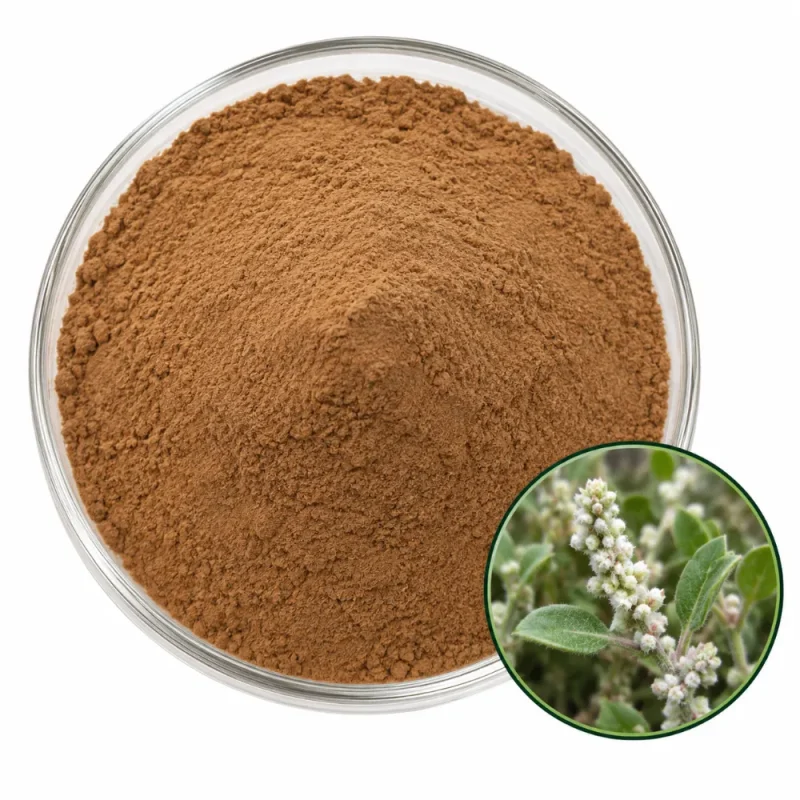
The phenolic content of this herb is a mixed class dominated by flavonol glycosides, mainly of kaempferol and quercetin, accompanied by phenolic acids. The grade sums the class without naming one compound, because the herb has no single dominant marker. The botanical entity is Aerva lanata (L.) Juss. ex Schult., a name that GBIF lists as a synonym of Ouret lanata. The part used is the aerial herb, which the master data groups with leaf and herb.
A 3% polyphenol content is modest, and the powder is best viewed as a whole-herb extract with a defined phenolic floor, not a polyphenol concentrate. The remaining weight is made up of soluble carbohydrates, minerals, small amounts of alkaloids and sterols, and the pale pigments of the herb. The page carries one grade, so there is no ladder of tiers, and the decision concerns dose, color and taste.
No sibling product from the same plant is currently listed in the catalog, and the nearest relatives for a formulator are other herbal extracts graded by total polyphenols. A formulator who needs a much higher phenolic load should consider an extract of a polyphenol-rich botanical, such as tea or apple. One who wants the character of this herb will value the whole-herb profile at a defined level.
Buyers who compare Aerva lanata extract quotes should check the name carefully. The Sanskrit name pashanbheda is applied to several unrelated plants, among them Bergenia ligulata and Aerva lanata, and the two have entirely different chemistry. A botanical name, the part and the method are the items that make a polyphenol figure comparable between suppliers.


