
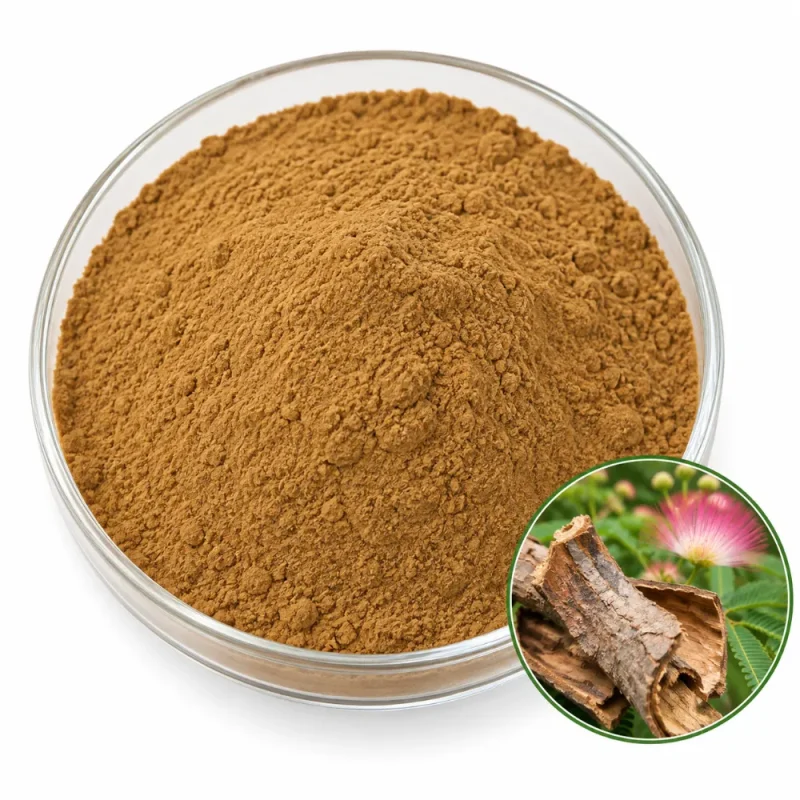
Saponin Standardization & Grades
The saponins of silk tree bark are oleanane-type triterpenoid glycosides, many of them acylated and carrying long sugar chains. The characteristic members are the julibrosides, which gave the species its name in the literature. The grade sums the saponin class, because the bark carries a family of related structures. The botanical entity is Albizia julibrissin Durazz., and the part used is the bark, which the master data groups with bark and stem.
| Grade | Assay & Method | Where It Fits |
|---|---|---|
| 5% Saponins | UV | Dry compounds and tea-style blends |
| 20% Saponins | UV | Capsules and drink sticks with small fill |
Grade choice follows dose, fill weight and astringency. The 20% grade holds four times the saponin load per gram of the 5% grade, so a capsule reaches its target with a smaller fill. The 5% grade keeps more of the bark tannins, lignan glycosides and flavonoids and tastes drier and more astringent. Siblings of the same tree are the unstandardized Albizia Julibrissin Extract Powder and the milled Albizia Bark Powder.
A secondary marker group, the julibrosides, is recorded in the data and is described here without numbers. Buyers who compare quotes should note that a total saponin figure by UV and a julibroside figure by chromatography are different measurements and should not be placed side by side.
Bark and flower are two distinct raw materials with different traditional uses and different chemistry, and the flowers are sold separately as he huan hua. A bark extract carries the saponin and tannin profile of the stem, while the flower is richer in flavonoids. The part is therefore as important as the percentage when two quotes are compared.


