
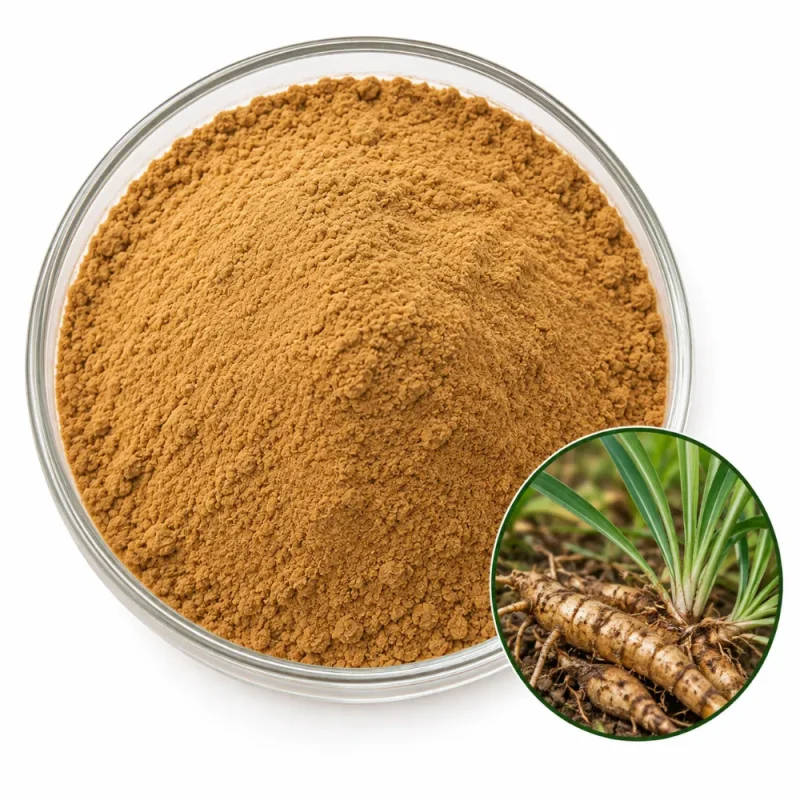
Saponin Standardization & Grades
The saponins of zhi mu are steroidal glycosides, built on the sapogenin sarsasapogenin. The rhizome carries two structural types: furostanol saponins such as timosaponin BII, which are water soluble, and spirostanol saponins such as timosaponin AIII, which are less polar. The grade sums the saponin class, because the rhizome carries both types and colorimetric analysis reads them together. The botanical entity is Anemarrhena asphodeloides Bunge, and the part used is the rhizome.
| Grade | Assay & Method | Where It Fits |
|---|---|---|
| 20% Saponins | UV | Tea-style blends and dry compounds |
| 60% Saponins | UV | Capsules and drink sticks with very small fill |
Grade choice follows dose, fill weight and taste. The 60% grade holds three times the saponin load per gram of the 20% grade, so it reaches a target in a very small fill, and it is paler and less sweet. The 20% grade keeps more of the xanthone mangiferin, the polysaccharides and the sugars and gives a darker, sweeter and more hygroscopic powder. Siblings from the same rhizome are the unstandardized Anemarrhena Rhizome Extract Powder, the milled Anemarrhena Rhizome Powder and the aglycone Sarsasapogenin 98%.
A secondary marker, timosaponin BII, is recorded in the data and is described here without numbers. Buyers who compare Anemarrhena extract quotes should ask whether the figure is a UV class total or an HPLC value for named saponins, because the first is always larger than the second and the two cannot be converted.
The word anemarrhena should not be confused with anemone. The two are unrelated plants in different families, and Anemone roots contain irritant compounds that are absent from zhi mu. The botanical name and the rhizome as the stated part keep the identity clear.


