
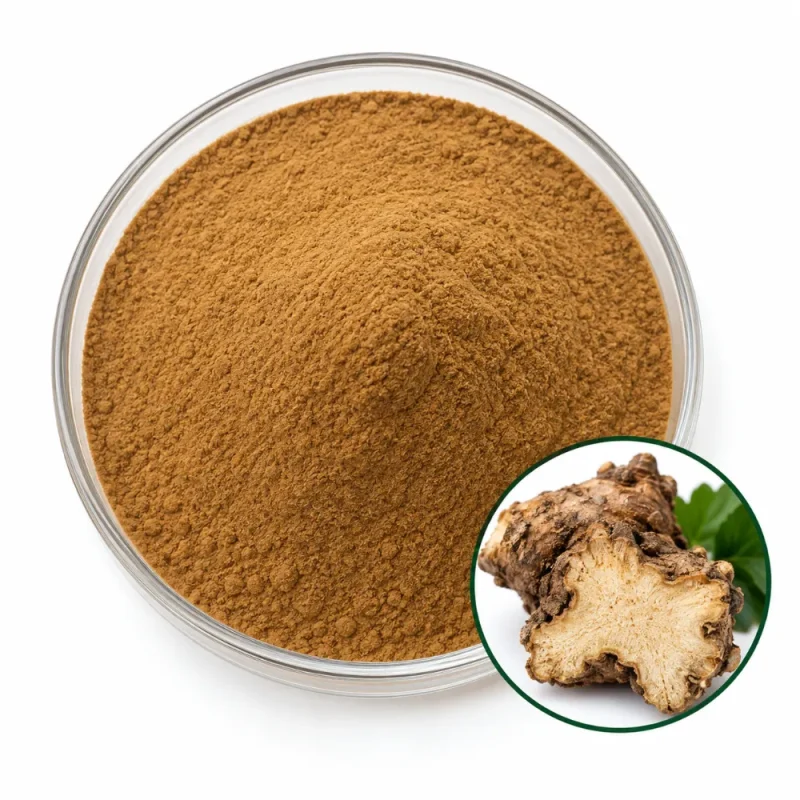
Sesquiterpene Standardization & Grades
Sesquiterpenes are terpenoids built from three isoprene units, and the rhizome of bai zhu is rich in the lactone-type members atractylenolide I, II and III together with the furan sesquiterpene atractylon. The grade sums the sesquiterpene class, because the rhizome carries several of these structures and because the same compounds convert into one another during drying and storage. The botanical entity is Atractylodes macrocephala Koidz., and the part used is the rhizome.
| Grade | Assay & Method | Where It Fits |
|---|---|---|
| 2% Sesquiterpenes | Total sesquiterpene basis | Dry blends keeping the rhizome matrix |
| 10% Sesquiterpenes | Total sesquiterpene basis | Capsules and tablets with small fill |
Grade choice follows dose, fill weight and the amount of rhizome matrix a formula should keep. The 10% grade carries five times the sesquiterpene load per gram of the 2% grade, so a capsule reaches its target in a smaller fill. The 2% grade retains the polysaccharides and amino acids of the rhizome and is paler, sweeter and bulkier. Siblings from the same plant are the unstandardized Atractylodes Macrocephala Extract Powder, the milled Atractylodes Macrocephala Rhizome Powder and the purified Atractylenolide I 98%.
Two further markers, atractylenolide I and III, are recorded in the data and are described here without numbers. The percentage is stated on the total sesquiterpene basis and should be compared only with figures that use the same basis.
The terms bai zhu and cang zhu are often confused. They are two species of the same genus, with different volatile oil compositions, different traditional preparations and different chemical markers. A botanical name and the rhizome as the stated part keep the identity of this product clear.


