
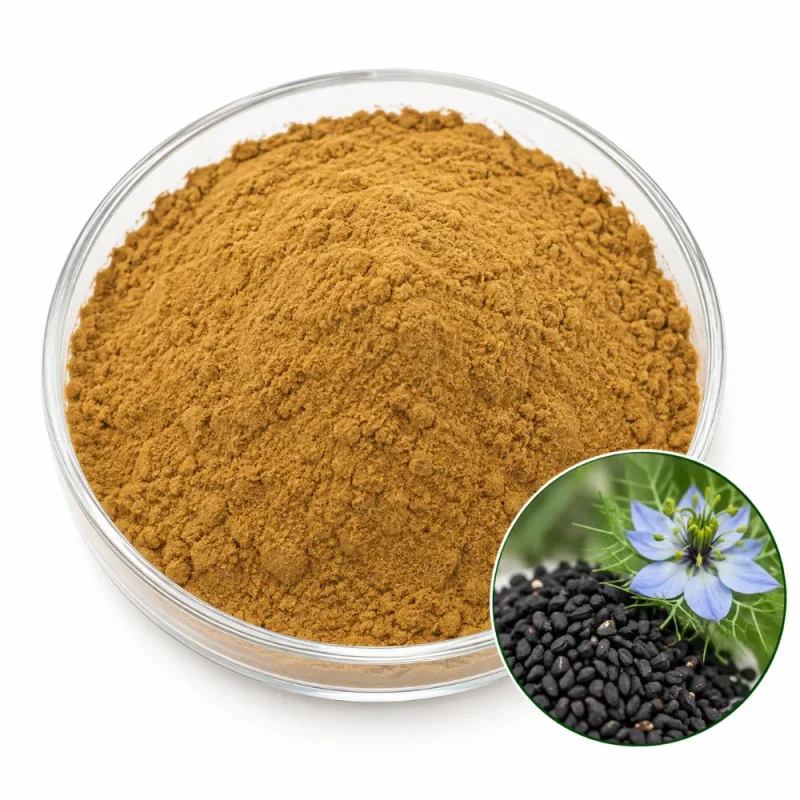
Thymoquinone Standardization & Grades
Thymoquinone is a small benzoquinone with a methyl and an isopropyl group, and it is the best known component of the volatile and fixed oil of black seed. It is the standardization target because it is characteristic of the species and can be measured by HPLC. The seed also holds p-cymene, carvacrol, thymohydroquinone and the fixed oil with its linoleic acid. The botanical entity is Nigella sativa L., and the part used is the seed.
| Grade | Assay & Method | Where It Fits |
|---|---|---|
| 5% Thymoquinone | HPLC | Dry blends keeping the seed matrix |
| 20% Thymoquinone | HPLC | Softgels, capsules and tablets with small fill |
Grade choice follows dose, fill weight and the character of the seed. The 20% grade carries four times the thymoquinone load per gram of the 5% grade, so a capsule reaches its target in a smaller fill, and the powder is oilier and more pungent. The 5% grade retains more of the seed protein, fixed oil and fiber-derived material and is bulkier and milder. Siblings from the same seed are the unstandardized Nigella Sativa Seed Extract Powder, the milled Black Cumin Seed Powder and the purified Thymoquinone 98%.
The common name causes frequent confusion. Black cumin is also applied to Bunium persicum, a different aromatic seed of the same family as cumin, and cumin itself is a distinct spice. Buyers who compare thymoquinone quotes should confirm the species, the seed as the stated part and the method, because a thymoquinone figure in an oil and one in a dry powder are not directly comparable.
The data for this plant show that thymoquinone content in the seed varies widely, so an extract graded to a percentage gives the formulator a defined starting point. Without it, a seed powder or an unstandardized extract can differ from lot to lot by a large factor.


