
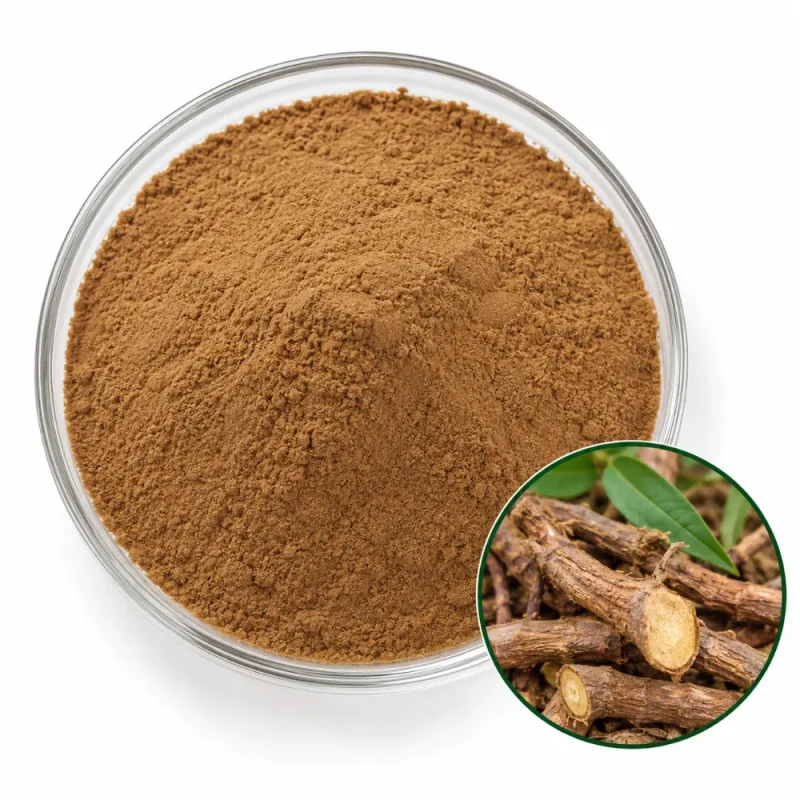
Saponin Standardization & Grades
Hemidesmus indicus (L.) R.Br. belongs to the milkweed family, and its root is rich in an aromatic principle, 2-hydroxy-4-methoxybenzaldehyde, which gives the fresh root a vanilla-like note. Alongside it the root carries triterpenoid constituents such as lupeol and a range of glycosides. The extract is standardized to saponins as a group, giving buyers one figure for the glycoside fraction that is soluble in water and responsible for much of the foaming behavior of the root extract.
The grade is a single 30% figure, which keeps ordering simple: each lot is measured against the same target and the same method. A single grade also removes the question of which level is meant when a formula states a saponin amount. The same root is supplied as a 10:1 ratio extract without a marker figure, the Hemidesmus Indicus Extract Powder. That product is the one to consider when a whole-root profile matters more than a defined saponin figure.
Because the Indian sarsaparilla standardization is to a group of compounds and not to one molecule, the number describes the saponin fraction only. It should not be read as a figure for the aromatic aldehyde, the lupeol-type triterpenoids or any single component, none of which is part of the specification.
The standardization also leaves room for a clear comparison with the supplier of any other root extract in the same family. Where a formula combines this extract with other roots rich in saponins, the totals add up in the marker fraction, so the combined saponin load of a finished product should be calculated from each ingredient figure and not from the label of one component.


