
Corosolic Acid Standardization & Grades
Corosolic acid is 2α-hydroxyursolic acid, a pentacyclic triterpenoid carboxylic acid of the ursane type. In loquat leaf it accompanies ursolic acid, oleanolic acid, maslinic acid and tormentic acid, which together form the triterpenoid acid fraction of Eriobotrya japonica (Thunb.) Lindl. A loquat leaf extract is standardized to corosolic acid because it is a defined, measurable member of that fraction, and the grade figure tells buyers how concentrated the extract is in this one acid.
| Grade | Assay & Method | Where It Fits |
|---|---|---|
| 1% Corosolic Acid | HPLC | Blends, oil-based fills |
| 20% Corosolic Acid | HPLC | Capsules and tablets, small fill weight |
The span is wide, so grade choice follows dose and carrier. At 20% the extract carries twenty times the corosolic acid of the 1% grade per gram, which permits a compact capsule. At 1% the powder keeps more of the leaf matrix, including phenolic compounds and fiber, and behaves like a leaf extract in blends. The same leaf is also supplied as a 10:1 ratio extract without a marker figure, the Loquat Leaf Extract Powder, and as a milled leaf, Loquat Leaf Powder. The fruit, Loquat Fruit Powder, is a separate material.
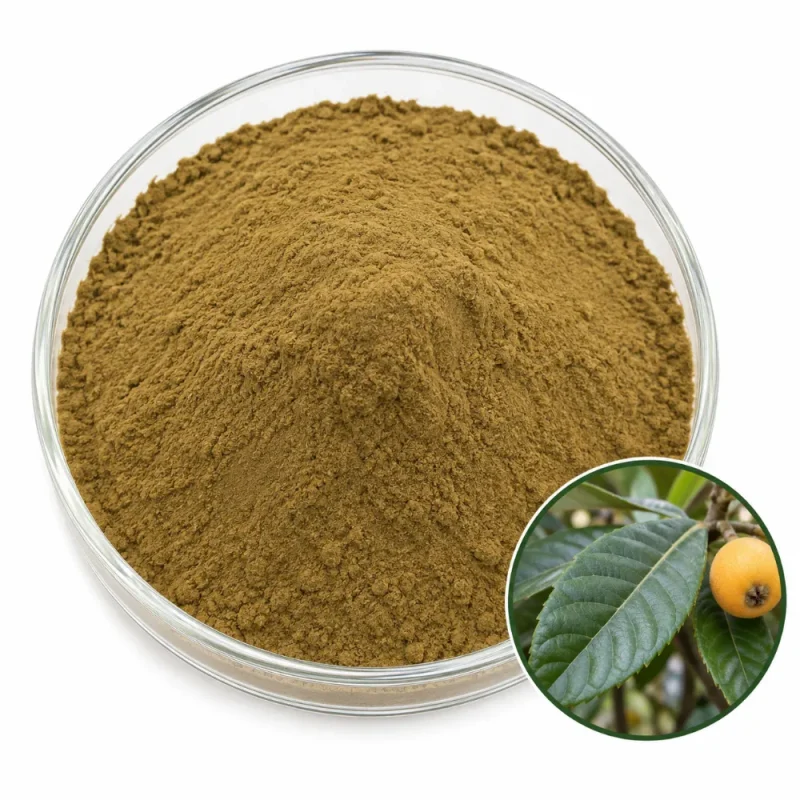
The leaf is the part used. Loquat leaves are thick, leathery and evergreen, and they are harvested from mature trees, brushed free of the rusty hairs on the underside and dried before extraction. Younger leaves and older leaves differ in their triterpenoid acid content, so the harvest age is part of the raw-material control for a loquat leaf extract.


