
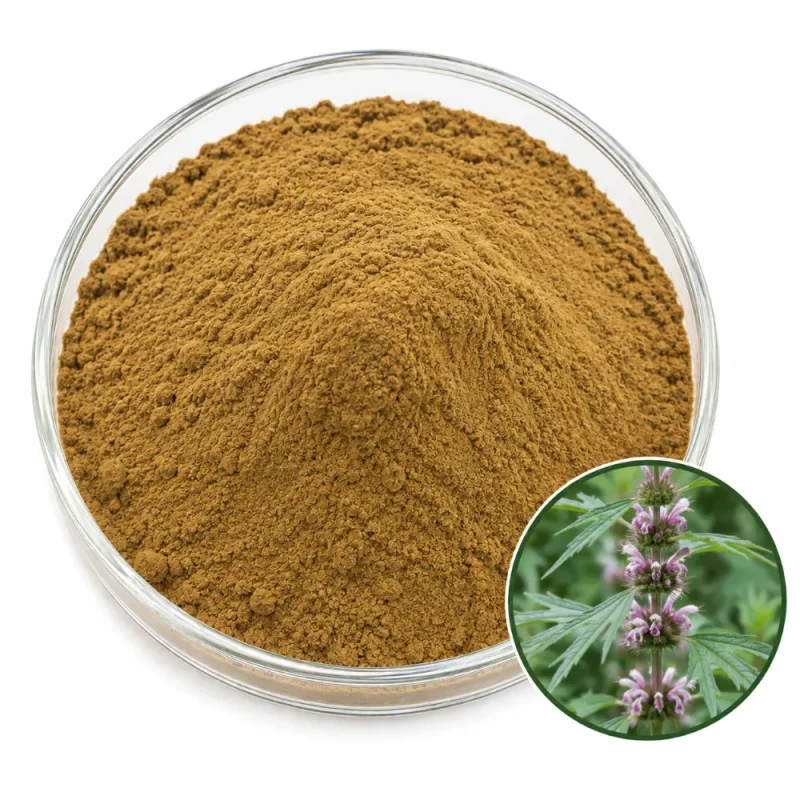
Stachydrine Standardization & Grades
Stachydrine is N,N-dimethylproline, a quaternary ammonium amino acid also known as proline betaine. It is a permanent zwitterion, which means it is highly water soluble, insoluble in most organic solvents and chemically very stable. It occurs in Leonurus japonicus Houtt. together with the guanidine ester leonurine, diterpenoids and flavonoid glycosides, and it is the marker chosen for this extract because it can be measured reliably and its level changes with the harvest and the extraction.
| Grade | Assay & Method | Where It Fits |
|---|---|---|
| 1% Stachydrine | HPLC | Drink powders, higher-inclusion blends |
| 5% Stachydrine | HPLC | Capsules and tablets, small fill weight |
The 5% grade carries five times the stachydrine of the 1% grade per gram, so a capsule reaches its target with a much smaller fill, while the 1% grade is bulkier and blends easily at gram-level inclusion. The same plant is also supplied as a 10:1 ratio extract without a marker figure, the Motherwort Extract Powder, as a milled herb, Motherwort Powder, and as a single compound, Leonurine 98%. Leonurine is a different molecule from stachydrine and is not part of the grade.
The aerial herb is the part used. The fruit of the same plant is a separate herbal drug with other constituents, and it is not part of this identity.
Harvest and part also matter. Motherwort is cut at the start of flowering, when the leaves are full and the stems still tender, and the whole aerial herb, including the soft upper stem, goes into extraction. Thick, woody lower stems add fiber and dilute the alkaloid share, so a lot with a high proportion of old stem shows a lower stachydrine figure and a paler extract.


