
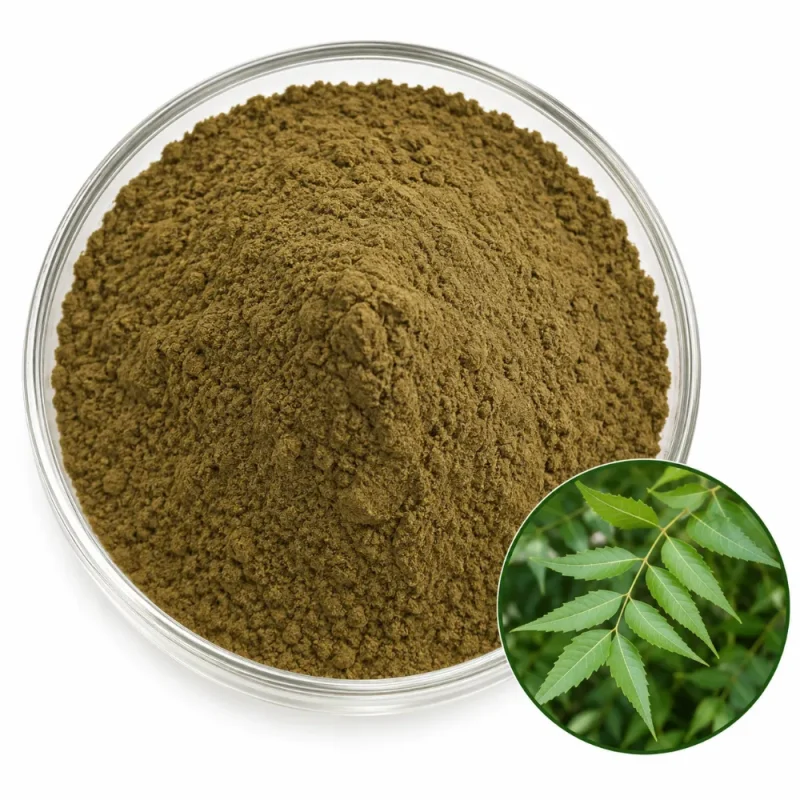
Bitter Principle Standardization & Grades
Neem is known for its bitterness, which comes from limonoids, a family of oxidized triterpenoids. In the leaf of Azadirachta indica A.Juss. the main bitter constituents include nimbin, nimbolide, nimbidin and related compounds, along with flavonoids such as quercetin glycosides and phenolic acids. A neem leaf extract is standardized to bitter principles as a group because no single compound represents the whole fraction, and the figure tells buyers how concentrated the bitter fraction is.
| Grade | Assay & Method | Where It Fits |
|---|---|---|
| 4% Bitter Principles | Group figure | Blends, higher-inclusion powders |
| 10% Bitter Principles | Group figure | Capsules and tablets, small fill weight |
The 10% grade carries two and a half times the bitter fraction of the 4% grade per gram. A capsule reaches its target with a smaller fill, while the 4% grade is bulkier and easier to blend. The same leaf is also supplied as a 10:1 ratio extract without a marker figure, the Neem Leaf Extract Powder, and as a milled leaf, Neem Leaf Powder. When the bitter fraction has to be stated, this standardized grade is the one to use.
Neem seed, kernel and oil are different materials with different chemistry, centered on azadirachtin, and they are not part of this identity.
The leaf is the part used. Neem leaves are picked from mature trees, shade-dried and cleaned of twigs before extraction, and shade drying keeps more of the green color and the limonoids than drying in direct sun. Bark, seed, flower and oil are different drugs with different markers and are not part of this identity.


