
Polyphenol Standardization & Grades
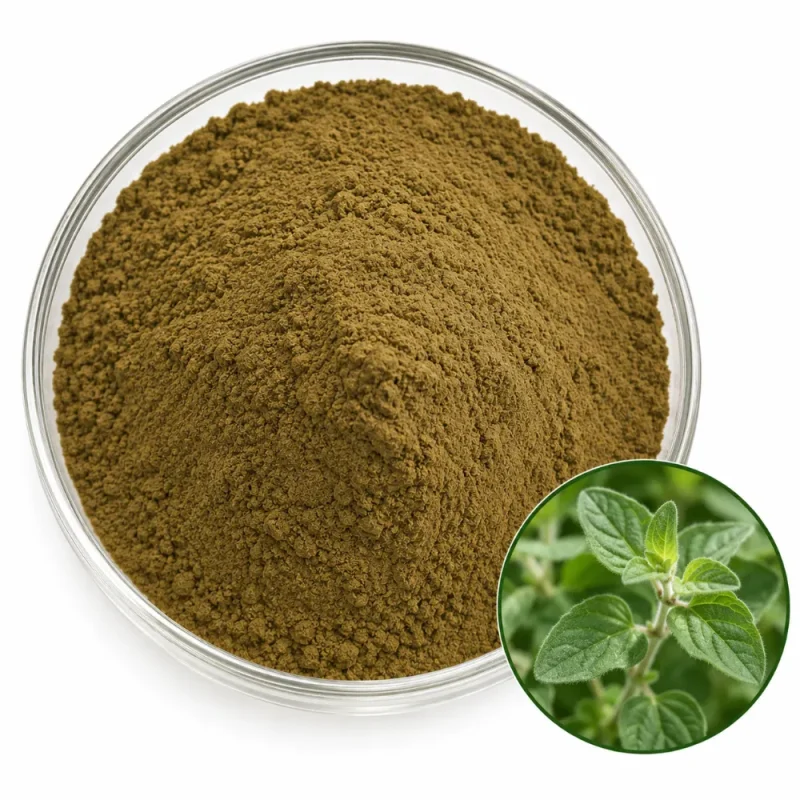
The aerial parts of Origanum vulgare L. are rich in two chemical fractions: the essential oil, dominated by carvacrol and thymol, and a polar phenolic fraction with rosmarinic acid, caffeic acid derivatives, flavonoid glycosides and phenolic glycosides. An ethanol-extracted powder keeps the phenolic fraction and loses most of the volatile oil on drying. Standardizing to total polyphenols gives buyers a figure for that polar fraction as a group.
A single 5% level means each lot is judged against one target and one method. A modest polyphenol figure suits an herb in which much of the extractable mass is made of sugars, minerals and polar plant matter, and it avoids implying a concentrated phenolic ingredient. The same herb is also supplied as a 10:1 ratio extract without a marker figure, the Oregano Extract Powder, and as a milled herb, Oregano Powder.
The number is a group total. It should not be read as a figure for rosmarinic acid, carvacrol or any single compound, and carvacrol and thymol, being volatile, are not part of the specification.
The aerial part is the herb used. Oregano is cut at the start of flowering, when the leaves are full and the flower bracts carry most of the aromatic material, and the herb is dried and rubbed before extraction. Stems add fiber and little phenolic content, so a lot with a high proportion of stem shows a lower polyphenol share and a paler extract.


