
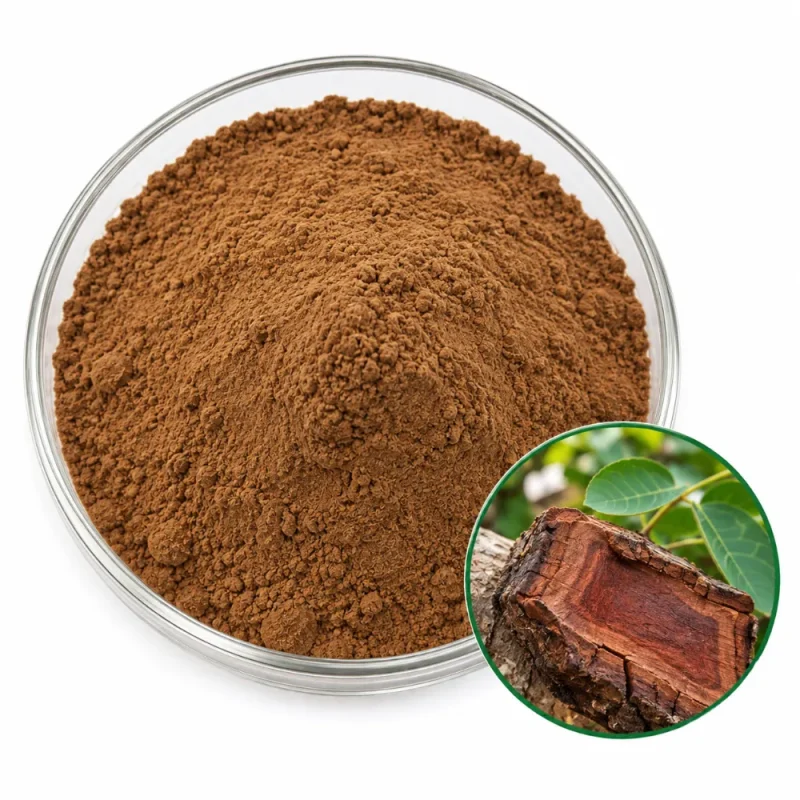
C-Glycoside Standardization & Grades
In a C-glycoside the sugar is joined to the aglycone through a carbon-carbon bond, not through an oxygen, and this makes the linkage far more resistant to acid and enzyme hydrolysis. The heartwood of Pterocarpus marsupium Roxb. contains several such compounds, among them the C-glucosyl chalcone and dihydrochalcone derivatives called marsupsin and pterosupin, together with the stilbene pterostilbene and the flavonoid liquiritigenin. The extract is standardized to C-glycosides as a group because they are the characteristic and most abundant polar constituents of the heartwood.
With a single 5% level, every lot is measured against one target by the same method. A 5% figure for a group of polar glycosides leaves a large share of the powder as other wood extractives, such as the red kino tannins and phenolics, which give the extract its color. The same tree gives a stilbene that is available as a purified compound, Pterostilbene 99%, a different material from the glycoside fraction. No milled wood or ratio extract of the species is currently listed in the catalog.
Other marker grades of the same wood are available by separate arrangement. This grade is defined by its C-glycoside figure only.
The heartwood is the part used, and the trade handles it in a specific way. Indian kino trees are felled or tapped, the sapwood is trimmed away, and the red heartwood is cut into chips before extraction. Material with a high proportion of sapwood gives a paler extract with a lower marker share. Pterocarpus marsupium extract is therefore defined by the heartwood and by the C-glycoside figure.


