
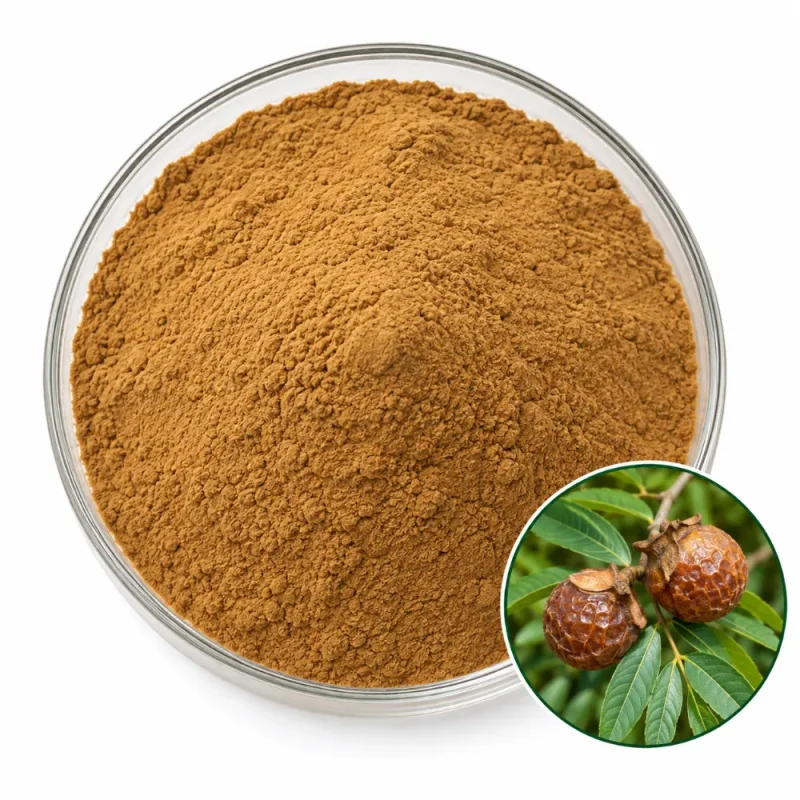
Soapnut Saponin Standardization & Grades
The fruit coat of the soapberry is one of the richest natural sources of triterpenoid saponins. Its main saponins, the sapindosides, are built on a hederagenin-type aglycone carrying sugar chains. The sugar side attracts water and the triterpenoid side attracts oil, so a solution foams and cleans oily films. Soap nut extract is standardized to total saponins because surface activity follows the saponin load, and the figure expresses how far the pericarp has been concentrated.
The botanical entity is Sapindus mukorossi Gaertn., and the part is the dried fruit coat, with the hard black seeds removed. The seed carries little saponin and adds weight and oil. The same fruit is supplied as a 10:1 ratio extract with no marker figure, the Soap Nut Extract Powder, and as the milled fruit coat, Reetha (Soapnut) Powder.
| Grade | Assay & Method | Where It Fits |
|---|---|---|
| 20% Saponins | UV | Foaming mixes, bulk blends |
| 40% Saponins | UV | Concentrated systems, capsule fills |
The 40% grade carries twice the saponin load per gram, so a concentrate or a capsule reaches its target with a smaller charge of powder. The 20% soap nut extract is bulkier and gives a gentler foam at a given gram weight, which matters in dry drink mixes where a high head is a nuisance. Both are read on the same UV basis, so the grades scale by weight.
The extract is made from the cleaned fruit coat, which is crushed and extracted, and the extract is filtered, concentrated and dried. The fruit coat is sticky and rich in sugars and gum-like material, and the process leaves much of that behind, so the finished powder is far richer in saponin than the dried pericarp.


