
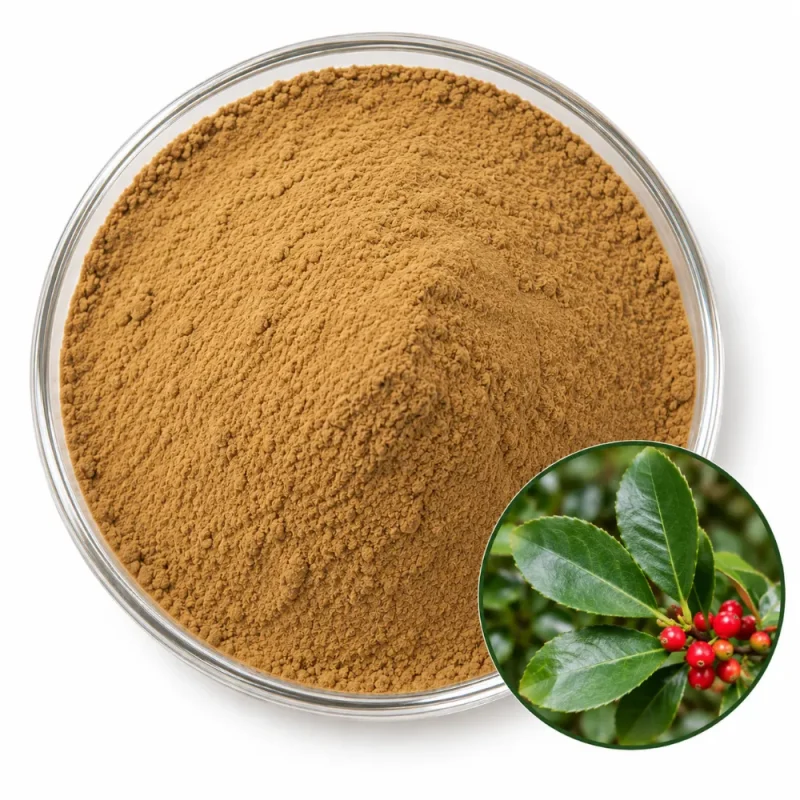
Caffeine Standardization & Grades
Caffeine is a methylxanthine alkaloid, a purine derivative with three methyl groups. The leaf of yerba mate holds it together with theobromine and traces of theophylline, chlorogenic acids, flavonoids such as rutin, and triterpenoid saponins called matesaponins. Yerba mate extract is standardized to caffeine because the compound is the best-known and most easily measured constituent of the leaf, and the figure expresses how far the leaf has been concentrated.
The botanical entity is Ilex paraguariensis A.St.-Hil., and the part is the leaf, with a small share of thin twig. Other caffeine-containing hollies exist, among them guayusa (Ilex guayusa) and yaupon (Ilex vomitoria), and they are different plants. The same leaf is supplied as a 10:1 ratio extract with no marker figure, Yerba Mate Extract Powder, and as milled leaf, Yerba Mate Leaf Powder. Purified caffeine from plant sources is available separately as Natural Caffeine 99%.
| Grade | Assay & Method | Where It Fits |
|---|---|---|
| 8% Caffeine | HPLC | Drink powders, bulk blends |
| 20% Caffeine | HPLC | Capsules and tablets, small fill |
The 20% grade carries two and a half times the caffeine of the 8% grade per gram, so a capsule or tablet reaches its target with a smaller charge. The 8% grade is bulkier and carries more of the leaf’s chlorogenic acids and saponins, which gives it a more herbal, slightly smoky character in a dissolved drink.
The extract is made from dried, milled leaf that may be green or lightly roasted before extraction. The concentrate is filtered, purified and dried, and higher strengths come from additional partition or resin steps that take out the chlorogenic acids and saponins.


