
Coumarin Standardization & Grades
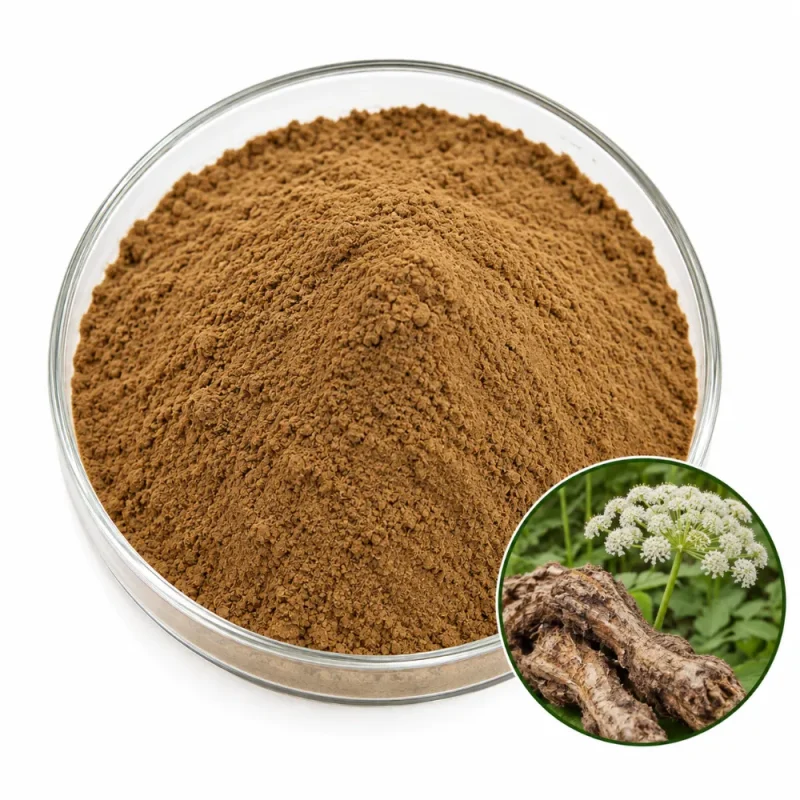
Pubescent angelica root holds a mixed coumarin fraction: angular dihydrofuranocoumarins such as columbianadin and columbianetin, linear furanocoumarins such as bergapten and xanthotoxin, and simple coumarins such as osthole. The grade sums the class without naming one compound, because the root carries all three types. The botanical entity is Angelica pubescens Maxim., and the part used is the root.
| Grade | Assay & Method | Where It Fits |
|---|---|---|
| 5% Total Coumarins | UV | Dry compounds keeping the root matrix |
| 30% Total Coumarins | UV | Capsules and softgels with small fill |
Grade choice follows dose, fill weight and the amount of aromatic root matrix a formula should keep. The 30% grade carries six times the coumarin load per gram of the 5% grade, so a capsule reaches its target in a smaller fill. The 5% grade retains the essential oil fragments, starch and polysaccharides of the root, which makes it bulkier, paler and more aromatic. Siblings from the same root are the unstandardized Angelica Pubescens Root Extract Powder and the milled Angelica Pubescens Root Powder.
Two secondary markers, osthole and columbianadin, are recorded in the data and are described here without numbers. Buyers who compare quotes should note that a UV class total and an HPLC value for a named coumarin are different measurements, and the first is always larger than the second.
The common name needs care. The Chinese drug du huo and the Japanese drug of the same character are related but come from different species and varieties, and the angelicas of the Chinese pharmacopoeia, namely dahurica, pubescens and sinensis, are distinct drugs with separate profiles. A botanical name and the root as the stated part keep the identity clear.


