
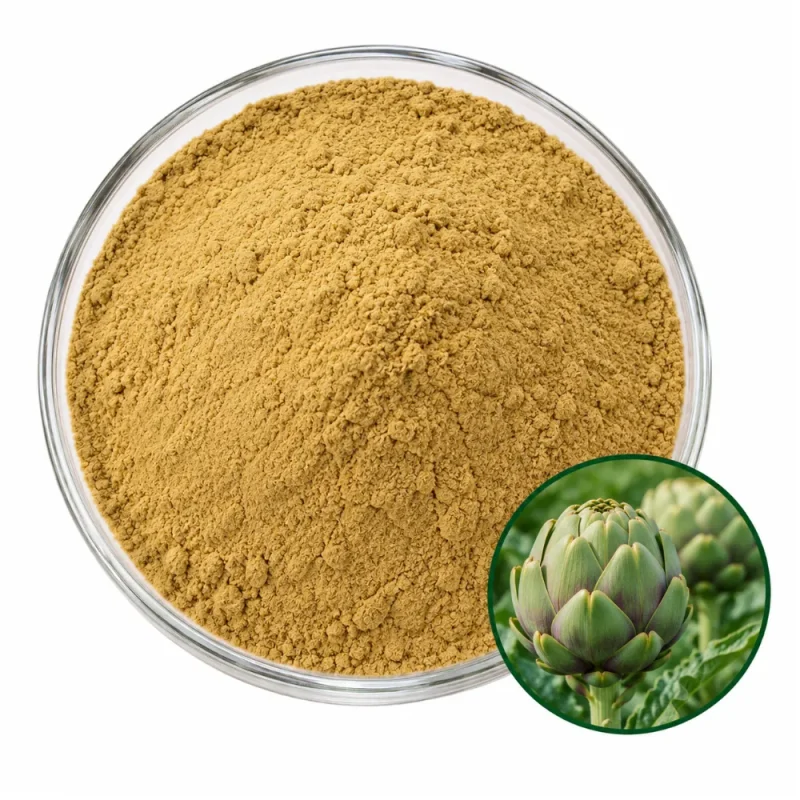
Cynarin Standardization & Grades
Cynarin is the common name for 1,3-dicaffeoylquinic acid, a compound in which two caffeic acid units are attached to quinic acid. It is the standardization target because it is the compound most associated with artichoke in the trade, and because a pure reference standard exists. In commerce the name is sometimes used loosely for the whole family of dicaffeoylquinic acids, and the leaf also holds chlorogenic acid and the bitter sesquiterpene lactone cynaropicrin. The botanical entity is Cynara scolymus L., and the part used is the leaf.
| Grade | Assay & Method | Where It Fits |
|---|---|---|
| 0.5% Cynarin | HPLC | Broad extract for blends and tea-style mixes |
| 5% Cynarin | HPLC | Capsules and tablets with small fill |
The two grades differ tenfold. The 5% grade is a marker concentrate that supplies a defined load from a small fill. The 0.5% grade is closer to the leaf, with more of the sugars, the chlorogenic acid and the bitter lactones, so artichoke extract at this level suits blends and tea-style mixes. The same leaf is also supplied as a 10:1 ratio extract, the Artichoke Extract Powder, as a milled leaf, the Artichoke Leaf Powder, and as the purified acid 1,3-Dicaffeoylquinic Acid 98%. The flower bud is the food part of the plant, and it is a different material from the leaf.


