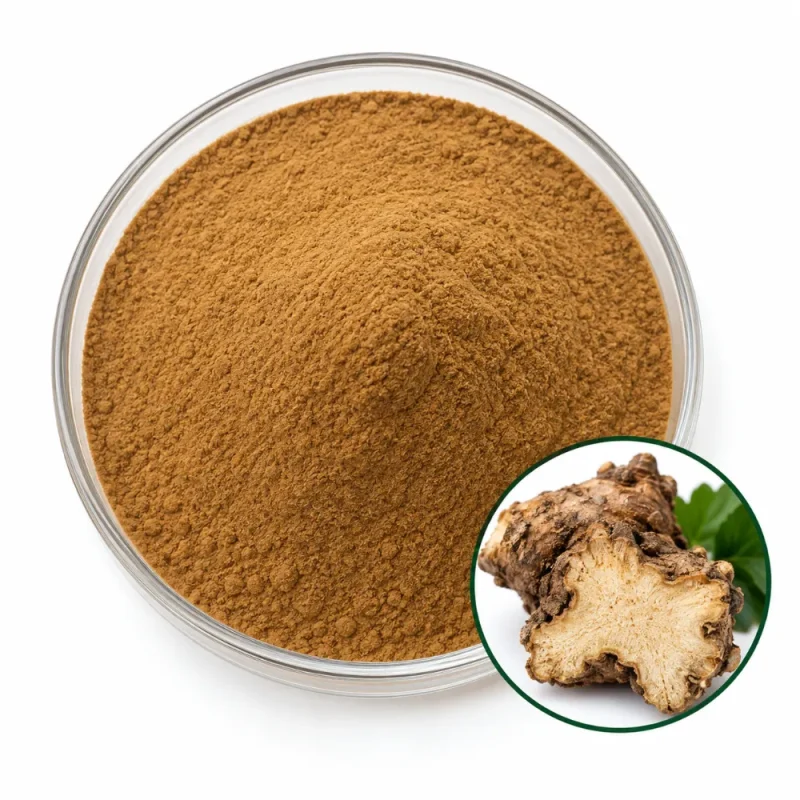
Atractylodes Macrocephala Extract 2–10% Sesquiterpenes

Bai zhu, the rhizome of Atractylodes macrocephala, supplies this extract, which does not use the cang zhu rhizome of Atractylodes lancea or the bran-fried and earth-fried preparations sold as separate drugs. Ethanol extraction concentrates the sesquiterpenoids of the rhizome, and the liquor is dried to a light brown powder.

The primary grade is 10% sesquiterpenes, with 2% as the lower end of the range. The powder is 80 mesh and insoluble in water. The 10% grade serves capsules and tablets with a limited fill weight, while the 2% grade suits dry blends that keep more of the starchy, polysaccharide-rich matrix.

Sesquiterpene Standardization & Grades

Sesquiterpenes are terpenoids built from three isoprene units, and the rhizome of bai zhu is rich in the lactone-type members atractylenolide I, II and III together with the furan sesquiterpene atractylon. The grade sums the sesquiterpene class, because the rhizome carries several of these structures and because the same compounds convert into one another during drying and storage. The botanical entity is Atractylodes macrocephala Koidz., and the part used is the rhizome.

GradeAssay & MethodWhere It Fits
2% SesquiterpenesTotal sesquiterpene basisDry blends keeping the rhizome matrix
10% SesquiterpenesTotal sesquiterpene basisCapsules and tablets with small fill

Grade choice follows dose, fill weight and the amount of rhizome matrix a formula should keep. The 10% grade carries five times the sesquiterpene load per gram of the 2% grade, so a capsule reaches its target in a smaller fill. The 2% grade retains the polysaccharides and amino acids of the rhizome and is paler, sweeter and bulkier. Siblings from the same plant are the unstandardized Atractylodes Macrocephala Extract Powder, the milled Atractylodes Macrocephala Rhizome Powder and the purified Atractylenolide I 98%.

Two further markers, atractylenolide I and III, are recorded in the data and are described here without numbers. The percentage is stated on the total sesquiterpene basis and should be compared only with figures that use the same basis.

The terms bai zhu and cang zhu are often confused. They are two species of the same genus, with different volatile oil compositions, different traditional preparations and different chemical markers. A botanical name and the rhizome as the stated part keep the identity of this product clear.

Sesquiterpene Analysis & Purity Risks

A sesquiterpene class figure can be derived by several routes, including chromatographic sums of the named lactones, gravimetric separation of a lipophilic fraction or spectrophotometric reading, and the numbers obtained are not interchangeable. The grade here is a class value, so comparing it with an HPLC result for atractylenolide I would be a comparison between different measurements.

The chemistry of the rhizome explains why the class matters. Atractylon is a volatile furan sesquiterpene that oxidizes to atractylenolide III, and atractylenolide I forms from related precursors on dehydration, so the proportion of each lactone depends on how long and at what temperature the rhizome was dried. A fingerprint with all three lactones and a small atractylon peak is typical of properly dried material.

Sample preparation for any chromatographic check uses methanol or ethanol with sonication and filtration. The lactones are lipophilic, so water-based preparation would lose most of them, and solutions are kept away from strong light and heat to limit conversion between the forms.

Purity risks follow from the botany and processing. Atractylodes lancea is a different species with an oil dominated by atractylodin and beta-eudesmol, and bran-fried or earth-fried bai zhu has a changed sesquiterpene profile because heat converts atractylon. A species statement, the raw rhizome as the stated part and a lactone fingerprint protect identity better than a percentage.

Typical Specifications

Specification ItemProduct Information
Latin NameAtractylodes macrocephala
Plant PartRoot & Rhizome
ProcessingEthanol Extraction
Compound ClassTerpenoids
Common NameAtractylodes Macrocephala, Bai Zhu, White Atractylodes
Ingredient TypeStandardized Extract
Marker Compound(s)Sesquiterpenes (atractylenolides and atractylon of Atractylodes macrocephala rhizome)
Primary Grade10% Sesquiterpenes
Available Grades2% · 10% Sesquiterpenes
AppearanceLight Brown powder
Solubility / DispersibilityInsoluble in Water
Quality Parameters
Moisture (LOD)≤5.0%
Total Ash≤5.0%
Particle Size80 mesh
Heavy MetalsLead ≤2 ppm · Arsenic ≤1 ppm · Cadmium ≤1 ppm · Mercury ≤0.1 ppm
MicrobiologyTPC ≤1,000 cfu/g · Yeast & Mold ≤100 cfu/g · E. coli Negative · Salmonella Negative/25 g
Shelf Life24 months in unopened original packaging, cool and dry storage

Applications by Grade

10% Grade for Compact Capsules

The 10% grade delivers a sesquiterpene target in a small capsule fill. The light brown powder is fine and slightly oily, so a flow agent helps the hopper feed evenly, and capsule weights should be checked at the start of each run and again after any pause.

10% Grade in Tablet Blends

Tablets of the high grade need a dry binder and an absorbent, since the lipophilic fraction softens compacts and sticks to punches. A modest lubricant level, a dry room and a hardness check after storage show whether the formula holds.

10% Grade for Oil-Based Fills

Sesquiterpene lactones dissolve in oils better than in water, so softgel fills disperse the 10% grade in a carrier oil. Mill the Atractylodes macrocephala powder fine and stir throughout encapsulation, because insoluble particles settle in the feed line and change the dose between capsules.

2% Grade for Dry Herbal Compounds

At 2% the extract is dosed by weight in dry compounds, where the starchy, mildly sweet matrix of the rhizome sits beside other root powders. A pre-mix with a bulking agent, followed by screening before filling, removes small lumps.

2% Grade for Granule Premixes

Granules carry the lower grade with a binder and a flavor system. The rhizome gives a mild, slightly sweet and resinous taste that pairs with jujube, ginger and licorice flavors, and gentle drying protects the volatile fraction of the extract.

Technical & Quality Considerations

The Atractylodes macrocephala extract is a light brown powder with a mild aromatic, slightly sweet odor and a bitter-sweet taste. Because it is insoluble in water, a drink base shows suspended particles that slowly settle. The lactones dissolve in ethanol, in oils and in some surfactant systems, and the choice of carrier decides how they behave in a finished product.

Sesquiterpene lactones are stable in dry form, but atractylon oxidizes in air and light, giving atractylenolide III, so keep the powder away from heat, light and oxygen. At production scale, handle the Atractylodes macrocephala extract in a ventilated station and pre-mix it with a portion of the carrier before it enters the main blender. Avoid long hot holds in wet granulation.

The polysaccharides of the lower grade attract water, so open drums briefly and store them cool and dry. Compare each lot with a retained sample for color, odor and flow, record the date the drum was opened and clean equipment between this powder and pale products, because the light brown tint and the resinous odor carry over.

An Atractylodes macrocephala extract is checked by odor, taste and the lactone peaks. A mild, slightly sweet aroma is typical, and a burnt note suggests heat damage. Keep a retained sample of each Atractylodes macrocephala extract lot, and compare the atractylenolide I, II and III peaks of later lots with it, because their balance shows how the rhizome was dried.

Packaging & Commercial Supply

Essencefield supports product evaluation, formulation trials, commercial orders, and ongoing ingredient supply. Packaging, storage, and shipping arrangements are determined by product characteristics, order quantity, stability requirements, and destination-market needs.

Supply ItemGeneral Information
SampleAvailable upon request for formulation, testing, and supplier evaluation
Order Quantities100 g · 1 kg · 5 kg · 25 kg · 100 kg · 500 kg · Bulk
Sample Lead TimeTypically 5–7 days after sample confirmation
Production Lead TimeTypically 15–30 days after order and specification confirmation
PackagingSuitable protective inner packaging with bags, cartons, drums, or other appropriate outer packaging
StorageStore in tightly sealed, suitable protective packaging in a cool, dry environment. Protect from moisture, heat, and direct sunlight. Specific storage conditions follow the approved product specification.
DocumentationCOA · Product Specification · TDS · SDS · Applicable declarations (as applicable)

Final order quantities, lead times, packaging, documentation, and shipping arrangements are confirmed according to the selected product and commercial requirements.

Request Ingredient Specifications & Quote

Share your target specification, application, quantity, and documentation needs. We’ll help confirm suitable options, samples, and commercial supply details.