
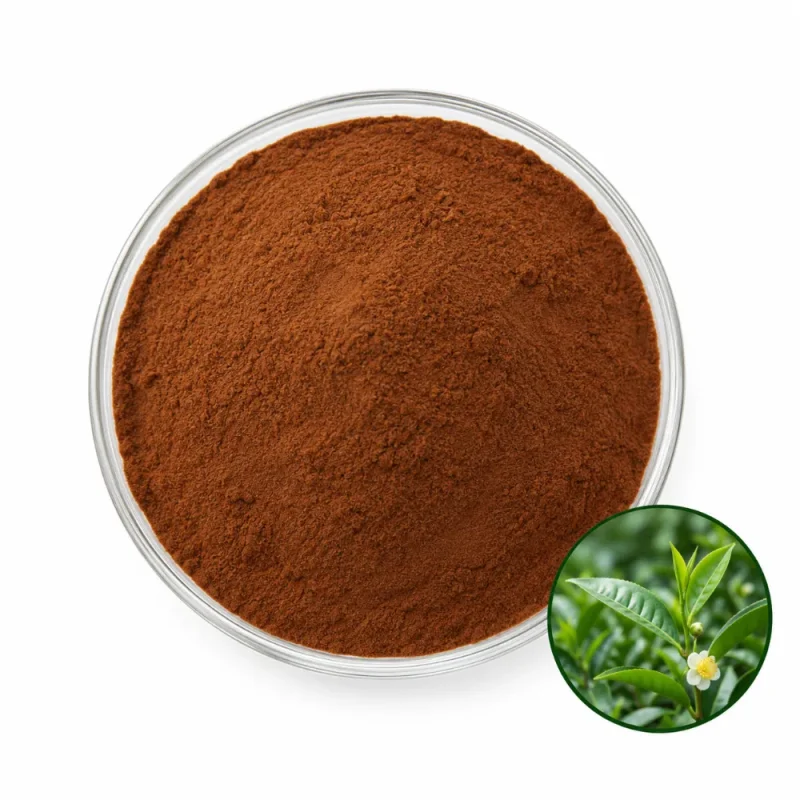
Theaflavin Standardization & Grades
Theaflavins are a family of four main pigments: theaflavin, theaflavin-3-gallate, theaflavin-3′-gallate and theaflavin-3,3′-digallate. They form when two catechins are oxidized and joined into a ring structure with a benzotropolone core, which gives the orange-red color. They are the standardization target because they are specific to oxidized tea and are not present in green tea. The botanical entity is Camellia sinensis (L.) Kuntze, and the part used is the leaf.
| Grade | Assay & Method | Where It Fits |
|---|---|---|
| 10% Theaflavins | HPLC | Tea-style drink mixes and blends |
| 40% Theaflavins | HPLC | Capsules and tablets with small fill |
The choice between grades depends on the color strength needed, the dose per serving and the fill weight. The 40% grade carries four times the theaflavin load per gram of the 10% grade, so a capsule reaches its target in a small fill. The 10% grade keeps more of the thearubigins, the brown polymeric pigments that dominate black tea, together with caffeine and the remaining catechins, so it tastes and looks more like black tea. Siblings from the same species are the green-tea Green Tea Extract 40–98% Polyphenols, the unstandardized Green Tea Extract Powder and the ratio-based Black Tea Extract Powder.
The theaflavin figure is not a polyphenol figure. A black tea extract can be high in total polyphenols and low in theaflavins, because most black tea polyphenol is present as thearubigins and other oxidation products. Buyers who compare quotes should ask which pigment group the percentage counts and which method produced it.


