
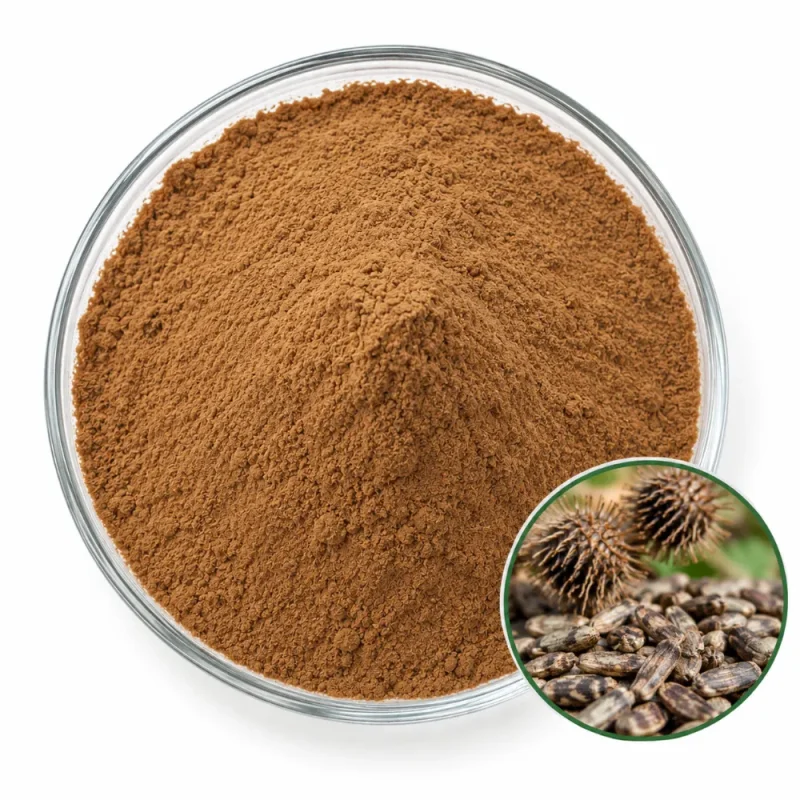
Arctiin Standardization & Grades
Arctiin is the glucoside of arctigenin, a dibenzylbutyrolactone lignan, and it is the dominant bioactive compound of burdock seed. The grade is defined by arctiin because it is abundant, stable in the dry state and resolved cleanly by HPLC. The seed also contains the aglycone arctigenin, other lignans such as matairesinol and lappaol, and a large amount of fatty oil. The botanical entity is Arctium lappa L., and the part used is the seed.
| Grade | Assay & Method | Where It Fits |
|---|---|---|
| 10% Arctiin | HPLC | Dry blends keeping the seed matrix |
| 40% Arctiin | HPLC | Capsules and tablets with small fill |
Grade choice follows dose, fill weight and the amount of seed oil and protein a formula should carry. The 40% grade carries four times the arctiin load per gram of the 10% grade, so a capsule reaches its target in a smaller fill, and the powder is paler and drier. The 10% grade retains more of the fatty oil and protein and is darker, oilier and more prone to oxidation. Siblings from the same seed are the unstandardized Burdock Seed Extract Powder, the milled Burdock Seed Powder and the purified aglycone Arctigenin 98%.
Seed and root are two separate burdock raw materials. The root is rich in inulin-type fructans and caffeoylquinic acids and contains almost no arctiin, whereas the seed is rich in lignans and oil. Buyers who compare burdock extract quotes should check the part before anything else, since an arctiin figure belongs only to the seed.
The difference between arctiin and arctigenin is a matter of the sugar. Arctiin is the glucoside and arctigenin the aglycone obtained when an enzyme or acid removes the glucose, and the two have different solubility, taste and handling. A formulator needing the aglycone should consider the purified compound, not this grade.


