
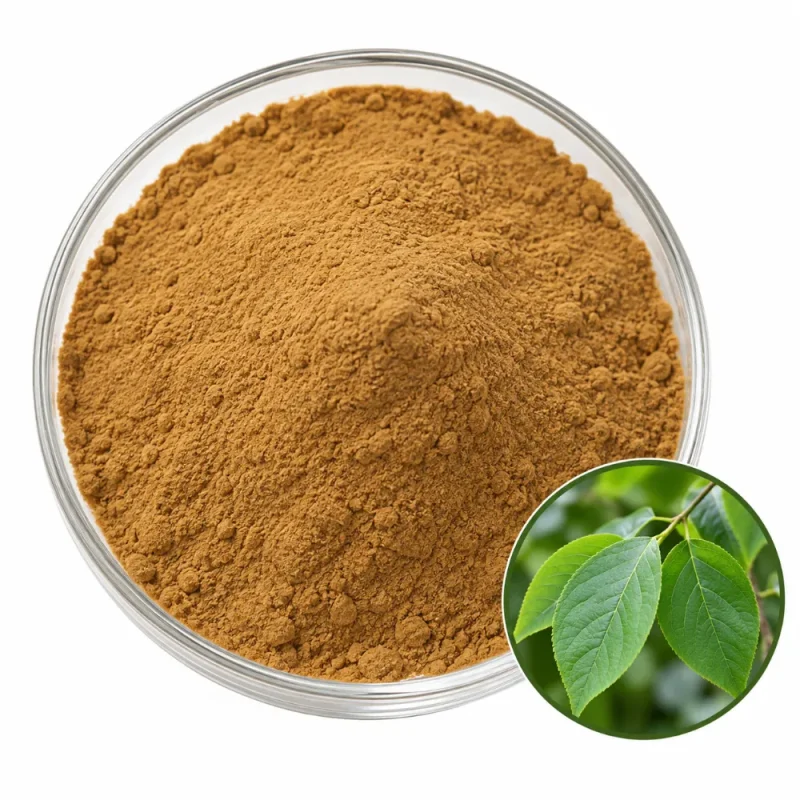
Chlorogenic Acid Standardization & Grades
Chlorogenic acid is an ester of caffeic acid with quinic acid and the leading phenolic acid of eucommia leaf. It is the standardization target because it is abundant in the leaf, dissolves well in water and can be resolved cleanly by HPLC. The botanical entity is Eucommia ulmoides Oliv., and the part used is the leaf. The same leaf also holds the iridoid aucubin, flavonoid glycosides and a small amount of the rubber-like polymer that gives the tree its common name.
| Grade | Assay & Method | Where It Fits |
|---|---|---|
| 5% Chlorogenic Acid | HPLC | Tea-style blends and beverage bases |
| 50% Chlorogenic Acid | HPLC | Capsules, tablets and drink sticks |
Grade choice follows dose, fill weight and how much leaf matrix a formula should carry. The 50% grade holds ten times the chlorogenic acid per gram of the 5% grade, so it reaches a target in a small fill. The 5% grade retains the aucubin, flavonoids and polysaccharides of the leaf and adds body and color to a beverage. The unstandardized sibling is the Eucommia Leaf Extract Powder, and the purified compounds are Chlorogenic Acid 98% and the iridoid Aucubin 98%.
A chlorogenic acid percentage does not say which isomers were counted, and eucommia leaf extract contains related caffeoylquinic acids besides the main 5-O isomer. Buyers who compare quotes should ask whether the figure is the single named peak or a sum of isomers, and which part of the tree was used.
The two grades also behave differently in water. The 50% powder dissolves into a more strongly colored, more astringent solution, so a drink formula usually needs flavor masking, while the 5% grade is closer to a leaf infusion in taste and appearance. Because the leaf matrix carries sugars and polysaccharides at the lower grade, that powder is also more hygroscopic, and its storage and handling need a little more care than the concentrated powder.


