
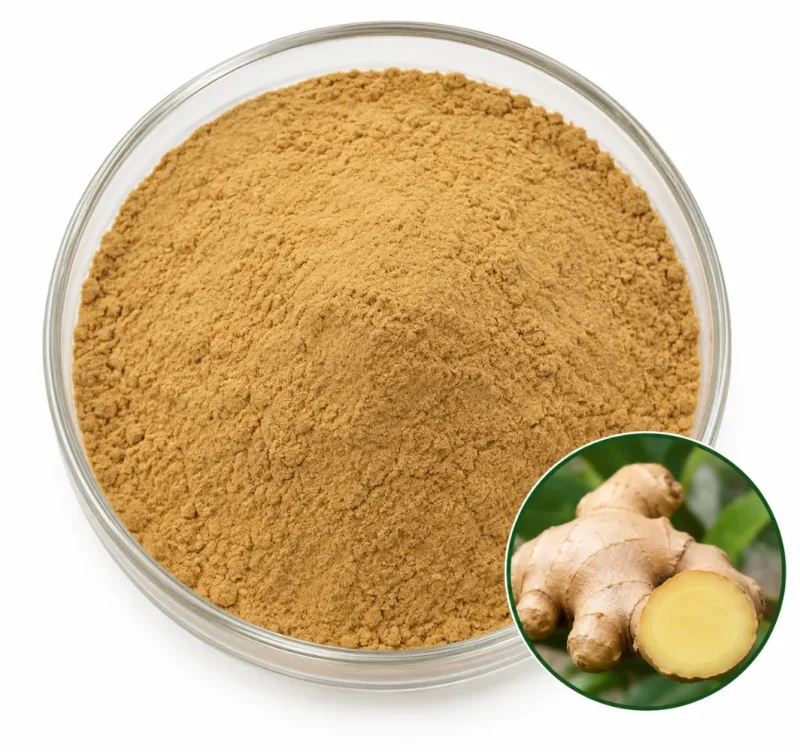
Gingerol Standardization & Grades
Gingerols are the main pungent compounds of fresh ginger, a series of phenolic ketones of which 6-gingerol is the most abundant member. They are the standardization target because they define the characteristic bite of the rhizome and because HPLC can resolve each homolog. The botanical entity is Zingiber officinale Roscoe, and the part used is the rhizome. A related family, the shogaols, forms from gingerols when the rhizome is dried or heated, so a gingerol figure describes a relatively gentle drying route.
| Grade | Assay & Method | Where It Fits |
|---|---|---|
| 5% Gingerols | HPLC | Drink sticks, gummies and ginger-led blends |
| 20% Gingerols | HPLC | Capsules and tablets with small fill weight |
Grade choice follows dose, fill weight and pungency. The 20% grade carries four times the gingerol load per gram of the 5% grade, so a capsule reaches its target in a smaller fill. The 5% grade is gentler and bulkier, which makes it easier to meter into sticks and to flavor in gummies where a hot, burning edge would be a drawback. Ginger is also supplied as a 10:1 ratio extract with no marker figure, the Ginger Extract Powder, as a milled rhizome, the Ginger Root Powder, and as the purified compound 6-Gingerol 98%.
The word gingerols stands for a group of homologs with side chains of different length, of which 6-gingerol is the most abundant, and the percentage on its own does not say which members were counted. Buyers who compare quotes should compare the list of quantified compounds before they compare numbers. The 5% grade is the choice when a formula wants the warm, rounded character of ginger at a high gram weight, and the 20% grade is the choice when gingerol dose is the design constraint.


