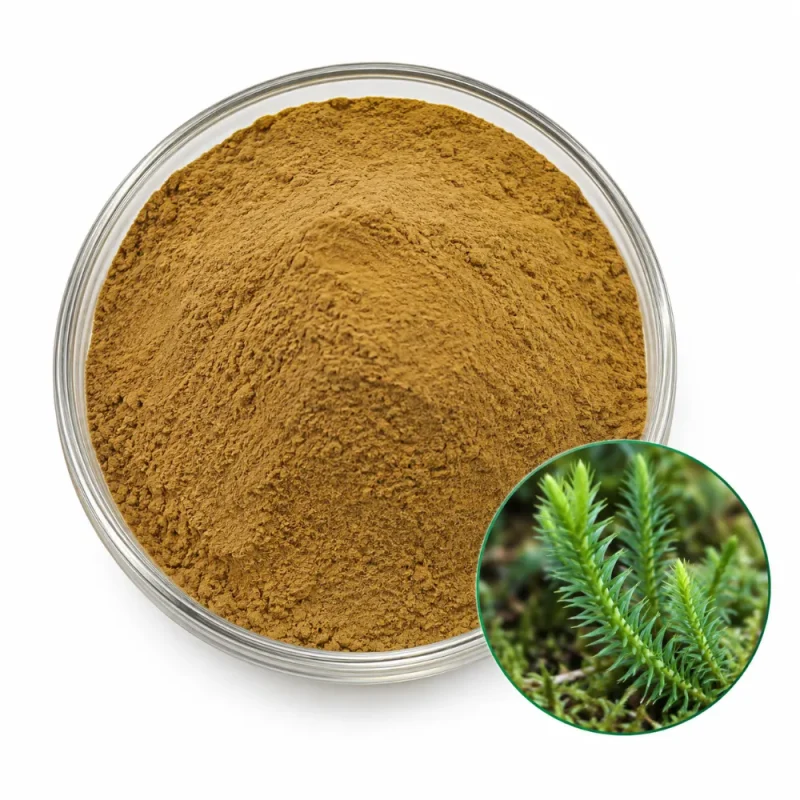
Huperzia Serrata Extract 1–5% Huperzine A

Huperzia serrata, a slow-growing clubmoss of damp mountain forests in East Asia, supplies the whole plant for this Huperzia serrata extract, and ethanol extraction concentrates its lycopodium alkaloids around huperzine A. The dried concentrate is a light brown, 80 mesh powder that is only slightly soluble in water and carries a mild, earthy plant note.

Huperzine A is measured by HPLC and offered as a 1–5% range, with 5% as the primary grade and 1% as the lower grade. A 98% isolate belongs to the phytochemical range, not to this extract. The higher grade fits small-fill capsules, and the lower grade suits blends.

Huperzine A Standardization & Grades

Huperzine A is a sesquiterpene-derived alkaloid of the lycopodium type, with a rigid bicyclic skeleton and a pyridone ring. It is the characteristic compound of Huperzia serrata (Thunb.) Trevis. and the reason this clubmoss is standardized at all. The same plant contains related alkaloids, among them huperzine B, and a standardized extract is therefore defined by its huperzine A figure while carrying the rest of the alkaloid family as a background profile.

GradeAssay & MethodWhere It Fits
1% Huperzine AHPLCBlends, larger-fill capsules
5% Huperzine AHPLCCapsules, small fill weight

The two grades differ by a factor of five in marker density, so a given huperzine A amount takes five times the powder at 1% as at 5%. Because the dose of this alkaloid is very small in absolute terms, the 5% grade is the practical choice for most dosage forms, while the 1% grade makes accurate weighing easier in premixes. Huperzia is also supplied as a 10:1 ratio extract without a marker figure, the Huperzia Serrata Extract Powder, and as the purified compound, Huperzine A.

The regulatory status of huperzine A differs between markets, so brands review it for each target country before launch.

Huperzine A Analysis & Purity Risks

HPLC resolves huperzine A from huperzine B and from other lycopodium alkaloids on a reversed-phase column. Because the compound is basic, the mobile phase is buffered or acidified to hold it in one ionic form and keep the peak sharp, and detection uses the UV absorbance of the pyridone ring. The result is huperzine A itself, quantified against a reference standard, and no other assay type is available to cross-check it.

Identity rests on more than one peak. The fingerprint of a genuine Huperzia serrata extract shows huperzine A beside the minor alkaloids typical of the plant, and the pattern helps to separate it from extracts of other clubmosses. It also helps to spot material that has been spiked with the purified compound or with synthetic huperzine A. A synthetic product is a racemate, while the natural compound is a single enantiomer, which a chiral method can show.

Species is the first purity risk. Clubmosses of the genera Lycopodium, Phlegmariurus and Huperzia look alike in dried form, and the taxonomy has been revised repeatedly, so the extract names the species and states the whole plant as the material. Lycopodium clavatum contains different alkaloids and little huperzine A. Plants from different regions and altitudes also carry very different levels, which is why the lot is tested and not assumed.

Sample preparation needs an acidic aqueous or alcoholic extraction of the powder, followed by filtration, because the alkaloid is held in a plant matrix that binds it. Incomplete extraction gives a low result that can be mistaken for a weak lot, so the extraction yield is checked with a spiked sample.

Raw material supply deserves a note. The plant grows slowly, often in shaded, humid mountain habitats, and wild-harvested herb varies in age and in the proportion of stem to leaf. Because huperzine A is unevenly distributed between these parts, two lots from different collections can differ even when both are correctly identified, which is a further reason why the marker is measured on the finished powder and not inferred from the raw herb.

Typical Specifications

Specification ItemProduct Information
Latin NameHuperzia serrata
Plant PartWhole Plant
ProcessingEthanol Extraction
Compound ClassAlkaloids
Common NameHuperzia, Toothed Clubmoss
Ingredient TypeStandardized Extract
Marker Compound(s)Huperzine A
Primary Grade5% Huperzine A (HPLC)
Available Grades1% · 5% Huperzine A (HPLC)
AppearanceLight Brown powder
Solubility / DispersibilitySlightly Soluble in Water
Quality Parameters
Moisture (LOD)≤5.0%
Total Ash≤5.0%
Particle Size80 mesh
Heavy MetalsLead ≤2 ppm · Arsenic ≤1 ppm · Cadmium ≤1 ppm · Mercury ≤0.1 ppm
MicrobiologyTPC ≤1,000 cfu/g · Yeast & Mold ≤100 cfu/g · E. coli Negative · Salmonella Negative/25 g
Shelf Life24 months in unopened original packaging, cool and dry storage

Applications by Grade

5% Grade in Micro-Dose Capsules

The 5% grade of Huperzia serrata extract reaches a huperzine A target in a very small fill, which suits two-piece capsules. Because the active amount is tiny, the extract is premixed with a carrier so that each capsule weighs enough to fill accurately and the dose does not drift.

5% Grade in Dilution Premixes

Contract fillers often dilute the 5% grade in stages with a flowable carrier, taking a small portion first and then widening the blend. Staged dilution prevents the fine dark powder from forming streaks, and a check of several samples confirms the alkaloid is spread evenly.

1% Grade in Tablet Blends

Tablets of the 1% grade carry the alkaloid at a weight that presses well, with a dry binder and a film coat to keep out moisture. The brown color of the plant matrix shows through light tablets, so a tint in the coating hides speckling.

1% Grade in Sublingual Strip Bases

Quick-dissolving strips and tabs can use the 1% grade, which keeps the extract load high enough to weigh easily. The bitter alkaloid needs a flavor system built for it, and the film or tab should be stored in moisture-proof wrapping.

5% Grade in Liquid-Filled Capsules

Oil or glycol suspensions can carry the 5% grade, but the powder is only slightly soluble. Milling the powder fine and holding the fill under gentle stirring keeps it suspended, and a sample from the start and end of the run shows whether it has settled.

Technical & Quality Considerations

Huperzia serrata extract is a light brown powder with a mild, earthy, faintly bitter character. It is only slightly soluble in water. Huperzine A is a basic compound and dissolves better under mildly acidic conditions, where it is protonated, so acidified liquids give a more uniform solution than neutral or alkaline ones.

The alkaloid is fairly stable as a dry solid, but it is sensitive to strong light and to oxidation in solution. In liquid formats, buffered mildly acidic systems and opaque packaging keep the huperzine A figure steady. High temperature and long hold times in solution should be avoided during processing.

Dose accuracy is the main production issue, because the amount of alkaloid per unit is very small. The powder is sieved before use, premixed with a carrier and weighed on a calibrated balance, and the blend is sampled from several positions to show uniform distribution. Static charge makes the fine powder cling to scoops and bag walls, so grounded equipment and humidity control help.

Closed charging and local extraction limit dust at the filling station. An accelerated stability study with the intended pack shows whether the alkaloid figure and the powder flow remain within the intended range across the shelf life.

Color and texture give a quick check at receipt. A light brown, fine powder with a faint earthy note is expected for Huperzia serrata extract, while a very dark shade can point to heat damage in concentration. Dark specks or fibrous particles suggest incomplete filtration of the plant matrix.

Packaging & Commercial Supply

Essencefield supports product evaluation, formulation trials, commercial orders, and ongoing ingredient supply. Packaging, storage, and shipping arrangements are determined by product characteristics, order quantity, stability requirements, and destination-market needs.

Supply ItemGeneral Information
SampleAvailable upon request for formulation, testing, and supplier evaluation
Order Quantities100 g · 1 kg · 5 kg · 25 kg · 100 kg · 500 kg · Bulk
Sample Lead TimeTypically 5–7 days after sample confirmation
Production Lead TimeTypically 15–30 days after order and specification confirmation
PackagingSuitable protective inner packaging with bags, cartons, drums, or other appropriate outer packaging
StorageStore in tightly sealed, suitable protective packaging in a cool, dry environment. Protect from moisture, heat, and direct sunlight. Specific storage conditions follow the approved product specification.
DocumentationCOA · Product Specification · TDS · SDS · Applicable declarations (as applicable)

Final order quantities, lead times, packaging, documentation, and shipping arrangements are confirmed according to the selected product and commercial requirements.

Request Ingredient Specifications & Quote

Share your target specification, application, quantity, and documentation needs. We’ll help confirm suitable options, samples, and commercial supply details.