
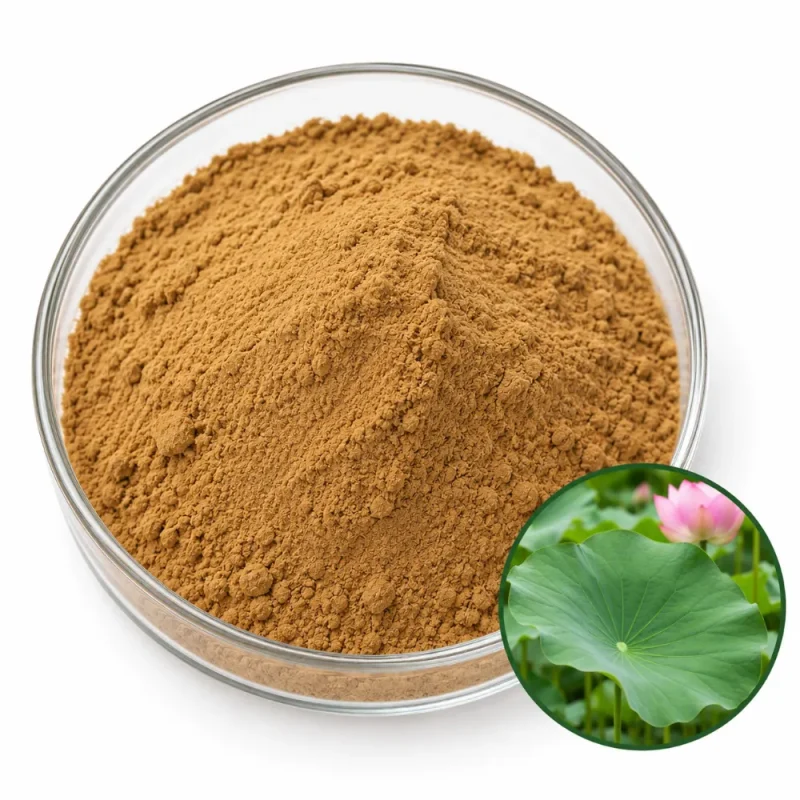
Nuciferine Standardization & Grades
Nuciferine is the lead alkaloid of lotus leaf, an aporphine type with a four-ring skeleton that carries a nitrogen atom in one ring. It is the standardization target because it is characteristic of the leaf, stable and resolved cleanly by HPLC. The botanical entity is Nelumbo nucifera Gaertn., and the part used is the leaf. Related alkaloids in the same leaf, such as nornuciferine and roemerine, travel with it and are not counted in the grade.
| Grade | Assay & Method | Where It Fits |
|---|---|---|
| 1% Nuciferine | HPLC | Tea-style blends and dry compounds |
| 5% Nuciferine | HPLC | Capsules and tablets with small fill |
Grade choice follows dose, fill weight and how much of the leaf matrix a formula should keep. The 5% grade holds five times the nuciferine load per gram of the 1% grade, so a capsule reaches its target with a smaller fill. The 1% grade keeps more of the leaf flavonoids, chlorophyll and fiber-derived material, and gives a deeper green and a more grassy character. Siblings of the same leaf are the unstandardized Lotus Leaf Extract Powder, the milled Lotus Leaf Powder and the purified Nuciferine 98%.
The plant part is the main identity issue for any lotus extract. The plumule, or embryo of the seed, contains a different group of alkaloids, the bisbenzylisoquinolines such as neferine and liensinine, and the rhizome is a starchy vegetable. Buyers who compare lotus leaf extract quotes should confirm that the quoted marker belongs to the leaf and not to the plumule before they compare numbers.


