
Saponin Standardization & Grades
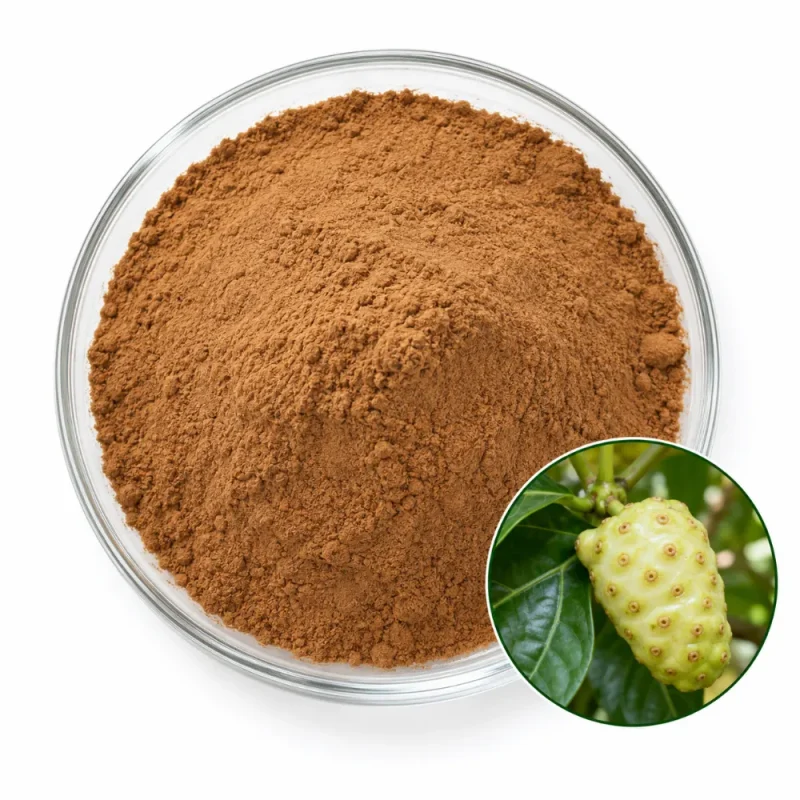
The fruit of Morinda citrifolia L. is a pale, lumpy syncarp with a strong odor when ripe. Its chemistry is wide: iridoid glycosides such as asperulosidic acid and deacetylasperulosidic acid, scopoletin, phenolic acids, sugars and organic acids. The grade follows the saponin figure supplied for this material, a group figure for the glycoside fraction measured by color development. The iridoids and other fruit constituents accompany the saponins as background and are not part of the figure.
| Grade | Assay & Method | Where It Fits |
|---|---|---|
| 10% Saponins | UV | Drink mixes, high-inclusion blends |
| 40% Saponins | UV | Capsules and tablets, small fill weight |
The span is wide, so grade choice follows dose and carrier. At 40% the extract carries four times the saponin of the 10% grade per gram, which allows a compact capsule. At 10% the powder keeps more of the fruit matrix and dissolves quickly into beverages. The same fruit is also supplied as a 10:1 ratio extract without a marker figure, the Noni Extract Powder, and as whole fruit powders, the Noni Powder and the Freeze-Dried Noni Powder.
The ripe fruit is the only part used. Noni leaf, root and bark are separate materials with other chemistry, notably anthraquinones in the root, and they are not part of this identity.
Noni is also a crowded category of products. Juices, fermented drinks, puree powders and leaf teas share the name, and each is defined by different processing. A dry noni extract of the ripe fruit is a concentrated, standardized ingredient, and its specification names the species, the fruit and the saponin figure so that it cannot be mistaken for a juice-derived powder.


