
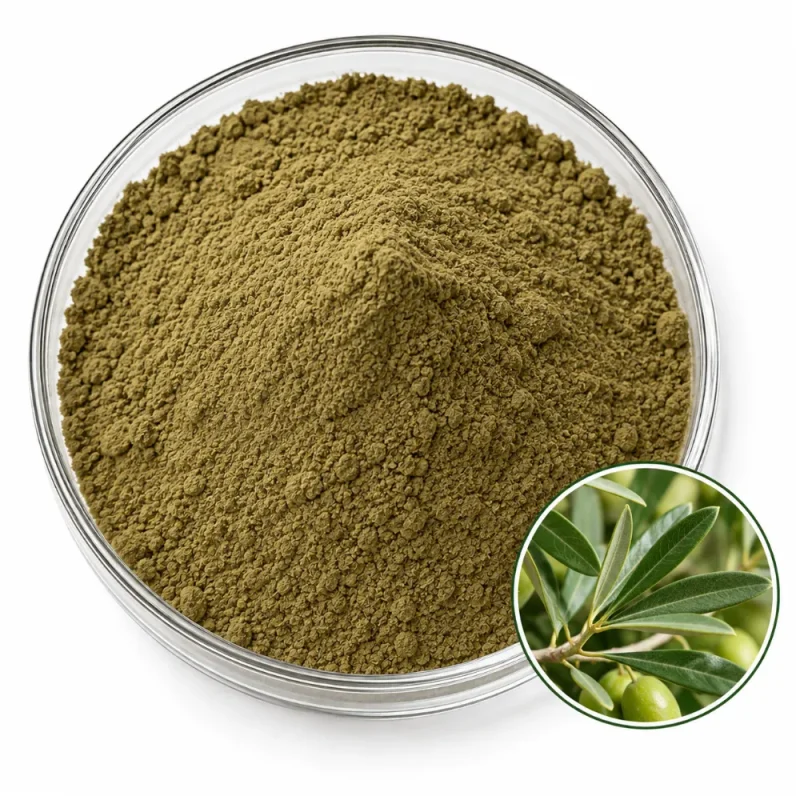
Oleuropein Standardization & Grades
Oleuropein is a secoiridoid glycoside, a bitter compound in which a glucose unit is joined to an iridoid-derived acid that is esterified with the phenol hydroxytyrosol. It is the main phenolic of the olive leaf and the compound that gives unripe olives and leaf teas their strong bitterness. It is the standardization target because it is the characteristic compound of the leaf and can be measured against a pure reference. The botanical entity is Olea europaea L., a tree of the Oleaceae, and the part used is the leaf.
| Grade | Assay & Method | Where It Fits |
|---|---|---|
| 10% Oleuropein | HPLC | Drink powders and blended premixes |
| 40% Oleuropein | HPLC | Capsules and tablets with small fill |
The two grades differ by a factor of four. The 40% grade is a marker concentrate that supplies a defined load from a small fill. The 10% grade holds more of the flavonoids, sugars and chlorophyll-derived solids of the leaf, so olive leaf extract at this level is bulkier and suits drink powders and blended premixes. The leaf is also supplied as a 10:1 ratio extract, the Olive Leaf Extract Powder, and as a milled leaf, the Olive Leaf Powder. The fruit is a separate material with a different marker, the Olive Fruit Extract 10–40% Hydroxytyrosol. Olive leaf extract at 40% is the more concentrated of the two grades, and olive leaf extract at 10% is the fuller one. The leaf is the plant part that carries oleuropein as its main phenolic.


