
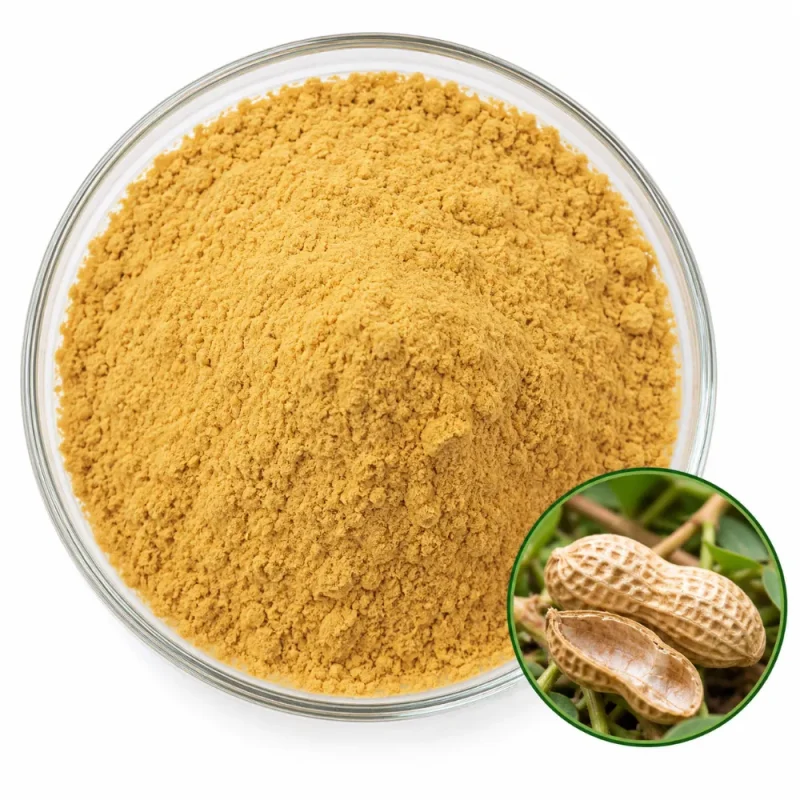
Luteolin Standardization & Grades
Luteolin is a tetrahydroxyflavone, 3′,4′,5,7-tetrahydroxyflavone, and the shell of Arachis hypogaea L. is one of its richer agricultural sources. The shell is a lignocellulosic material, rich in fiber, and its extractable phenolic fraction is dominated by luteolin and its glycosides, with eriodictyol and other flavonoids in smaller amounts. Standardizing a peanut shell extract to luteolin gives buyers one defined figure for this fraction.
The grade is a single 20% level, so each lot is measured against the same target and the same method. A 20% luteolin figure is a strong concentration and implies a purification step that removes the fiber and the sugars of the shell. The luteolin in the shell is partly glycosidic, so the figure counts luteolin as the aglycone after the defined extraction conditions. The same flavone is also supplied as a purified compound, Luteolin 98%, a different product with a higher purity.
Peanut skin extract, the Peanut Skin Extract Powder, is built on the red seed coat and its procyanidins, and the seed itself is available as Peanut Powder. Neither shares the shell’s luteolin profile.
The shell is the part used, and it is worth saying why. Peanut shells are produced in very large quantities by the shelling industry, and they are a clean, dry, lignocellulosic by-product. Turning that stream into a defined flavonoid extract needs milling, extraction and a purification step, and the luteolin figure is the quality check that the purification has concentrated the flavone. Peanut shell extract is therefore defined by the shell and by the luteolin figure.


