
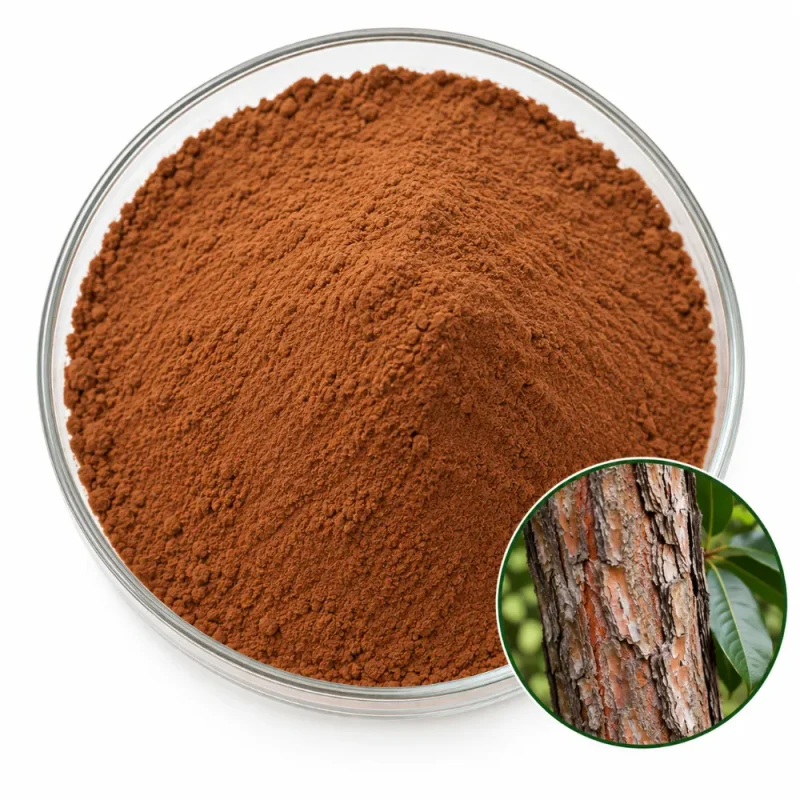
Phytosterol Standardization & Grades
Phytosterols are plant sterols, tetracyclic triterpenoid alcohols that resemble cholesterol in structure. In the bark of Prunus africana (Hook.f.) Kalkman, beta-sitosterol is the main sterol, with campesterol and stigmasterol as minor members, and the bark also holds long-chain fatty alcohols and ferulic esters of those alcohols. A Pygeum africanum extract is standardized to phytosterols as a group because the sterol fraction is the largest defined, measurable part of the lipophilic extract.
| Grade | Assay & Method | Where It Fits |
|---|---|---|
| 2.5% Phytosterols | GC | Blends, oil-based fills |
| 13% Phytosterols | GC | Capsules, small fill weight |
The span is wide, so grade choice follows dose and carrier. At 13% the extract carries more than five times the phytosterol of the 2.5% grade per gram, which allows a compact capsule. At 2.5% the powder holds more of the bark matrix and is easier to blend at gram-level inclusion. The same bark is also supplied as a 10:1 ratio extract without a marker figure, the Pygeum Africanum Extract Powder, and as a bark-named extract, Pygeum Bark Extract Powder.
The bark is the only part used. Leaves, fruit and wood of the tree carry little of the sterol fraction and are not part of this identity. The tree is wild-harvested, so documentation of sourcing matters for every order.
The bark is the part used, and the supply chain is specific. Prunus africana bark is stripped from mature trees in the African highlands, dried and sold in strips, and the quality of a lot depends on the age of the bark and the care of the stripping. Pygeum africanum extract is therefore defined by the bark and by the phytosterol figure, and sourcing documentation matters for every order.


