
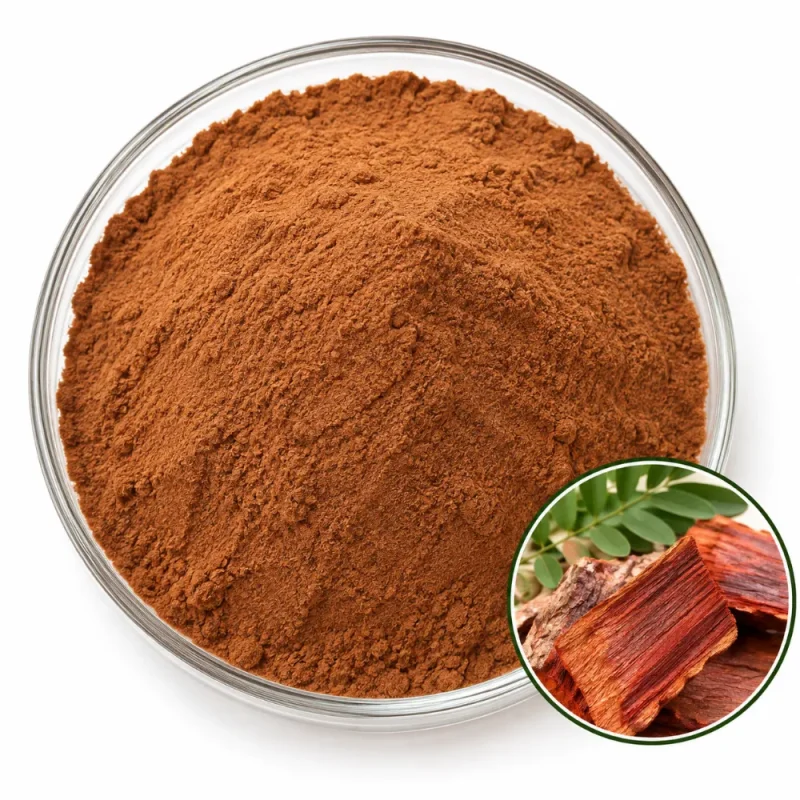
Sappanwood Tannin Standardization & Grades
Tannins are plant polyphenols large enough to bind proteins. The heartwood of sappanwood is known above all for brazilin, a homoisoflavonoid that oxidizes to the red pigment brazilein, and it also carries sappanchalcone, other homoisoflavonoids and tannins. The extract is standardized to tannins at 15% because the figure is measurable by a routine colorimetric method and it expresses how far the heartwood has been concentrated.
The botanical entity is Caesalpinia sappan L., and the part is the heartwood. The sapwood and bark carry little of the red pigment. The name brazilwood is shared with a different tree, Paubrasilia echinata, so buyers should confirm the species when a source document says only brazilwood. The same heartwood is also supplied as a 10:1 ratio extract with no marker figure, the Caesalpinia Sappan Extract Powder.
This is one grade, not a range, so there is no grade table. The 15% powder is the grade the specification is written around, and inclusion rates are calculated from that figure. Brazilin and brazilein are not counted in a tannin percentage, so the extract’s red tone and its tannin load are two separate properties of the same powder. Sappanwood extract at 15% therefore needs a color check as well as an assay.


