
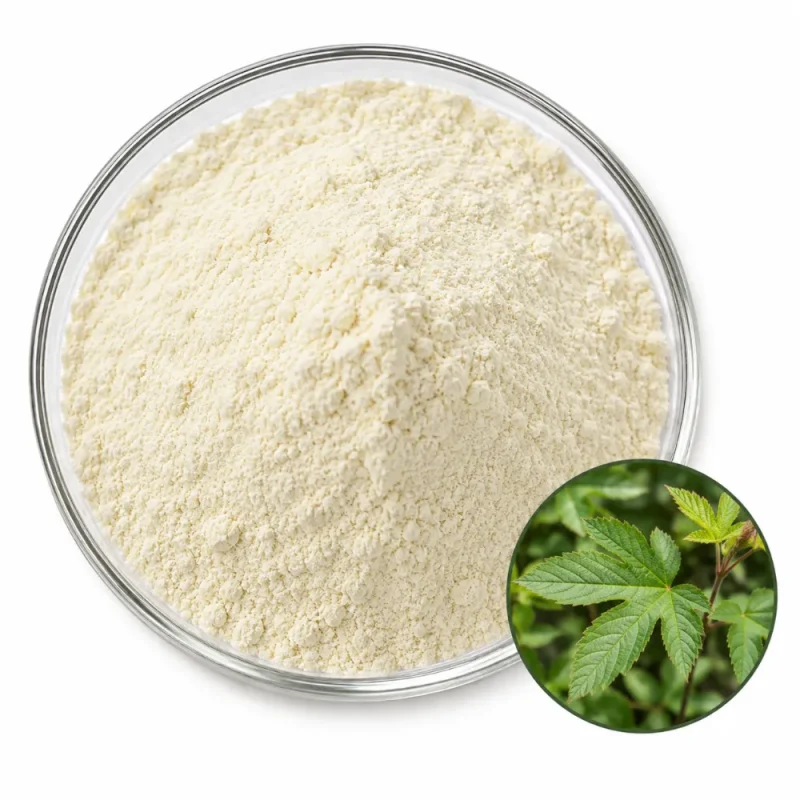
Rubusoside Standardization & Grades
Rubusoside is a diterpene glycoside with a kaurane skeleton carrying a glucose unit on the carboxyl group and another on the ring. It is closely related to the steviol glycosides of stevia, though it lacks the rhamnose and extra glucose units that distinguish rebaudioside A. The grade is defined by this single compound, which is the dominant sweet principle of the leaf. The botanical entity is Rubus suavissimus S.K.Lee, which GBIF lists as a synonym of Rubus chingii, and the part used is the leaf.
| Grade | Assay & Method | Where It Fits |
|---|---|---|
| 70% Rubusoside | HPLC | Beverage bases and tea-style blends |
| 95% Rubusoside | HPLC | Sweetener systems and drink sticks |
Grade choice follows taste cleanliness, color and the amount of leaf matrix a formula should keep. The 95% grade is nearly pure, paler and cleaner on the palate, and its high water solubility suits clear drinks. The 70% grade keeps more of the leaf polyphenols, which add a faint astringency, a slightly deeper color and a more tea-like character. No sibling product from the same plant is currently listed in the catalog, so this grade pair is the full offer for sweet tea.
Rubusoside also has a technical role. It forms soluble complexes with hydrophobic molecules and can increase the apparent solubility of fat-soluble ingredients in water, which is why formulators sometimes use it as a co-solubilizer in powdered premixes. This effect depends on concentration and on the partner compound and should be tested for each formula.
Buyers who compare sweet tea extract quotes should check the plant and the part. True tea, stevia and the raspberry fruit are different ingredients, and a rubusoside figure belongs only to Rubus suavissimus leaf. A named species, the leaf as the stated part and a named method are the three items that make a figure comparable.


