
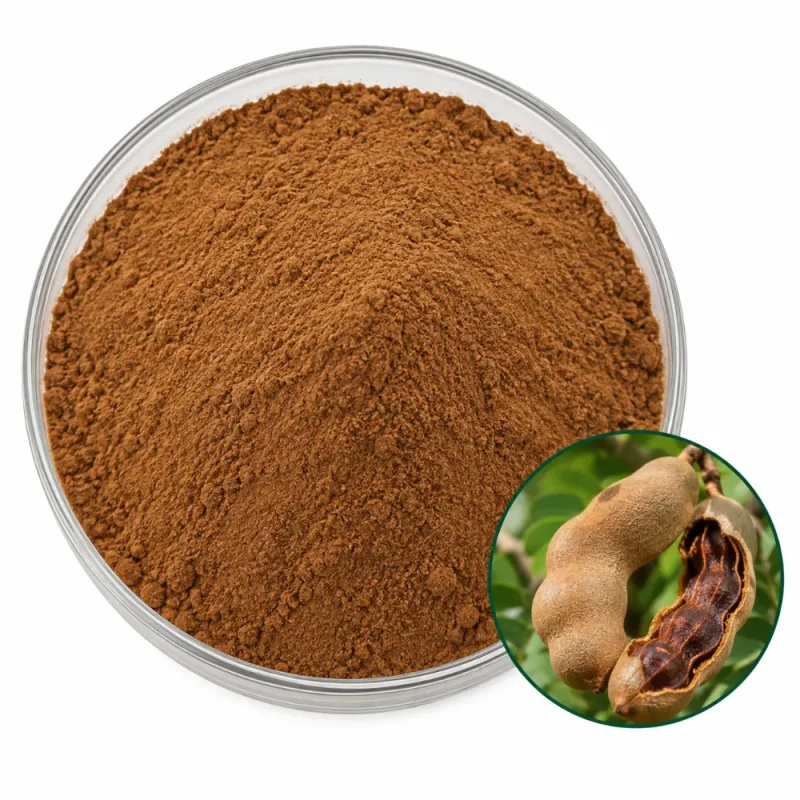
Tamarind Tartaric Acid Standardization & Grades
Tartaric acid is a dihydroxy dicarboxylic acid, and tamarind pulp is one of the few fruit sources in which it is the dominant acid. Most fruits are led by citric or malic acid, and grape is the other well-known tartaric fruit. The pulp of tamarind also holds reducing sugars, pectin, polyphenols and a small share of malic acid. The extract is standardized to tartaric acid because it is the acid that gives tamarind its sharp, clean sourness, and because HPLC can measure it directly.
The botanical entity is Tamarindus indica L., and the part is the fruit pulp. The seed kernel is a different material, tamarind kernel powder, which is a thickener made from the seed endosperm and not a pulp extract. The same pulp is supplied as a 10:1 ratio extract with no marker figure, Tamarind Extract Powder, and as the dried pulp, Tamarind Powder.
This is a single grade, so there is no grade table. The 10% powder is the one the specification is written around, and inclusion rates are calculated from the tartaric acid figure. The pulp is soaked, extracted with water, strained to remove fiber and seeds, concentrated and dried. The water extract keeps the acids and sugars of the pulp, and the powder is a sour, sticky material, not a bland one.


