
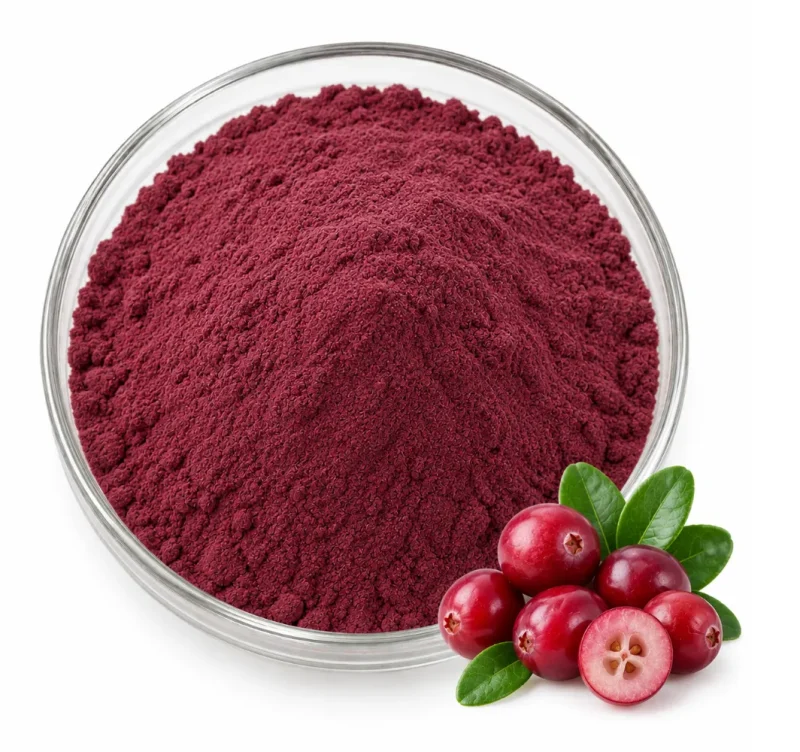
PAC Standardization & Grades
Proanthocyanidins are condensed tannins built from flavan-3-ol units. Cranberry PACs are of the A type, in which an extra ether bond links the units, and this distinguishes them from the B-type PACs of grape seed and cocoa. The extract is standardized to them because they are the compound class most characteristic of the berry and because a colorimetric assay can measure them in a routine laboratory. The botanical entity is Vaccinium macrocarpon Aiton, and the part used is the ripe fruit.
| Grade | Assay & Method | Where It Fits |
|---|---|---|
| 10% PACs | UV, BL-DMAC | Drink sticks, gummies and fruit-led blends |
| 50% PACs | UV, BL-DMAC | Capsules and tablets with small fill weight |
Grade choice follows dose, fill weight and acidity. The 50% grade carries five times the PAC load per gram of the 10% grade, so a capsule reaches its target in a smaller fill. The 10% grade brings more of the fruit’s acids, sugars and color into each gram, which suits drinks and gummies in which cranberry flavor and tartness are part of the design. Cranberry is also supplied as a 10:1 ratio extract with no marker figure, the Cranberry Extract Powder, and as fruit powders, the Cranberry Powder and the Freeze-Dried Cranberry Powder.
A PAC percentage depends on the assay behind it, so quotes for cranberry extract should state the method as well as the number. A figure obtained with the BL-DMAC procedure is not comparable with a figure from another colorimetric procedure or from a chromatographic method. The 10% grade suits formulas in which tartness, color and fruit acids are wanted, and the 50% grade suits formulas in which the PAC dose is the design constraint of the cranberry extract.


