
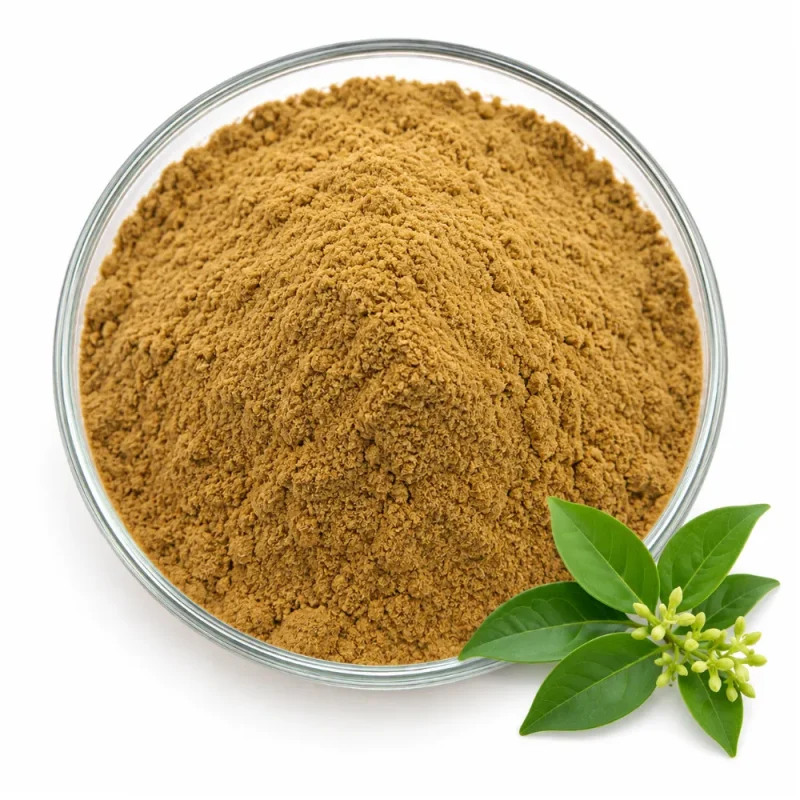
Gymnemic Acid Standardization & Grades
Gymnemic acids are triterpene saponins, glycosides in which a four-ring triterpene skeleton carries sugar and glucuronic acid units. They are not one compound but a mixture of related members, and public chemical databases list no single entry for them. That is why a reference standard is built from a defined set of named members, and why a percentage is meaningful only together with that set. The botanical entity is Gymnema sylvestre (Retz.) R.Br. ex Sm., a plant of the Apocynaceae, and the part used is the leaf.
| Grade | Assay & Method | Where It Fits |
|---|---|---|
| 25% Gymnemic Acids | HPLC | Chewable bases and blended powders |
| 75% Gymnemic Acids | HPLC | Capsules and tablets with small fill |
The two grades differ widely. The 75% grade is a saponin concentrate that supplies a marker dose from a small fill. The 25% grade keeps more of the plant matrix, the flavonoids, the sugars and the polypeptide gurmarin, so Gymnema sylvestre extract at this level is closer to the leaf and easier to blend. The same plant is also supplied as a 10:1 ratio extract, the Gymnema Extract Powder, as a milled leaf, the Gymnema (Gudmar) Powder, and as the isolated fraction Gymnemic Acid. The name gurmar means sugar destroyer in Hindi, which refers to the sensory effect of the leaf on sweet taste. Gymnema sylvestre extract at 75% is therefore a concentrate, while Gymnema sylvestre extract at 25% stays close to the leaf in taste and texture. Both are extracts of the same leaf and differ in concentration, not in botanical identity.


