
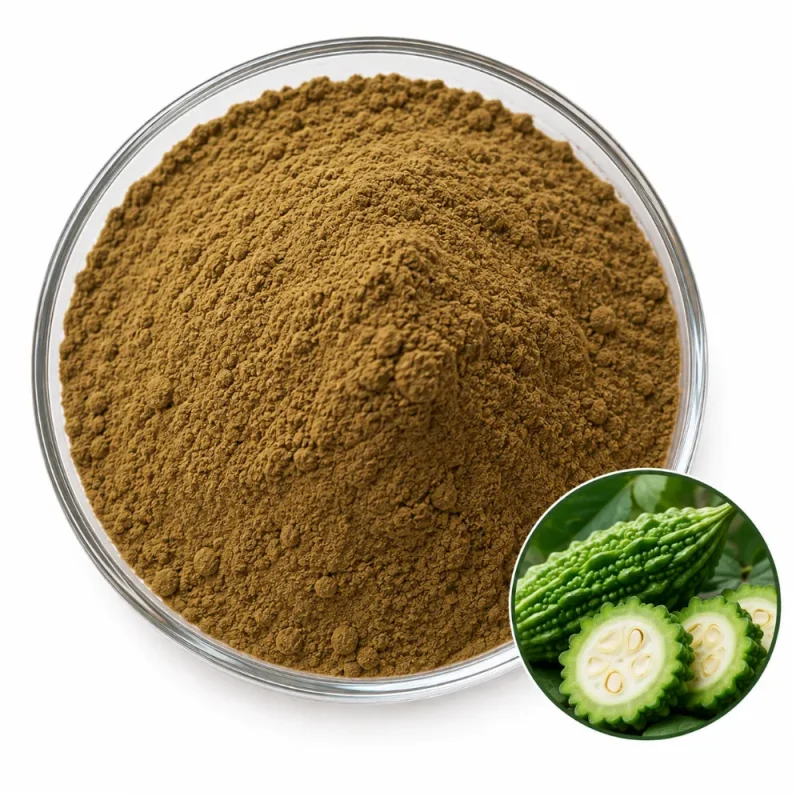
Charantin Standardization & Grades
Charantin is the name given to a mixture of steroidal glucosides, mainly the glucosides of beta-sitosterol and stigmasterol, that is isolated from the fruit. It is a sterol glycoside and not a bitter compound. The strong bitterness of bitter melon comes from a different group, the cucurbitane triterpene glycosides known as momordicosides. The grade names charantin because it is the marker most used in the trade and because it can be measured by HPLC. The botanical entity is Momordica charantia L., a vine of the Cucurbitaceae, and the part used is the green fruit.
| Grade | Assay & Method | Where It Fits |
|---|---|---|
| 0.5% Charantin | HPLC | Blended powders and tea-style mixes |
| 1% Charantin | HPLC | Capsules and tablets with small fill |
The two grades are close in strength, so the choice is a matter of fill size. The 1% grade packs twice the marker into a capsule of the same weight. The 0.5% grade is easier to meter in blends, and bitter melon extract at this level carries more of the fruit matrix. The data for this product lists total saponins as a secondary figure, which reflects the bitter fraction. The fruit is also supplied as a 10:1 ratio extract, the Bitter Melon Extract Powder, as a juice powder, the Bitter Melon Juice Powder, and as a milled fruit, the Bitter Melon Powder. Those forms carry no charantin figure. Bitter melon extract at 1% is the more concentrated of the two grades, and bitter melon extract at 0.5% is the fuller one. Bitter melon is eaten as a vegetable in Asia, but the extract is a concentrated powder and is dosed by the marker figure, not by the weight of fruit.


