
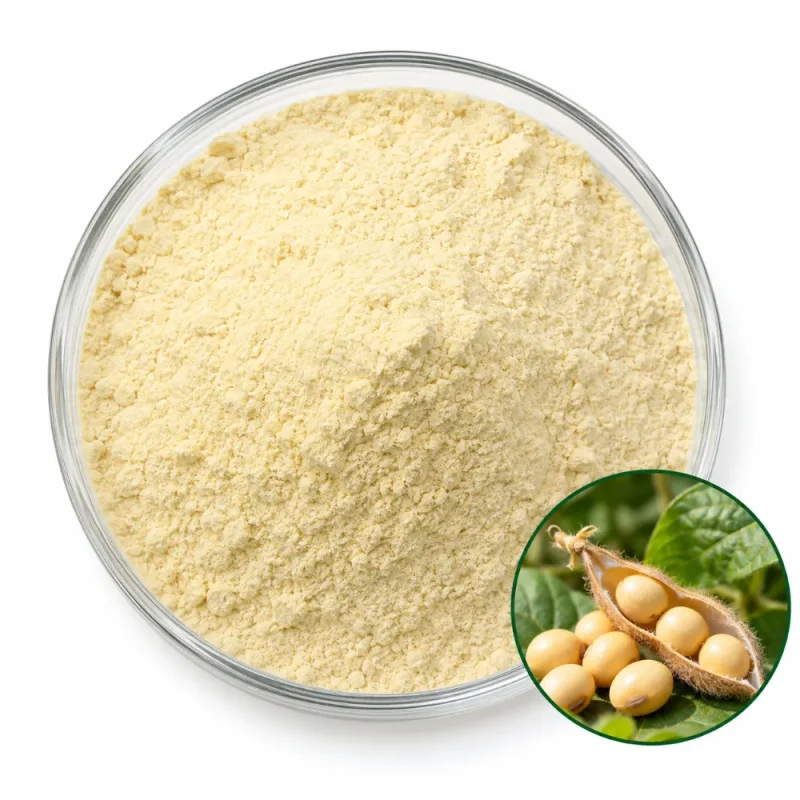
Soybean Isoflavone Standardization & Grades
Isoflavones are phenolic compounds built on a 3-phenylchromone skeleton, and soybean is their most important dietary source. The main soy isoflavones are daidzein, genistein and glycitein, and each occurs in the seed as several conjugates: the glucosides daidzin, genistin and glycitin, their malonyl and acetyl forms, and a smaller share of free aglycones. The extract is standardized to isoflavones because the class is stable, measurable and specific to the soy seed profile.
The botanical entity is Glycine max (L.) Merr., and the part is the seed. Closely related are the wild soybean (Glycine soja) and the black soybean, which is the same species with a dark seed coat. Black soybean has its own anthocyanin extract, Black Soybean Extract 5–25% Anthocyanins, and the germ of the bean is supplied separately as Soybean Germ Extract 40% Isoflavones. The 10:1 ratio extract with no marker figure is the Soybean Extract Powder.
| Grade | Assay & Method | Where It Fits |
|---|---|---|
| 20% Isoflavones | HPLC | Blends, larger inclusion |
| 80% Isoflavones | HPLC | Capsules and tablets, small fill |
The 80% grade carries four times the isoflavone load per gram, so a capsule or a tablet reaches its target with a small charge. The 20% grade is bulkier and still carries part of the seed’s other constituents, which suits blends where bulk is not limiting. Both are read on the same HPLC basis, so grades scale by weight.
The extract is made from defatted soybean material. The bean is largely oil and protein, so the oil is removed first, the isoflavones are taken up in ethanol, and the concentrate is purified and dried. Higher grades involve more purification steps, which also remove saponins, sugars and the beany flavor of the seed.


