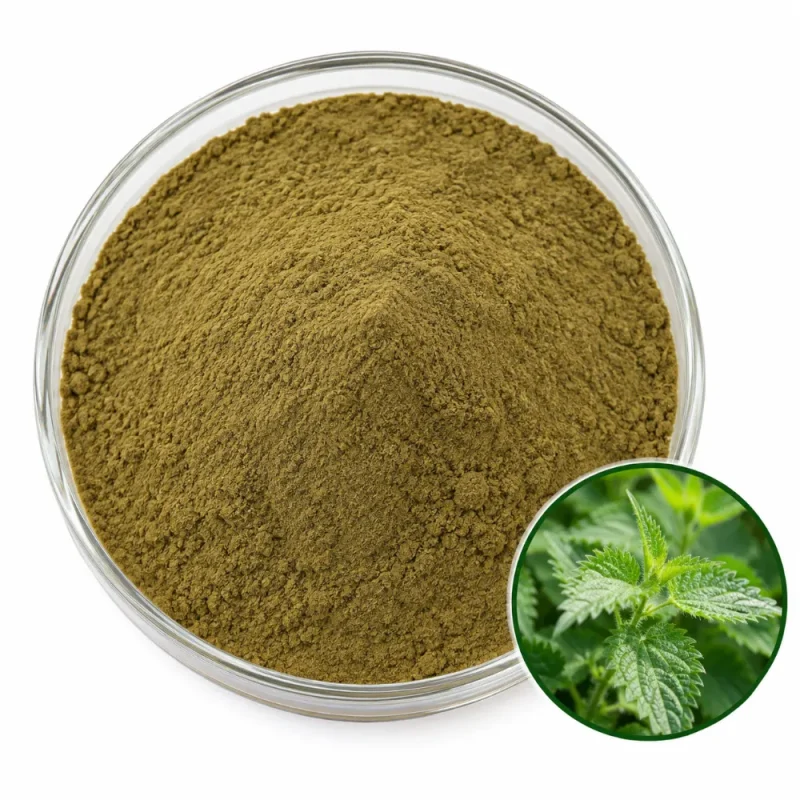
Stinging Nettle Root Extract 1% Beta-Sitosterol

Nettle root extract comes from the underground parts of Urtica dioica, the stinging nettle, and not from the leaves that dominate nettle tea and food products. Ethanol extraction pulls the lipophilic sterol fraction out of the root, and the liquor is dried to a powder for use in capsules and tablets.

The grade is 1% beta-sitosterol, measured by GC, and the powder is 80 mesh and slightly soluble in water. Beta-sitosterol is the lead phytosterol of the root, so one figure describes the sterol content without suggesting that the powder is a purified sterol concentrate.

Sitosterol Standardization & Grades

Beta-sitosterol is the most abundant plant sterol in many botanicals, and nettle root carries it both as the free sterol and as its glucoside, with campesterol and stigmasterol in smaller amounts. It is the practical marker for this root because it is stable, measurable by GC and tied to the lipophilic fraction that ethanol brings out. The botanical entity is Urtica dioica L., and the part is the root with its rhizome.

The page is built around a single 1% grade, so there is no ladder of tiers to compare. The decision is about format and carrier load: at 1% the powder is a whole-root extract with a defined sterol content, not a sterol concentrate. The other root compounds, such as lignans and polysaccharides, remain in the matrix. Siblings from the same plant are the ratio-based Nettle Root Extract Powder, which carries no sterol figure, and the leaf-based Nettle Leaf Extract Powder and Stinging Nettle Leaf Powder, which come from a different plant part.

Buyers who compare nettle extract quotes should check the plant part before the percentage. Root and leaf are different raw materials with different chemistry, and a sterol number on a leaf extract is not comparable with one on a root extract. A named part, a named marker and a named method are the three items that make a sterol figure usable.

A stinging nettle root extract at 1% beta-sitosterol is therefore a moderate-strength product. The remaining 99% is the rest of the ethanol-soluble root matrix, including other sterols, fatty compounds, lignans and the pigments that give the powder its color. Formulators who need a much higher sterol load should consider a purified phytosterol ingredient instead. Those who want the root profile around a defined sterol level will find this grade a better fit.

Sitosterol Analysis & Purity Risks

The marker is quantified by GC, which separates sterols after they have been converted into volatile derivatives and reads each against a reference standard. The method counts individual sterols, so it sees beta-sitosterol as its own peak, apart from campesterol and stigmasterol. A UV or gravimetric test would lump every lipophilic compound together and is not comparable with a GC result.

Sample preparation controls the answer. Beta-sitosterol glucoside is not volatile, so a GC run that includes a hydrolysis step also counts the sterol released from the glucoside. One that omits it reads the free sterol only. Two laboratories can therefore report different numbers on the same lot, and the preparation should be the first question when figures disagree.

The fingerprint of the root is a sterol profile with beta-sitosterol as the dominant peak and campesterol and stigmasterol as clear minor peaks. Because this pattern is common to many seed and root extracts, it works as an identity check only when read together with the plant part, the botanical name and a retained reference sample of the same stinging nettle root extract.

Purity risks follow from the botany. Leaf material is sold under the same common name and is much cheaper, so a nettle product needs a named part. Urtica urens, the small nettle, grows beside stinging nettle and is occasionally collected with it. The root of other nettle relatives can look alike once cut and dried, and beta-sitosterol itself is common to many plants, so the figure alone does not prove origin.

Typical Specifications

Specification ItemProduct Information
Latin NameUrtica dioica
Plant PartRoot & Rhizome
ProcessingEthanol Extraction
Compound ClassPhytosterols
Common NameStinging Nettle, Nettle Root
Ingredient TypeStandardized Extract
Marker Compound(s)Beta-sitosterol (plant sterol of Urtica dioica root)
Primary Grade1% Beta-Sitosterol (GC)
AppearanceGreen powder
Solubility / DispersibilitySlightly Soluble in Water
Quality Parameters
Moisture (LOD)≤5.0%
Total Ash≤5.0%
Particle Size80 mesh
Heavy MetalsLead ≤2 ppm · Arsenic ≤1 ppm · Cadmium ≤1 ppm · Mercury ≤0.1 ppm
MicrobiologyTPC ≤1,000 cfu/g · Yeast & Mold ≤100 cfu/g · E. coli Negative · Salmonella Negative/25 g
Shelf Life24 months in unopened original packaging, cool and dry storage

Applications by Grade

1% Grade for Capsule Fills

The single 1% grade is dosed by weight in capsules, so a typical formula needs a generous fill to reach a target sterol amount. The powder is fine and slightly cohesive, which means a glidant and a fill-weight check at each run keep the capsules uniform. A larger capsule size may be needed for higher doses.

Tablet Blends With Root Extracts

Tablets suit the grade when it is blended with other root extracts at moderate inclusion. The sterol-containing matrix is slightly waxy, so a dry binder and an absorbent give hard compacts and reduce sticking to punches during longer runs, and a short hardness check after storage confirms the result.

Oil-Based Softgel Fills

Because sterols dissolve better in oil than in water, softgel fills suspend the powder in a carrier oil. Mill the powder fine before dispersion and stir during encapsulation, since sedimentation changes the sterol content from one capsule to the next and from the start to the end of a batch.

Dry Mix Sachets

Powder sachets combine the stinging nettle extract with other dry botanicals and a flavor system. The root has a mild, earthy taste, and the extract is only slightly soluble. It stays suspended and leaves a fine sediment, which suits shake-before-use formats and thick, opaque drink bases.

Bar and Granola Premixes

In bars, the grade is blended into the dry fraction before the binder syrup is added, so the waxy particles spread evenly. The inclusion is modest, and nutty or cocoa bases hide the earthy note without masking the color or adding a visible green fleck.

Technical & Quality Considerations

The stinging nettle extract is a green powder with a mild, grassy odor and a slightly bitter taste. It is slightly soluble in water, and the lipophilic sterol fraction stays in the particles, so a solution looks cloudy and settles as a fine sediment. Phytosterols are chemically stable, but the unsaturated lipids that travel with them can oxidize, which is why exposure to air and light should be kept low.

The color of a nettle root extract comes from pigments that fade in strong light and under acid, so formulas with a low pH may shift from green to olive over time. For scale-up, sieve the powder before dosing, pre-blend it with a portion of the carrier and verify content uniformity at the start of each run. Clean mixers between nettle and pale products because the green pigment is easy to carry over, and keep the drum closed and dry.

Sterols are waxy and tend to lump when the powder is stored warm, so a cool, dry store room helps the powder stay free-flowing. When the powder is wetted for granulation, a non-aqueous or low-moisture binder performs better than water, because the lipophilic fraction does not wet evenly. Test any wet process on a small lot first, and judge the granule by hardness, flow and color before running a full batch of stinging nettle root extract.

Packaging & Commercial Supply

Essencefield supports product evaluation, formulation trials, commercial orders, and ongoing ingredient supply. Packaging, storage, and shipping arrangements are determined by product characteristics, order quantity, stability requirements, and destination-market needs.

Supply ItemGeneral Information
SampleAvailable upon request for formulation, testing, and supplier evaluation
Order Quantities100 g · 1 kg · 5 kg · 25 kg · 100 kg · 500 kg · Bulk
Sample Lead TimeTypically 5–7 days after sample confirmation
Production Lead TimeTypically 15–30 days after order and specification confirmation
PackagingSuitable protective inner packaging with bags, cartons, drums, or other appropriate outer packaging
StorageStore in tightly sealed, suitable protective packaging in a cool, dry environment. Protect from moisture, heat, and direct sunlight. Specific storage conditions follow the approved product specification.
DocumentationCOA · Product Specification · TDS · SDS · Applicable declarations (as applicable)

Final order quantities, lead times, packaging, documentation, and shipping arrangements are confirmed according to the selected product and commercial requirements.

Request Ingredient Specifications & Quote

Share your target specification, application, quantity, and documentation needs. We’ll help confirm suitable options, samples, and commercial supply details.